There’s a certain flatness to Lumbini that catches you off guard if you’ve been staring at Himalayan ridgelines for weeks. The land here is the Terai — low, green, impossibly humid in the wrong season — and the sacred grove where Siddhartha Gautama was born in the fifth century BCE sits without drama or elevation change. No mountain backdrop. Just ancient brick, a sacred pond, and an atmosphere that earns its gravity slowly.
The Sacred Garden and What It Actually Feels Like
The Maya Devi Temple marks the precise spot of the birth. Archaeologists have layered it down to a marker stone now encased in glass. I stood over it on a Thursday morning with a Tibetan family who had traveled three days to be there, and a Japanese monk who was on his fourth visit. The air inside smelled of incense and old stone. No one was loud. That’s the thing about Lumbini — it enforces its own quiet.
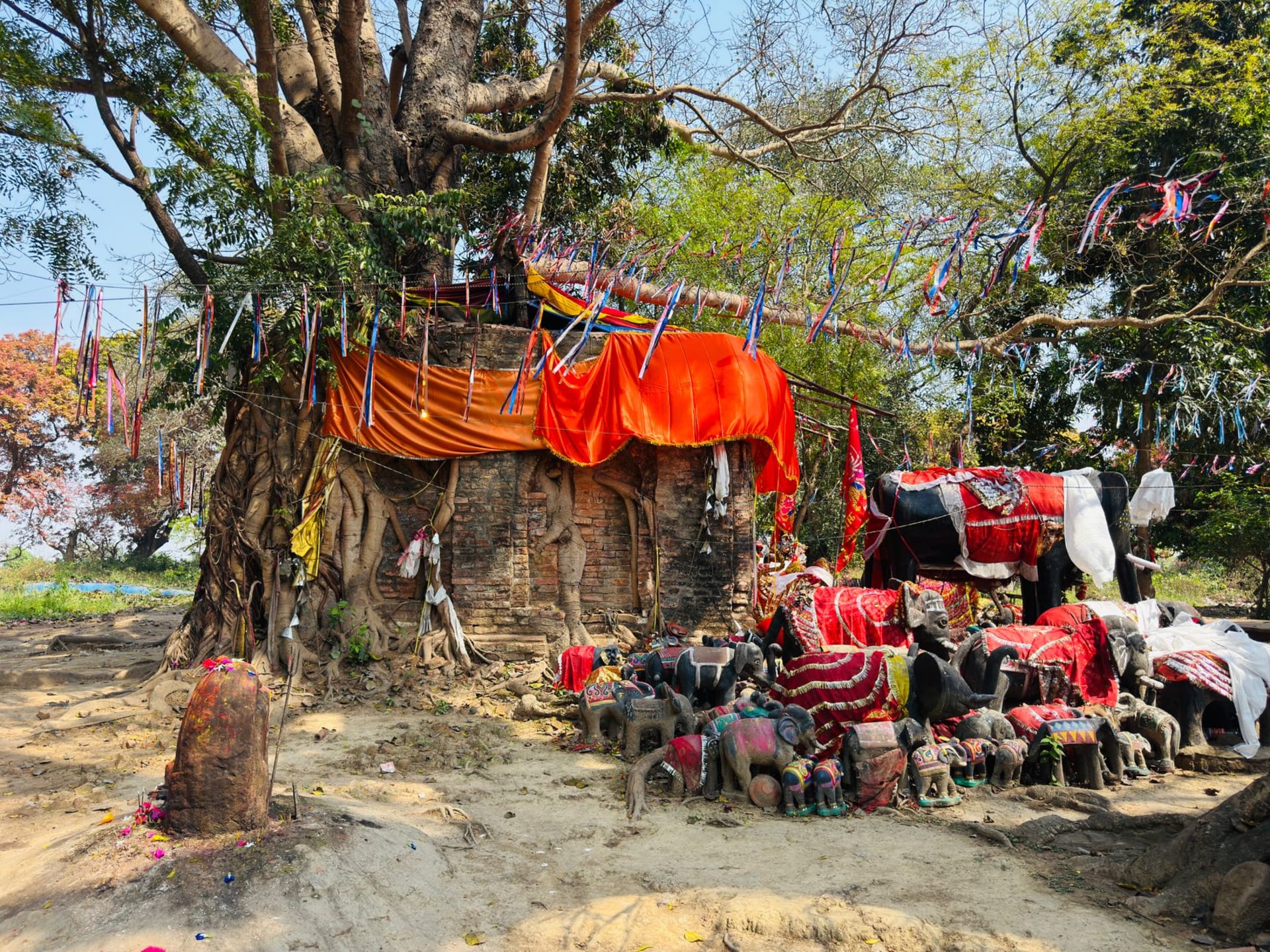
The Ashoka Pillar from 249 BCE stands just outside, the inscription still legible if you know Brahmi script (I don’t, but the placard helped). The sacred Bodhi tree nearby is strung so densely with prayer flags that the light through them turns gold and fragmented.
The Monastic Zone
Walking north from the temple, the landscaping shifts into something almost surreal: a two-kilometer canal lined with monasteries built by Buddhist countries around the world. A Thai wat with mirrored mosaics. A German monastery that looks vaguely modernist. A Cambodian pagoda that could have been transplanted whole. A Vietnamese temple trailing lotus ponds. Each one distinct, each one largely empty when I visited.
It sounds kitsch in description. In practice, wandering between them on a rented bicycle in the late afternoon — the light going amber, monks in various colors moving across courtyards — it’s genuinely strange and genuinely moving. Not because any single structure is spectacular, but because the accumulation of the thing is real. People actually came here, from everywhere, to build something in this field.
The Edges of the Experience
The town itself is functional rather than beautiful — guesthouses, cycle rentals, a few restaurants catering to international pilgrims. I ate dal bhat at a place where I was the only non-monk at the table and nobody spoke to me for forty-five minutes, which was fine. The food was excellent and the fan overhead turned slowly and the afternoon dissolved.
What Lumbini is not: a spectacle. It doesn’t announce itself. If you need a site to perform its significance at you, you’ll feel nothing here. If you’re willing to slow down into it — which means staying at least one full day, cycling the monastic zone at dusk, arriving at the temple before the tour groups — it accumulates into something you’ll carry.
Lia described it as “the only UNESCO site that made me feel like I’d actually been somewhere instead of somewhere I’d seen before.” That’s close enough.
When to go: October through February, when the Terai is dry and the temperatures are tolerable. March gets hot fast, and the monsoon from June to September makes the plains genuinely punishing. Dawn visits to the temple are cooler and dramatically less crowded.