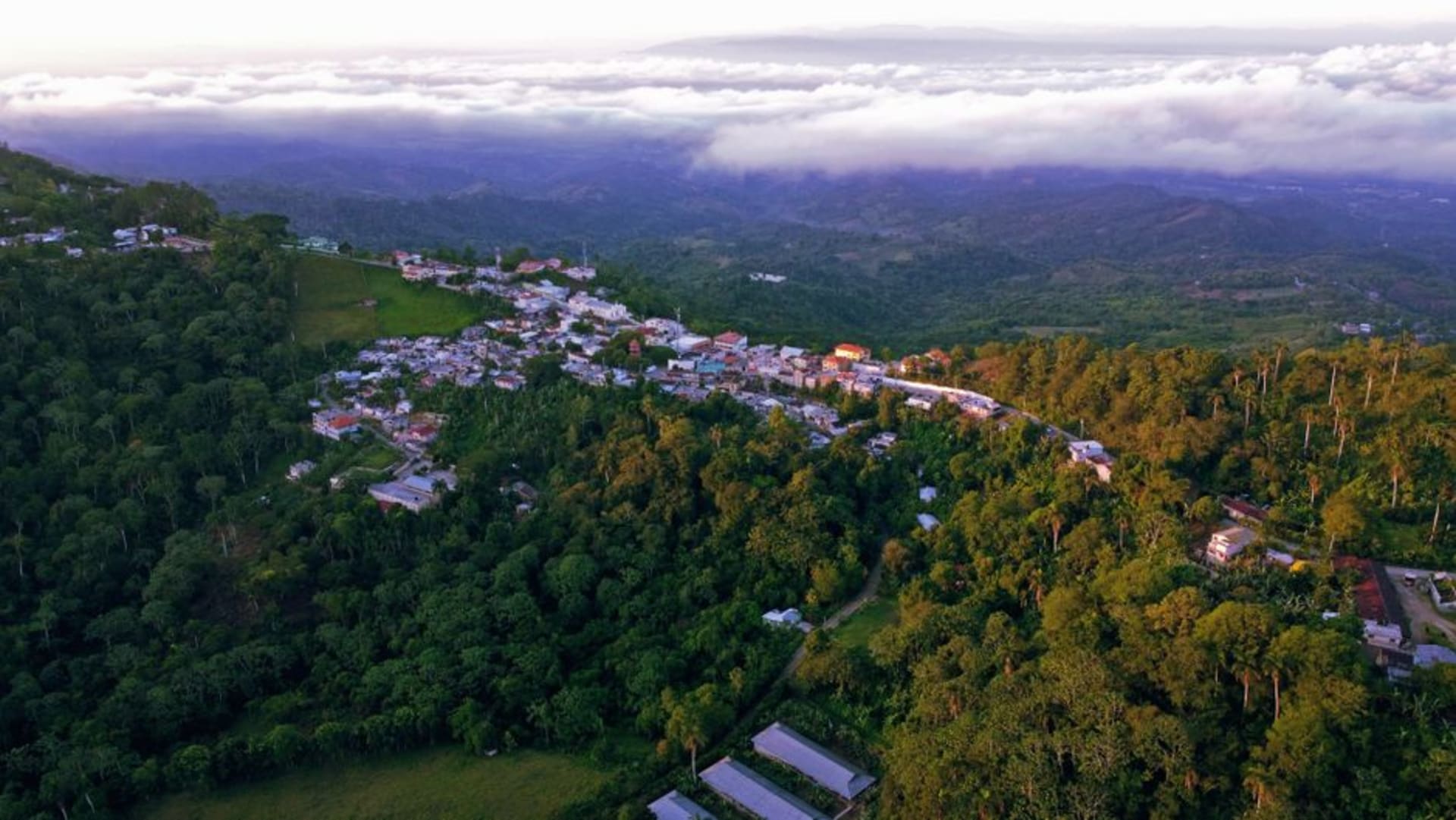
Gómez Farías
"My guide found the quetzal trail in fifteen minutes. He has been walking it since he was six years old."
The road to Gómez Farías changes character at a precise altitude. Below, it threads through dry scrub and citrus groves — the flat logic of the Gulf coastal plain. Then the Sierra Madre takes over, and everything shifts: tree ferns, bromeliads, moss colonizing every horizontal surface. I came up from Ciudad Mante on a colectivo that stopped for a goat in the road and again, inexplicably, for a man transporting an enormous plastic chair. By the time the village appeared — a loose cluster of painted concrete, a tianguis, a basketball court full of teenagers — the temperature had dropped six degrees and the air smelled like rain that had happened three days ago and was still deciding whether it was finished.
Where the Cloud Forest Begins
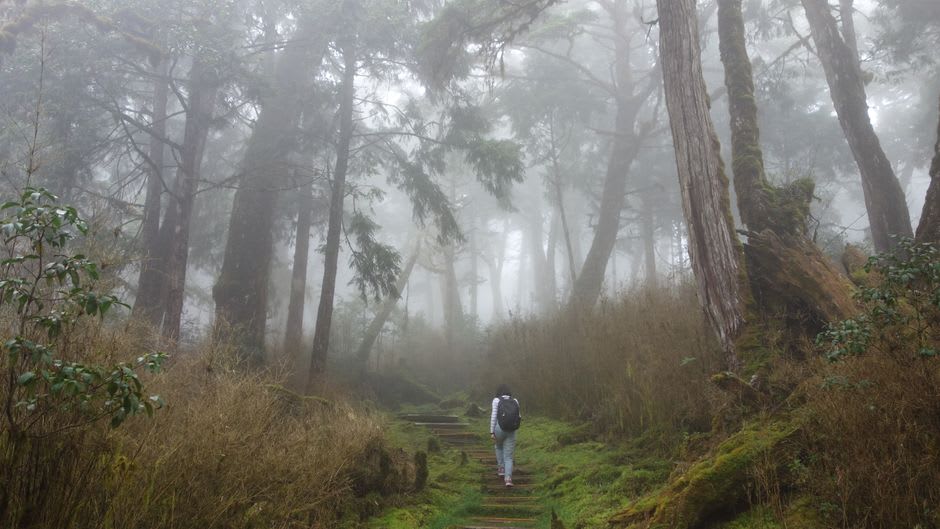
El Cielo is not one place. The biosphere reserve stacks four distinct vegetation zones vertically along the Sierra Madre: tropical forest, subtropical, temperate, and the cloud forest — bosque de niebla — that begins around 1,200 meters and is the reason most people make the climb to Gómez Farías at all. It is one of the northernmost persistent cloud forests on the continent, and it holds species with no business being this far from Central America: resplendent quetzal, mountain trogon, white-throated robin, and a checklist of warblers that migrating birders from Texas drive eight hours to see.
The ejido manages the guide service, and these are not recreational guides with laminated checklists. Don Rubén, who took me out at five in the morning, has been walking these trails since childhood. He stopped on a muddy slope, tilted his head, and in fifteen minutes had located a quetzal by a sound I would have filed under background noise. We stood in the fog for twenty minutes watching it move through the canopy. He never consulted a phone. The trails into El Cielo proper require a guide — this is both a rule and, genuinely, the best advice anyone will give you here.
Breakfast at the Tianguis, Dinner at the Posada
The Saturday market sets up along the main street and is small enough to walk end to end in four minutes, which means you will do it several times. Women from surrounding ranchos sell tamales de rajas, huevo de rancho, and a dense Huastec tamale — larger than its central Mexican cousins, wrapped in banana leaf and steamed overnight. I ate two standing next to the masa seller’s table and considered a third.
Meals beyond the market belong to the posadas and a couple of family comedores near the plaza. Expect plates of frijoles de la olla, rice, and whatever protein arrived that morning — sometimes goat, sometimes chicken, often just beans and handmade tortillas done well enough that nothing feels missing. This is not a restaurant village. It is a village where people cook and, if you are staying, occasionally sell you what they made. The Huastec influence shows up in the seasoning more than in any labeled dish: a certain earthiness, a restrained use of chile, a preference for slow heat over loud heat.
Where to Sleep and How to Arrive
The ejido runs a posada near the reserve entrance — basic rooms, shared bathrooms, and the unusual luxury of hearing nothing after nine at night except cloud forest working through its business. A few families also rent rooms independently; ask at the tianguis or at the presidencia municipal. Rates are modest by any standard.
Book your guide before arriving, ideally through the ejido office directly. Someone at any posada will give you the WhatsApp contact. Morning birding departures run at five a.m.; bring waterproof boots, a headlamp, and one more layer than you think you need. I wore a borrowed fleece belonging to Don Rubén’s son for most of the morning and returned it damp with cloud.
Getting There
From Ciudad Mante — roughly 50 kilometers west — take a colectivo or taxi on the road that climbs into the Sierra. Mante is served by ADO and Primera Plus buses from Tampico (about 2.5 hours) and Ciudad Victoria (about 2 hours). There is no direct service from any major city to Gómez Farías itself. The road is paved but climbs steadily; arrange your final leg before late afternoon, when colectivos thin out and taxis negotiate more confidently.