Xochicalco
"You walk into a cave and watch a column of light fall precisely on the floor. The engineers who designed this have been dead for twelve hundred years."
Most visitors to the Morelos valley come for Cuernavaca and consider the day complete. The ones who drive thirty-eight kilometers further southwest, up the road that climbs into the dry hills toward a ridge line that appears from below to hold nothing of interest, discover Xochicalco: a hilltop city of such architectural and astronomical sophistication that standing on its plaza at eight in the morning, with no other visitors present and a hawk working the thermals above the valley below, you feel the particular disorientation of encountering a genuinely major civilizational achievement in a place the world has largely agreed not to notice.
Xochicalco — the name is Nahuatl, “place in the house of flowers” — was built by a people we do not have a precise name for: not a subdivision of the more famous Aztec or Maya traditions but a distinct civilization of the Central Mexican highlands who occupied this hilltop from approximately 650 to 900 CE. Their occupation coincides with the collapse of Teotihuacán, the great metropolis to the north, and they appear to have absorbed refugees and knowledge from that collapse. The evidence suggests a cosmopolitan city — a meeting point of traditions — where the calendar systems and astronomical knowledge of different Mesoamerican civilizations were synthesized.
The result of this synthesis was a calendar correction. The evidence preserved in the carvings of the principal pyramid suggests that Xochicalco hosted a great congress of astronomical and calendrical specialists who calibrated the Mesoamerican calendar. Whether this happened precisely as the archaeological interpretation suggests is debated, but the sophistication of the astronomical infrastructure at the site is not: Xochicalco has an underground solar observatory of a precision that was not accidentally built.
The Pyramid of the Feathered Serpent
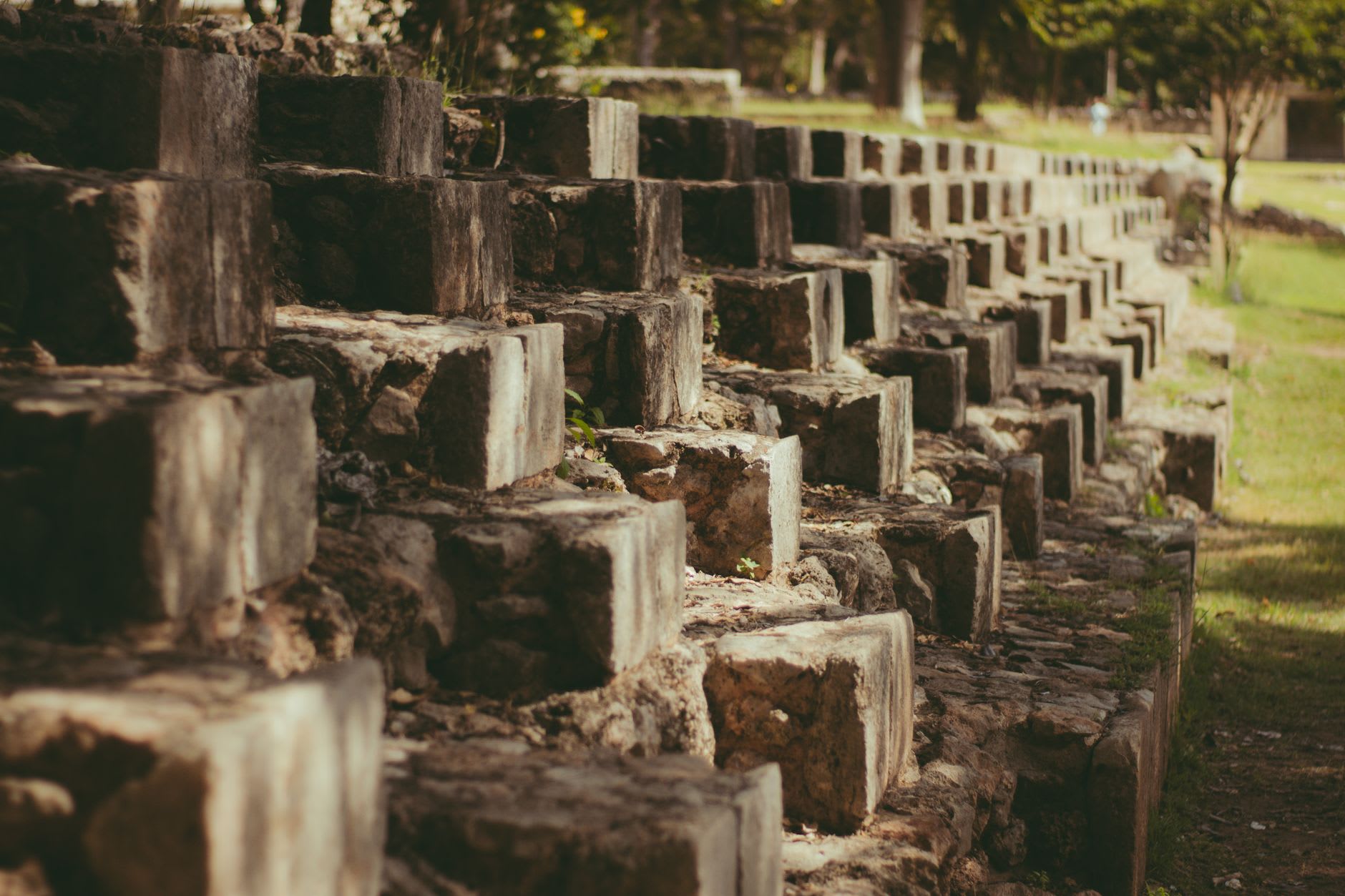
The site’s principal monument is the Pirámide de la Serpiente Emplumada — a stepped platform whose carved stone panels are so iconographically dense that specialists have spent careers unpacking them. The principal motif is a feathered serpent in undulation whose body, curving across all four sides of the platform, encloses seated human figures in niches. These figures, identifiable by their headdresses and gestures as astronomical specialists or calendar priests, hold objects associated with the recording of time.
The carving quality is exceptional. The serpent’s scales are individually rendered, the feathers detailed to the degree of individual barbs, the human figures in the niches expressive in posture and gesture. At the corners, the serpent’s body curves and the figures change position — there is a narrative logic to the program that becomes partially legible if you circumambulate the pyramid slowly, reading panel to panel.
I arrived before nine on a Tuesday in October, and I had the pyramid essentially to myself for forty minutes. A guide with a small German couple was working the north panel; otherwise the only movement was the security guard circling at a distance. Standing at the base of the carved panels at close range, reading the figures — their positions, their objects, their relationships to the serpent’s body — without anyone interrupting: this is why arriving early at pre-Columbian sites matters. The experience of reading these images in solitude is qualitatively different from reading them in a crowd.
The Underground Observatory
The observatory is the part of Xochicalco I had read about and was skeptical of before visiting. An underground cave with a hexagonal opening in the ceiling through which light enters — this seemed, in description, like a minor thing. It is not a minor thing.
The cave is entered from the hilltop through a narrow stone corridor. The interior is a chamber perhaps eight meters long, low-ceilinged, cool even in summer. In the ceiling, a hexagonal shaft approximately forty centimeters across opens to the sky above. Light falls through this shaft in a beam that is narrow and precise — at the spring and autumn equinoxes and the zenith passage dates of Xochicalco’s latitude, the beam falls on the cave floor in positions that the site’s builders calculated in advance and used to calibrate the calendar.
At the zenith passage — when the sun passes directly overhead at this latitude, which happens twice a year at Xochicalco — the beam of light falls vertically through the shaft and illuminates the floor in a perfect circle. The observatory allowed the calendar specialists to determine the exact moment of zenith passage and synchronize their calendar accordingly.
What strikes me about this, standing in the cave with light entering the shaft at noon in October: the engineering precision required to design it. The shaft is not vertical by accident. Its angle, its hexagonal shape, the orientation of the chamber below it — all of this required calculation. The people who built this understood the geometry of the sun’s movement in three dimensions and cut stone to capture a specific moment of that movement for repeatable observation. They have been dead for approximately twelve hundred years.
I was in the cave with two other visitors, a Mexican couple who had come specifically for the observatory. The woman was an engineer. She looked at the shaft and the geometry of the chamber and was quiet for a long time. “They were better at this than we are,” she said eventually. She meant it purely as a compliment.
The Site and the Valley
Beyond the pyramid and the observatory, the site covers a substantial hilltop — plazas, ball courts, residential areas, the remains of a market — with exceptional views over the Morelos valley in all directions. The hilltop position is strategic: Xochicalco controlled the route between the Central Mexican highlands and the Pacific coast lowlands, and the defensive walls on the lower terraces reflect awareness of this position’s value.
The site museum at the base of the hill contains some of the finest carved stelae from the site, removed for conservation, along with an architectural model that helps orient the hilltop layout before you climb. The museum is well designed and the contextual information is clearer than at many Mexican archaeological sites. Spend thirty minutes here first, then climb.
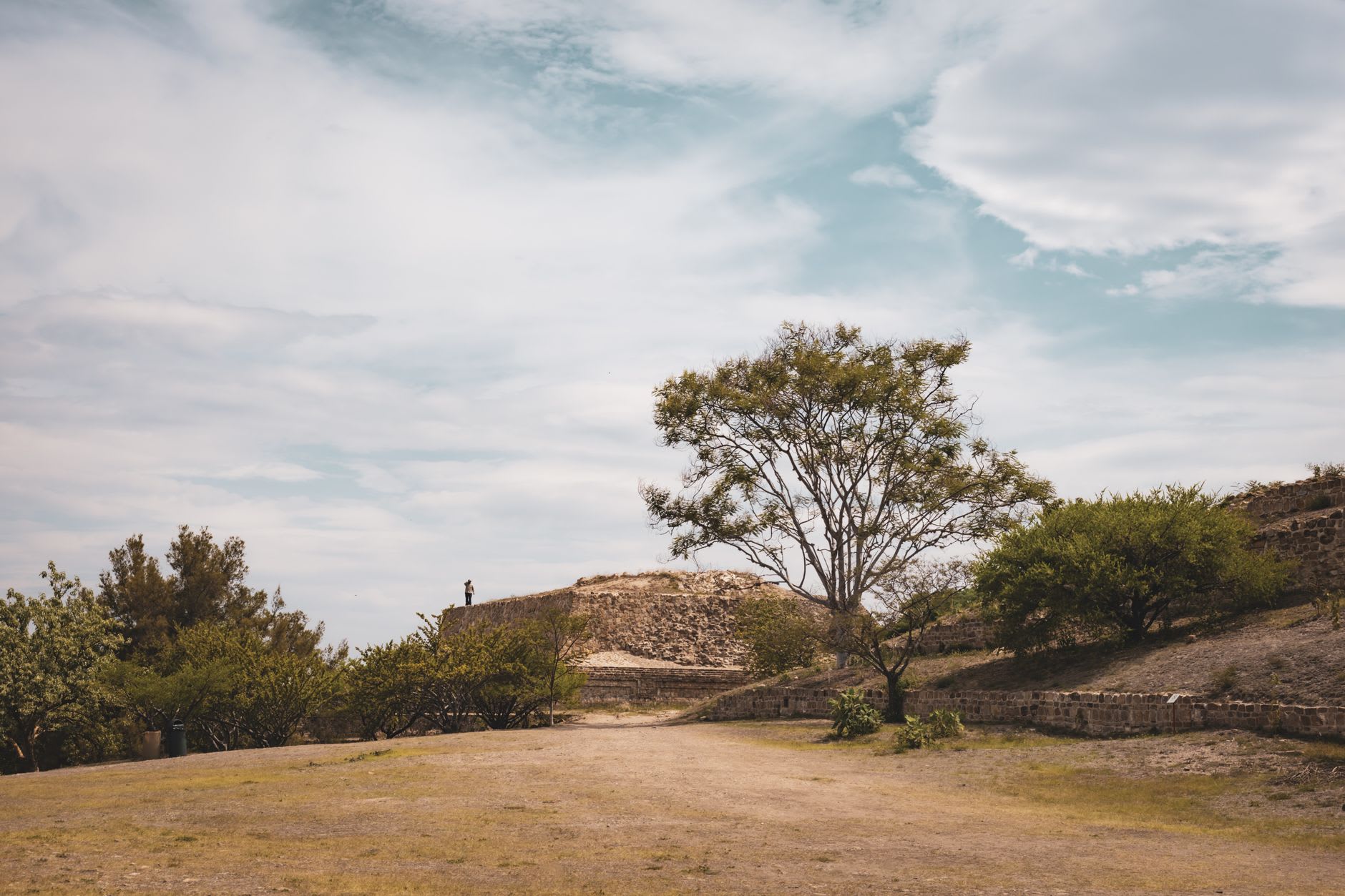
The hilltop also has birds. Red-tailed hawks use the thermals over the site consistently, and a pair of caracaras (the crested black-and-orange falcon that appears on the Mexican coat of arms as its evolutionary ancestor) nest in one of the larger mounds. I watched one perch on the edge of a carved platform for several minutes, regarding the excavated plazas below it with an expression of general satisfaction, as though the site had been built specifically to provide good perch height.
Getting there: From Cuernavaca, combis (collective taxis) to Xochicalco leave from the second-class bus station. Alternatively, taxis from the Cuernavaca center are affordable for the forty-minute drive. The site has parking if you’re driving from Mexico City directly — about ninety minutes on the toll road. Entry includes both the site and the museum.
When to go: Year-round, but May 15 and July 28 are the zenith passage dates when the observatory’s effect is most dramatic — the beam falls vertically through the hexagonal shaft in a way it does on no other days of the year. Arriving before 9am gives you the site largely to yourself. The hilltop has no shade; bring water and sun protection regardless of season.