El Rosario
"Past this town, the peninsula sheds its tourist skin and becomes something wilder and harder to shake."
I pulled over in El Rosario because my fuel gauge was nudging toward empty and my stomach had been making its case for the past hour. That was the practical version. The real version is that you don’t drive the length of Baja without stopping here — it would be like skipping a comma in a sentence that needs one. El Rosario is where the road south stops feeling like a road trip and starts feeling like a commitment. The town sits at around kilometer 280 of the Transpeninsular Highway, and past it, the peninsula becomes something harder to categorize. You feel the shift before you can name it.
The Burrito That Has Its Own Mythology
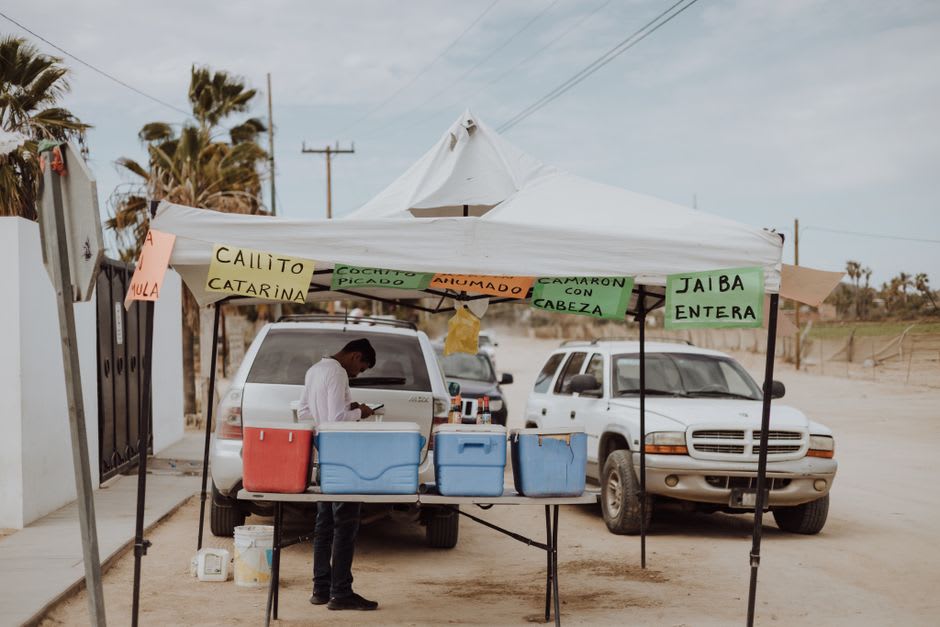
Mama Espinoza’s — the full name is Restaurant Bar Espinoza but everyone uses the family shorthand — has been feeding Baja road-trippers since the 1950s. Doña Anita Espinoza started serving lobster burritos when the Transpeninsular Highway was still being punched through the desert, and the place has expanded sideways over the decades into something that looks exactly like what it is: a family dining room that got too popular to stay small. The walls are covered in photographs, dollar bills pinned to the beams, business cards from truckers and cyclists and overlanders who passed through and felt compelled to leave a trace. I had the lobster burrito and a café de olla, sitting at a plastic table next to a German couple on motorcycles who had ridden from Tijuana. The burrito is not subtle — it’s not trying to be. It’s generous in the way that road food earns the right to be, and you finish it feeling ready for whatever the next 300 kilometres throw at you. The coffee arrives in a clay cup, which is the correct choice.
The Mission the Desert Is Reclaiming
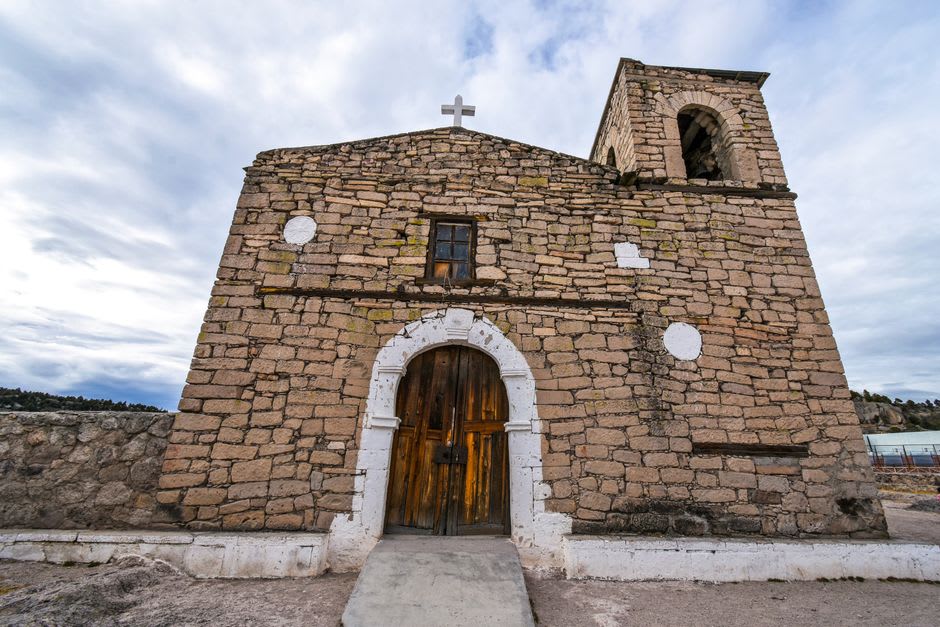
The Dominican mission of El Rosario — officially Misión Nuestra Señora del Rosario de Viñadaco, a name nobody uses in conversation — was founded in 1774 and abandoned by 1832. What’s left sits about two kilometres off the highway, in two separate sites: the crumbling remains of the original building, and then a second, rebuilt when the first location proved untenable. I walked out to the later site in the early evening, when the light was going amber and the cardon shadows were long and strange across the ground. The adobe walls have been dissolving back into the desert for nearly two centuries and the process is almost complete — the forms are still legible, but just barely, the way a word stays readable after water damage. There’s a small interpretive sign and otherwise nothing: no fence, no admission fee, no gift shop. The valley was perfectly quiet except for wind working through the cactus spines. Some ruins feel dead. These feel like the desert simply repossessing what was always its.
The Threshold
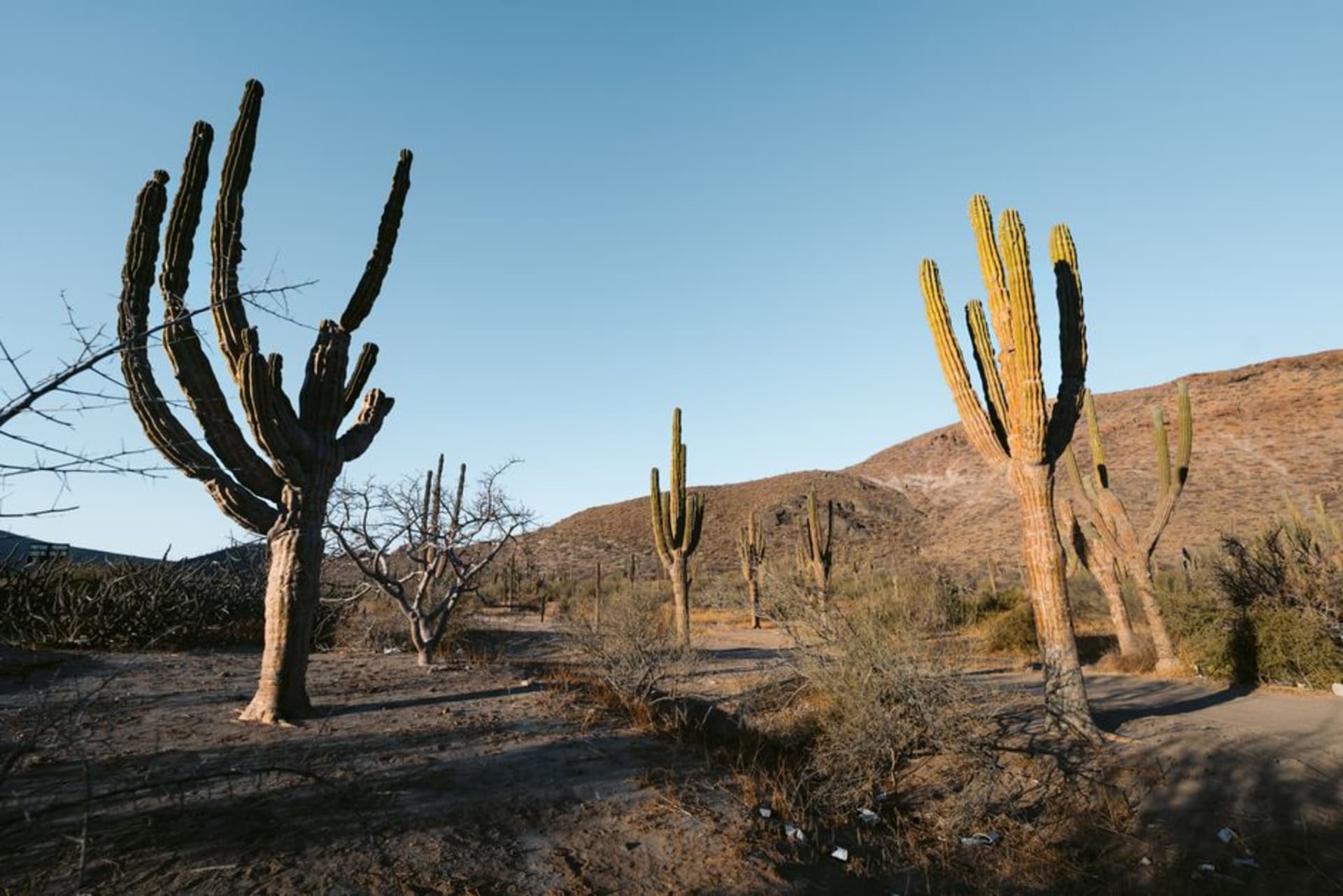
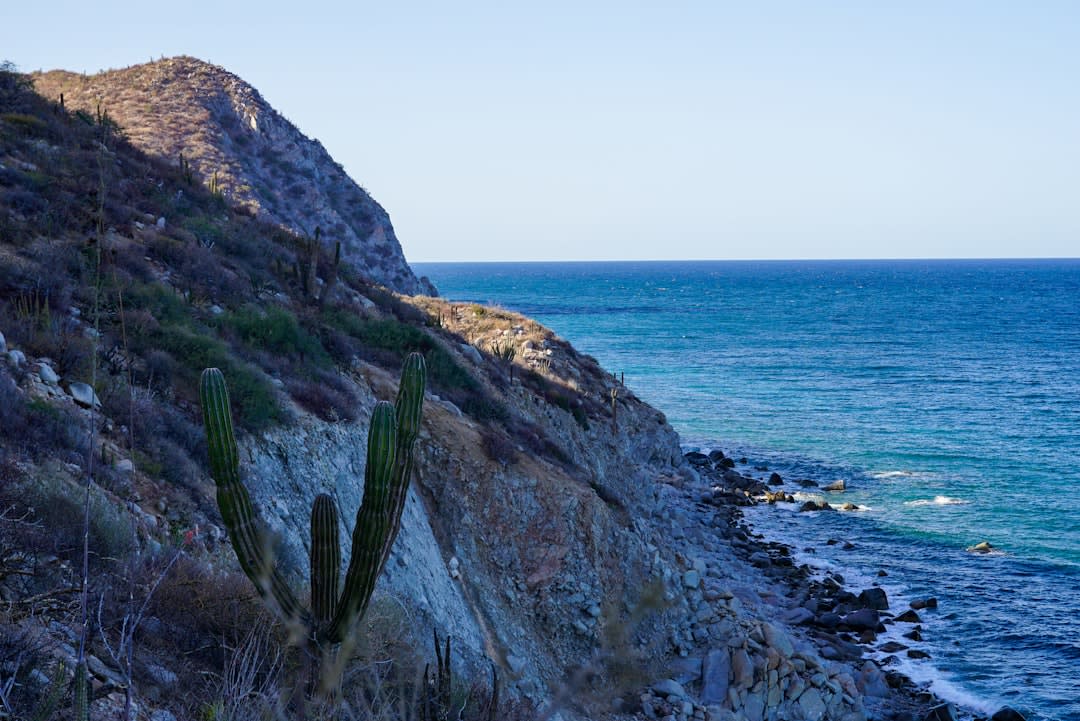
El Rosario doesn’t ask you to linger, and that’s not an insult — it’s accurate. It asks you to stop, eat something real, fill your tank to the brim, and look south with clear eyes. Drive a few kilometres past town on MEX 1 before the light dies and you’ll understand what I mean: the cardon cacti reach heights that feel architectural, some of them centuries old and fifteen metres tall, branching in ways that look deliberate. The road ahead disappears into a desert that has no particular interest in your schedule. There’s a small panadería near the main junction that opens before seven — a bag of pan dulce for the road is the kind of small, correct decision that makes the rest of the day feel handled.
Getting There
El Rosario sits at roughly kilometer 280 on the Transpeninsular Highway (MEX 1), about three hours south of Ensenada and six from the US border crossing at Tijuana. This is driving country — buses are not a realistic option here. Fill up without question at the PEMEX on the highway: the next reliably open station is in Guerrero Negro, 370 kilometres south. There is no circumstance in which leaving with less than a full tank is the right call.