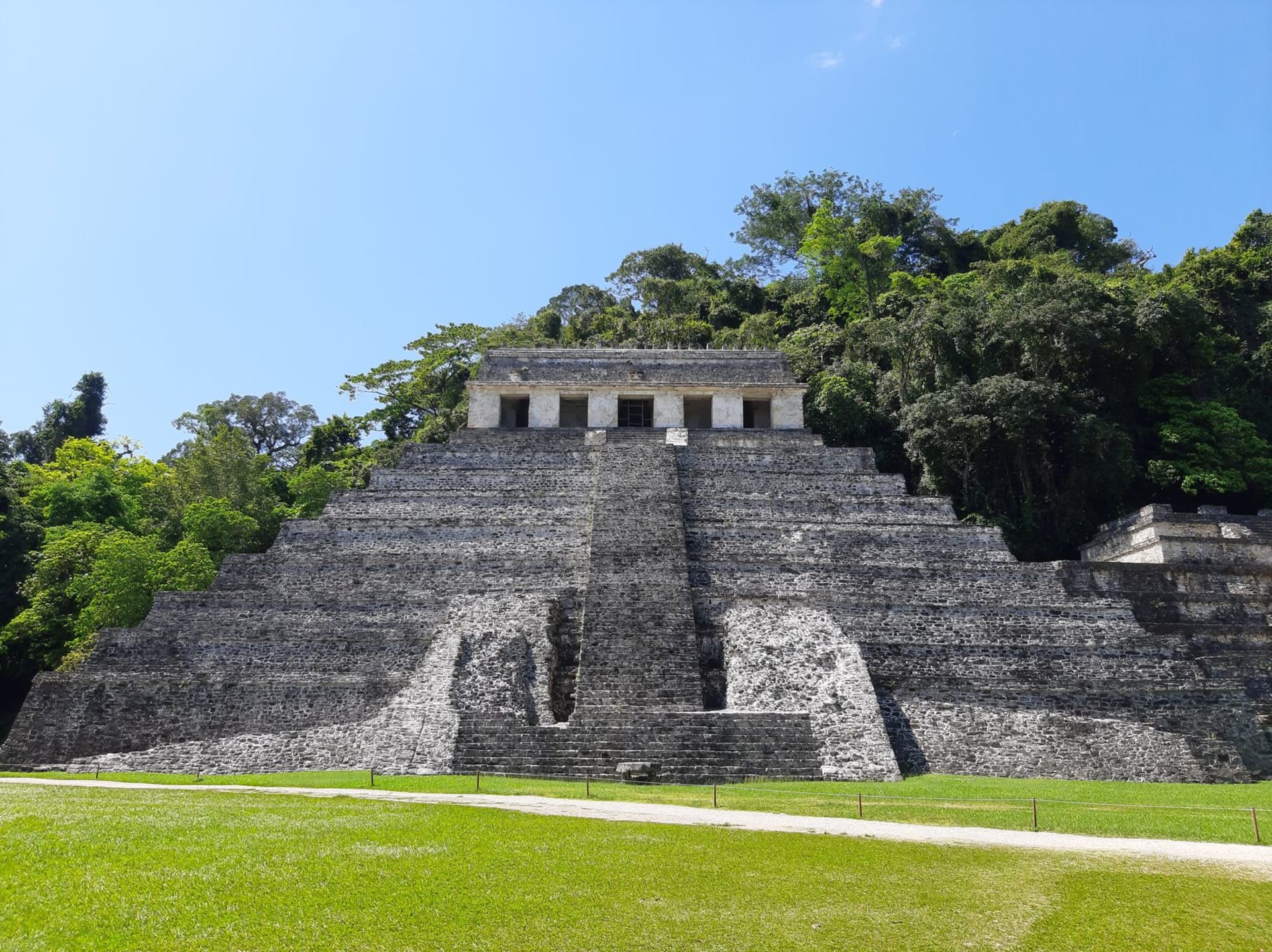
Palenque
"Palenque taught me that ruins can have a perfume — wet stone, orchids, and something I couldn't name."
I arrived in Palenque on a night bus from Oaxaca City, nine hours through the mountains, and stepped out into air so thick and humid that it felt like walking into a warm damp cloth. This is the first thing Palenque tells you about itself: you are in the tropics now, deep in them, and the jungle here is not the dry-season backdrop of the Yucatán but something actively alive and breathing. The small town smelled of diesel and frying tortillas and, underneath everything, the mineral sweetness of the Usumacinta watershed. I found a hotel with a ceiling fan and slept until the macaws woke me at dawn.
The ruins are twenty minutes by colectivo from town, and the approach through the park is its own experience. The path rises into the canopy and then the temples begin to appear — not dramatically, but gradually, the way things that have been waiting a long time for you tend to reveal themselves. Palenque was one of the great powers of the Classic Maya period, and its architecture has an elegance that sets it apart: the corbeled vaults here are taller and more graceful than at most other sites, the stucco relief work more fluid, the compositions less rigid. There is something almost baroque in the detail, a willingness to fill every surface with meaning, but calibrated by an overriding sense of proportion.
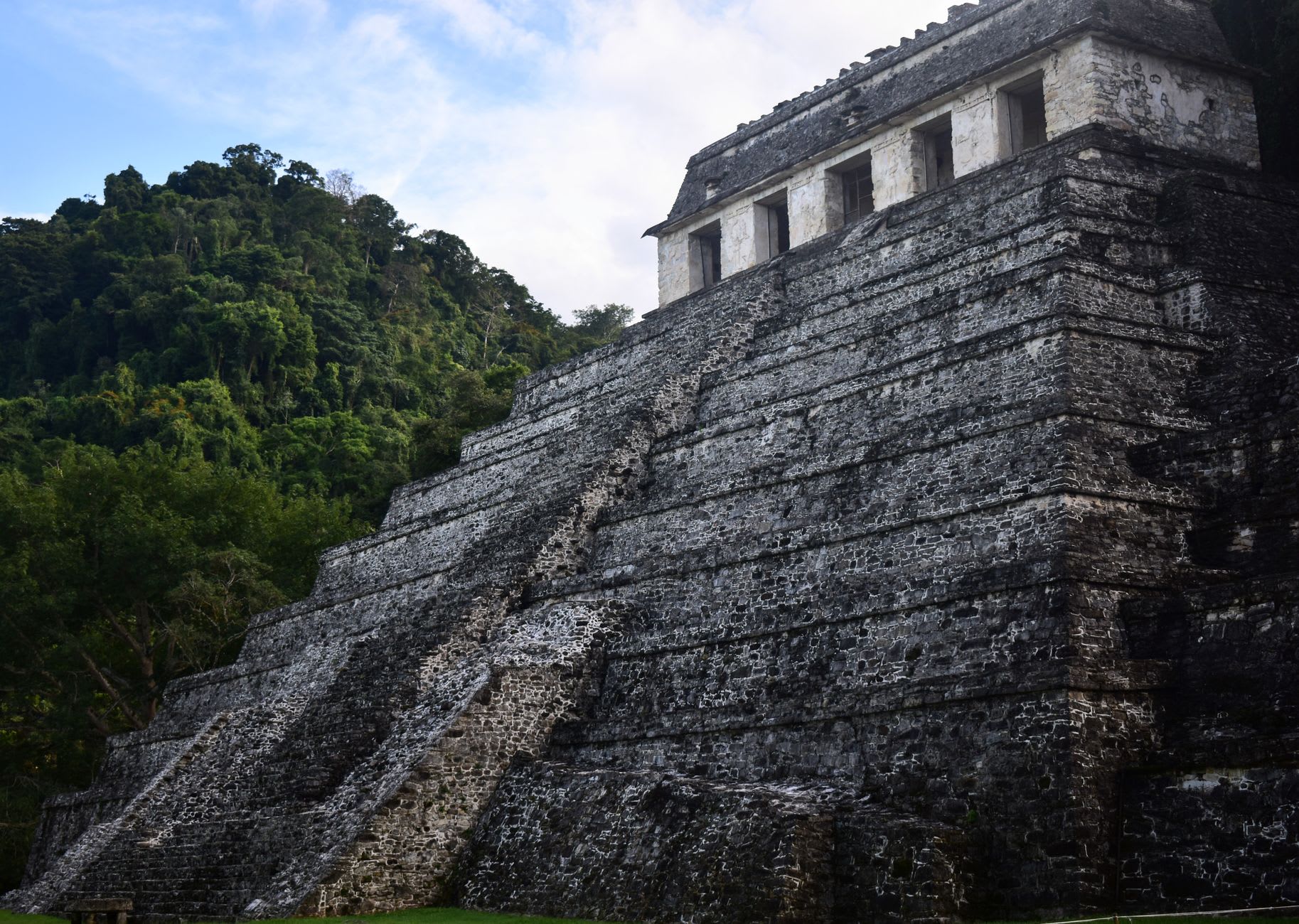
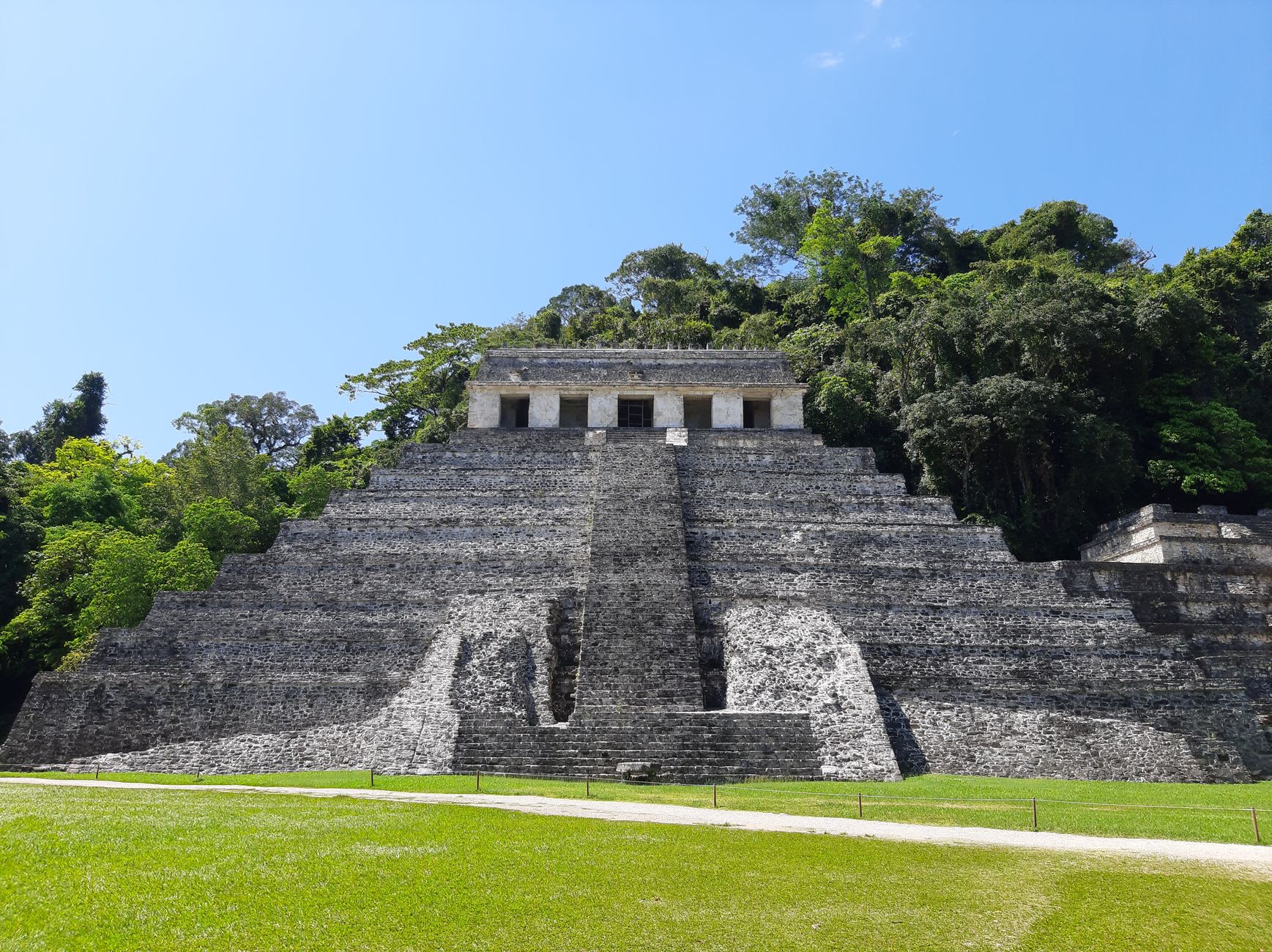
Inside the Temple of the Inscriptions, a staircase descends into the rock — though it is often closed to visitors — to the tomb of K’inich Janaab’ Pakal, the ruler who governed Palenque for sixty-eight years in the seventh century and whose jade death mask is now one of the most recognized images from the ancient world. Even without access to the tomb itself, standing at the base of the temple and understanding what lies below changes the way the structure reads from the outside. The pyramid is not a pyramid in the Egyptian sense — it is a building that happens to contain a burial, designed so that the staircase inside mirrors the one outside, so that Pakal in death could still ascend.
The waterfalls near Palenque are the part that most guides treat as a sideshow but that I find essential. Misol-Ha is forty-five minutes from town, a single large cascade dropping into a pool in a canyon so overgrown that the walls are invisible behind vegetation. You can walk behind the falls on a ledge cut into the rock, standing inside the sound and spray of it. Agua Azul, an hour further, is a sequence of turquoise cascades through limestone that produces a color so improbable it reads as digitally enhanced. It is not. The calcium carbonate in the water catches the light that way, and on a clear day in the dry season, the pools are a blue that has no name in French, only in K’iche’.
Back in town, the market near the bus station sells tamales wrapped in banana leaves, the Chiapas style — larger and richer than the Yucatán variety, filled with pork in red achiote sauce that stains your fingers. Eat two. Drink the horchata from the woman who sets up her stand at the corner by seven every morning. This is not a place that rewards hurry.
When to go: November through March for drier conditions, though even dry season in Chiapas means occasional rain. The waterfalls are at peak flow in October through December — magnificent but some paths close. December and January offer the best balance of passable trails and full cascades.