Africa
Mali
"Mali reminded me that ancient and alive aren't opposites."
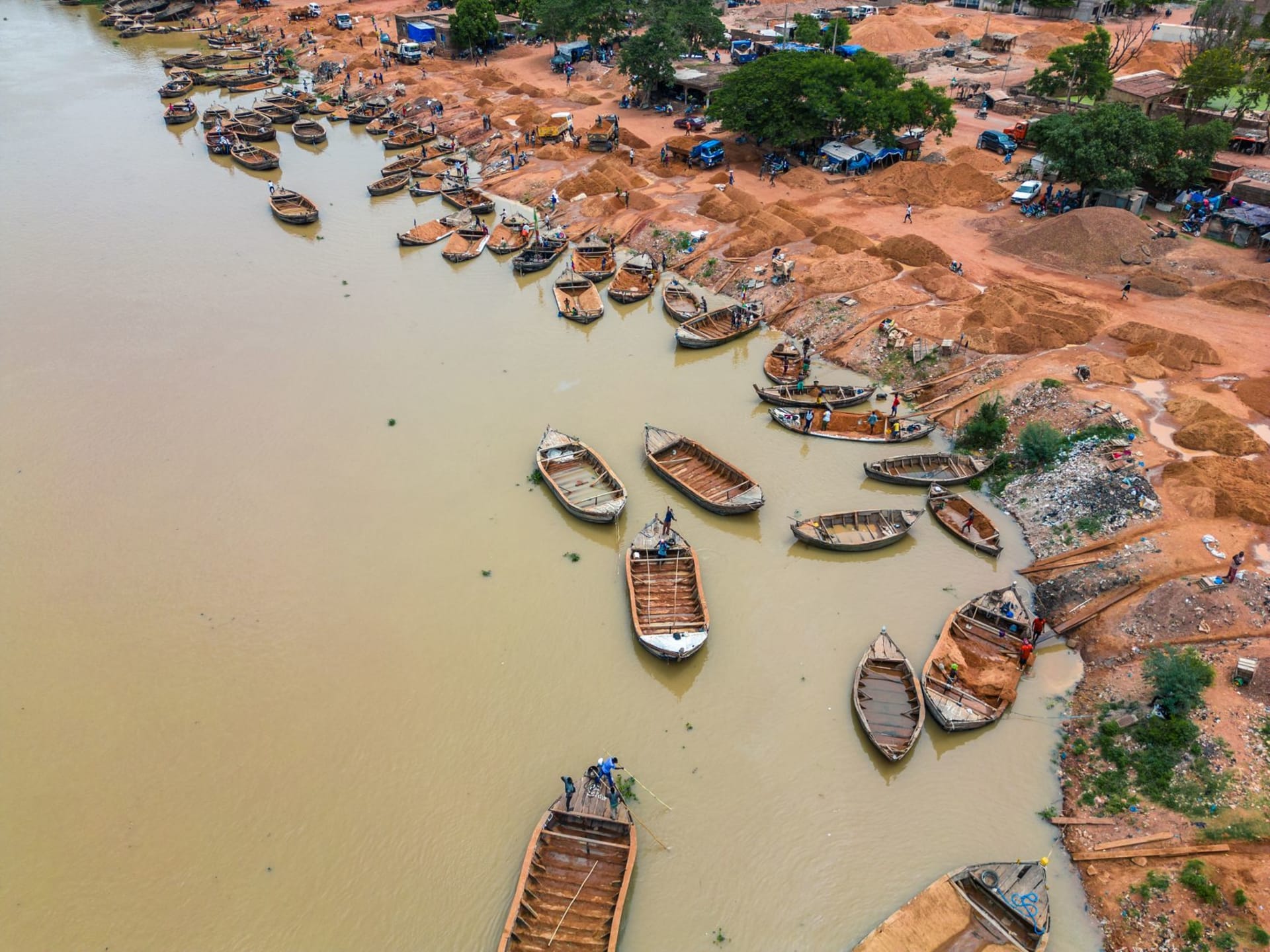
The first thing I noticed wasn’t the heat — though it was formidable, the kind of dry weight that presses on your shoulders from the moment you step off the plane in Bamako. It was the river. The Niger moves through the city slowly, unhurried, carrying wooden pirogues loaded with millet sacks and motorcycle parts and women in bright wax-print cloth who balance everything on their heads with a casual precision that makes the effort invisible. I stood on the bank for a long time the first afternoon, watching that traffic, and understood immediately that this is not a country that looks inward. It follows the water.
Djenné is why people who know Mali talk about Mali. The Grand Mosque — the largest mud-brick structure on earth — is rebuilt every spring by the entire community, a collective plastering ritual where hundreds of people scale scaffolding made of permanent wooden spikes embedded in the walls and smooth fresh banco clay onto the facades. I arrived a week after the annual festival and the mosque was still fresh, the surface intact and almost glowing in the morning light, its conical minarets capped with ostrich eggs. Nothing in a photograph conveys the texture of the thing — pitted and organic, like the earth itself decided to become architecture. The Monday market in Djenné spills around the mosque and into the surrounding streets, selling smoked fish from the Niger, hand-dyed indigo cloth from Ségou, and kola nuts in quantities that suggest a country-sized appetite.
The Dogon Country, carved into the Bandiagara Escarpment southeast of Mopti, is the other Mali that stays with you. Villages cling to cliffs the color of rust, some of them inhabited, some of them ancestral Tellem settlements built high in the rock face centuries before the Dogon arrived — granaries so perfectly placed and so inaccessible that no one has fully explained how they were constructed. Walking between villages with a local guide who grew up in one of them, stopping to watch elders play awale in the shade of a baobab, is one of those travel experiences that feels genuinely apart from the tourism economy. Or it did, before the instability of recent years made many itineraries impossible.
When to go: November through February is the only window I’d recommend. The harmattan wind blows dust across everything and mornings are surprisingly cool. From March onward the heat becomes punishing, and the rainy season from June to September makes overland travel difficult and the Bandiagara Escarpment paths treacherous. Aim for the Djenné market festival in late January or early February if you can time it — the city is at its fullest and the mosque freshly replastered.
What most guides get wrong: They present Mali as a ruin — a place defined by what it lost to conflict and instability since 2012. That framing is not entirely wrong, but it buries what still exists: living mud architecture maintained by living communities, a river culture that hasn’t changed its rhythms in centuries, and a musical tradition — the blues of West Africa, Wassoulou, kora-and-balafon — that shaped American music in ways the credit rarely acknowledges. Mali is genuinely difficult to visit right now. Parts of it are impossible. But the Mali that exists is not a museum piece. It’s a civilization still in use.