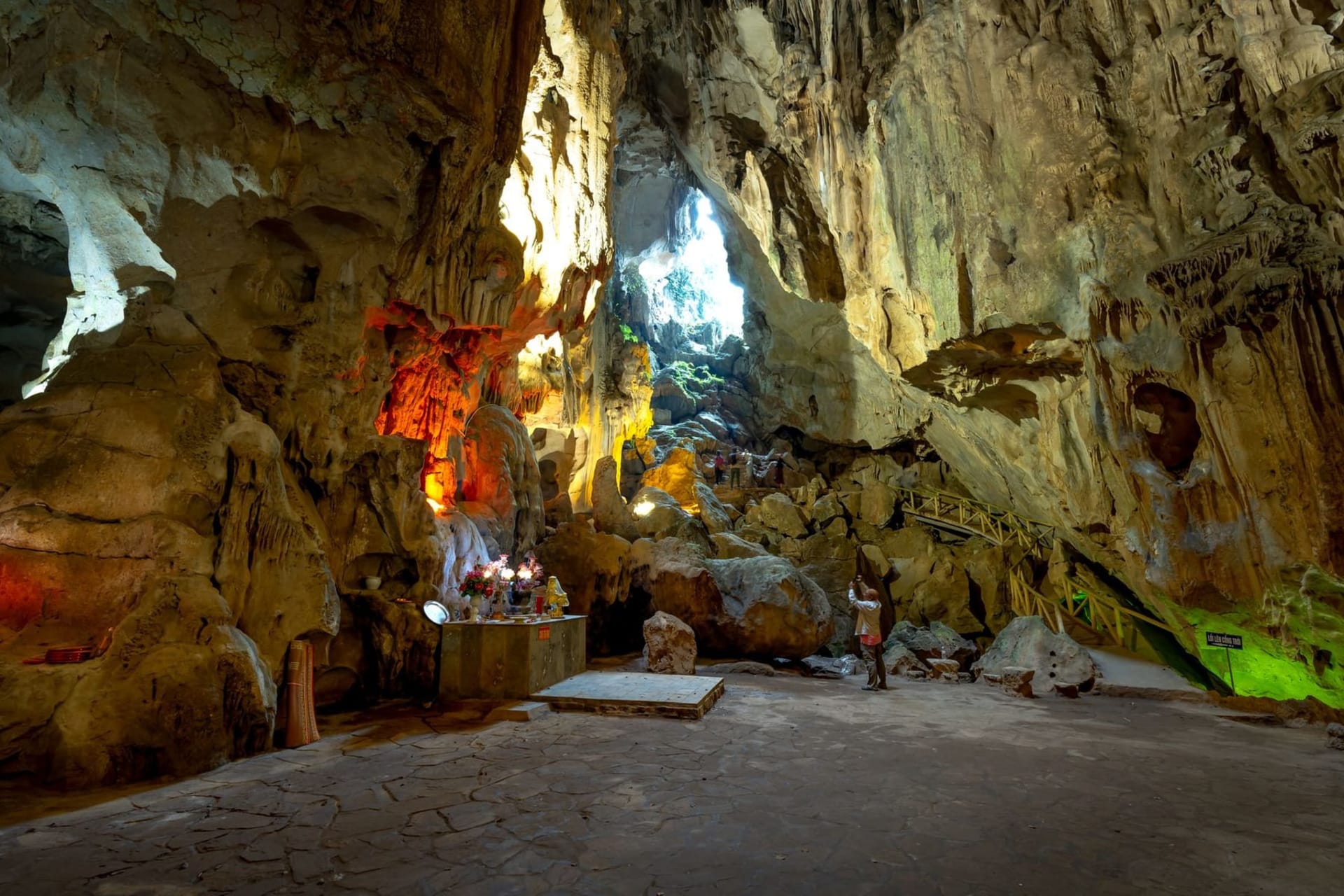
Mulu Caves
"The Sarawak Chamber at Mulu is so vast that the far wall disappears — your torch finds only darkness."
The world's largest cave chamber and the nightly exodus of three million bats spiral-rising at dusk.
The Royal Mulu Resort sits at the end of a twenty-minute boat ride up the Melinau River, and by the time the longboat engine cuts out and you drift the last few meters into the dock, you already understand that you have arrived somewhere that operates on a different scale. The jungle is denser here. The silence is wetter. Everything smells of clay and vegetation and something older underneath — something underground.
Into the Sarawak Chamber
The guides at Mulu do not let you walk to the Sarawak Chamber alone, which is probably sensible. The path through Gua Air Jernih passes through three antechambers before the ceiling lifts away and the walls retreat beyond the reach of any light you have brought with you. I stood at the entrance with my headlamp pointed forward and felt, for the first time in my adult life, genuinely unable to perceive the space I was standing in. The Sarawak Chamber is 600 metres long and 415 metres wide, with a ceiling that clears 80 metres at its lowest point. The numbers are useless. What registers instead is the absence — an absence so complete it has its own texture, its own pressure.
Lia grabbed my arm near the back of the group and whispered that it felt like standing inside a held breath.
The Bat Exodus at Dusk
We had been told about the bats before we came. Three million wrinkle-lipped free-tailed bats, roosting in Deer Cave, emerging every evening just before dark in a column that spirals upward from the cave mouth and fans out over the Melinau valley. We sat on the wooden benches outside the cave entrance with sixty other tourists and waited. A bat hawk circled. The light went amber.
What nobody had told me was the sound. The column emerges in near-silence — just a low, dry whisper of wings — and then as the spiral tightens against the sky it produces a sound like distant applause, or rain arriving on a tin roof from very far away. I had expected spectacle. I had not expected it to be so intimate. We stayed until the last stragglers cleared the cave mouth and the hawk had made its final pass and the sky had gone properly dark.
Getting There and Moving Around
Mulu is accessible only by MASwings flight from Miri or Kota Kinabalu — there are no roads in. The park headquarters and all cave tours operate out of the same central boardwalk area, a single elevated wooden path through the forest that connects the resort, the park office, the cooking stalls, and the cave trailheads. At night the boardwalk belongs to the civets and the flying squirrels. Meals are mostly rice and grilled fish from the canteen near the ranger station; the laksa they serve at breakfast, made with a broth that tastes of dried shrimp and something fermented and good, became the thing I looked forward to most each morning.
When to go: March through October offers the driest conditions and clearest visibility inside the caves. The bat exodus happens year-round, but arrive at the Deer Cave viewing platform at least an hour before sunset to secure a good position on the benches.