
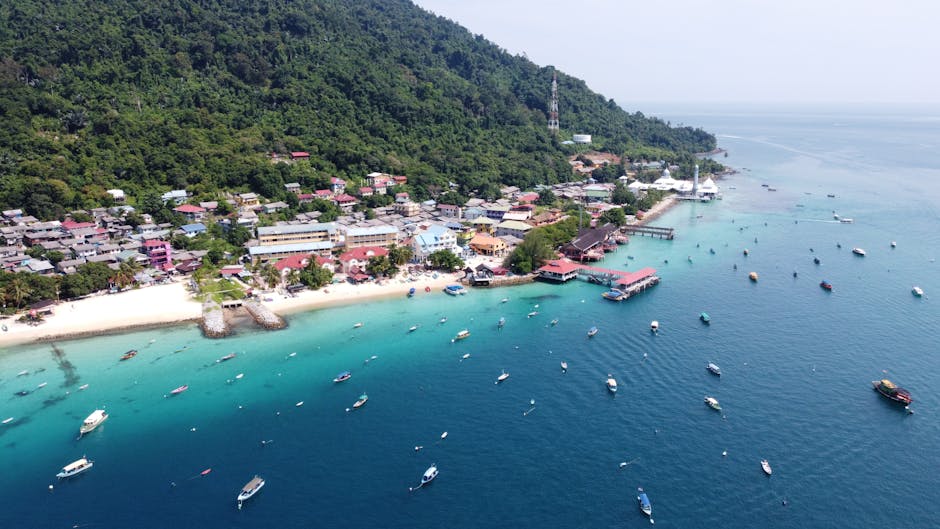
The Perhentians are what you imagine when someone says tropical island — white sand, water so clear it barely looks like water, and jungle pressing right up to the beach like it is trying to reclaim what the sand took. Kecil is the backpacker island, all hammocks and beach bars and dive shops run by people who came for a week ten years ago and never found a reason compelling enough to leave. Besar is quieter, with a handful of resorts tucked into coves that feel private even in peak season. We stayed on Kecil and visited Besar by water taxi for the contrast. Both are worth your time, but they are different holidays.
Long Beach on Kecil is the social hub — a crescent of white sand backed by budget chalets and restaurants that serve fresh fish, banana pancakes, and the kind of fruit shakes that make you wonder why anyone drinks anything else. The beach faces east, which means sunrise is the show — we woke before six most mornings and watched the sky turn from grey to pink to gold while the fishing boats headed out and the water shifted through every shade of blue the spectrum allows. By eight, the snorkellers were in the water. By nine, the divers were on the boats. By ten, the rest of the beach had surrendered to the hammocks.
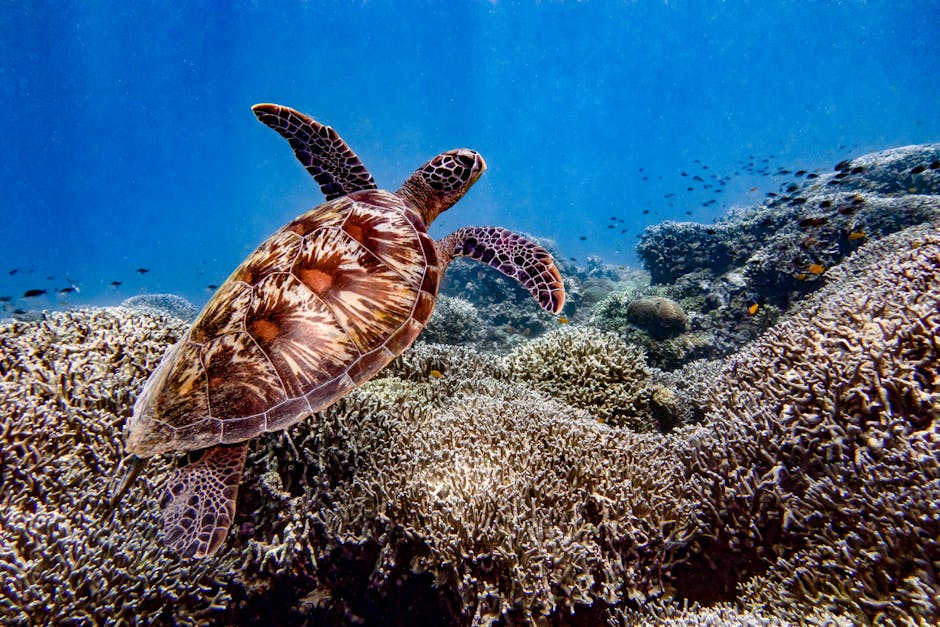
We snorkelled straight off Long Beach and found ourselves surrounded by blacktip reef sharks — small, elegant, completely indifferent to our presence — and sea turtles that glided past with the calm authority of creatures who have been doing this for a hundred million years. The coral gardens here rivalled anything we had seen in Indonesia. Hard coral in brain-like formations, soft coral waving in the current, and fish in such density and variety that the water itself seemed to be made of colour. The house reef off Coral Bay, a ten-minute walk over the headland from Long Beach, was even better — shallower, more accessible, and home to a resident green turtle that the locals had named but whose name I have forgotten. She surfaced to breathe every few minutes, unbothered, majestic, and enormous.
The diving is excellent and affordable — a PADI Open Water course here costs a fraction of what it costs in Australia or the Caribbean. Shark Point lives up to its name, with blacktip and whitetip reef sharks circling in the blue. Sugar Wreck, a sunken sugar barge encrusted with coral, is home to schools of batfish and the occasional turtle. Our divemaster had been living on Kecil for six years and spoke about the reef with the proprietary pride of someone describing their garden.
Evenings were the best part. We ate grilled fish on the beach — red snapper, squid, prawns — chosen from an ice display and cooked over charcoal while we sat on cushions in the sand. The bioluminescent plankton sparked in the shallows when we walked to the water’s edge after dark, each footstep triggering a burst of blue-green light that looked like something from a science-fiction film but was simply biology doing what it has always done, invisibly, until you step into it.
The jungle interior of Kecil is worth exploring — a trail crosses the island from Long Beach to Coral Bay in about twenty minutes, through forest thick with monitor lizards and the sound of things moving in the undergrowth. A longer trail leads to a viewpoint above the island where both coasts are visible simultaneously, the sea impossibly blue on both sides, the jungle a dark green strip between them.
When to go: March to October only — the islands effectively close during monsoon season (November to February) and most accommodation shuts down. June and July are peak; March and October offer the best balance of weather and solitude. Book accommodation in advance for June-August.