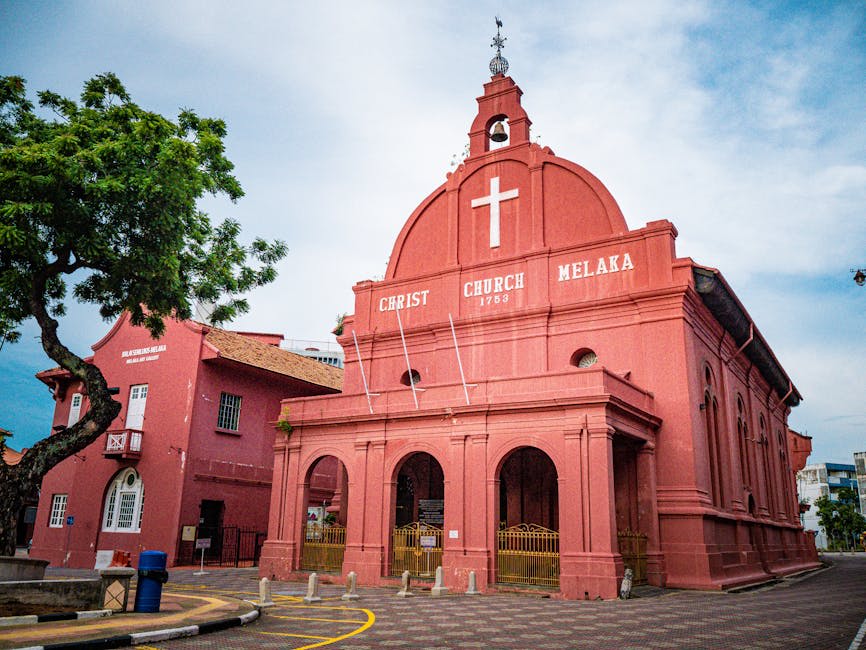
Malacca wears its history like jewellery — conspicuously, proudly, and in layers. The Dutch left the Stadthuys and Christ Church, both painted a terracotta red that glows at sunset. The Portuguese left A Famosa fortress and the Eurasian community of the Portuguese Settlement, where descendants of sixteenth-century colonizers still speak a creole Portuguese and cook devil curry with a recipe that has survived five hundred years of geography and politics. The British left their administrative buildings. And the Malay, Chinese, and Indian communities wove through everything, creating a Peranakan culture whose flavours, colours, and architecture are unlike anything else in Southeast Asia.
The Baba and Nyonya Heritage Museum is a time capsule of Peranakan opulence — tiled floors in geometric patterns imported from Europe, carved furniture inlaid with mother-of-pearl, beaded slippers made with a stitching technique so fine each pair took months to complete. The guide told us stories of merchant families who bridged Malay and Chinese cultures, who spoke a hybrid language, who ate food that combined the spices of the Strait with the techniques of Fujian. The house itself is the exhibit — every room a demonstration of what happens when cultures collide and decide, against all historical odds, to create something new together.
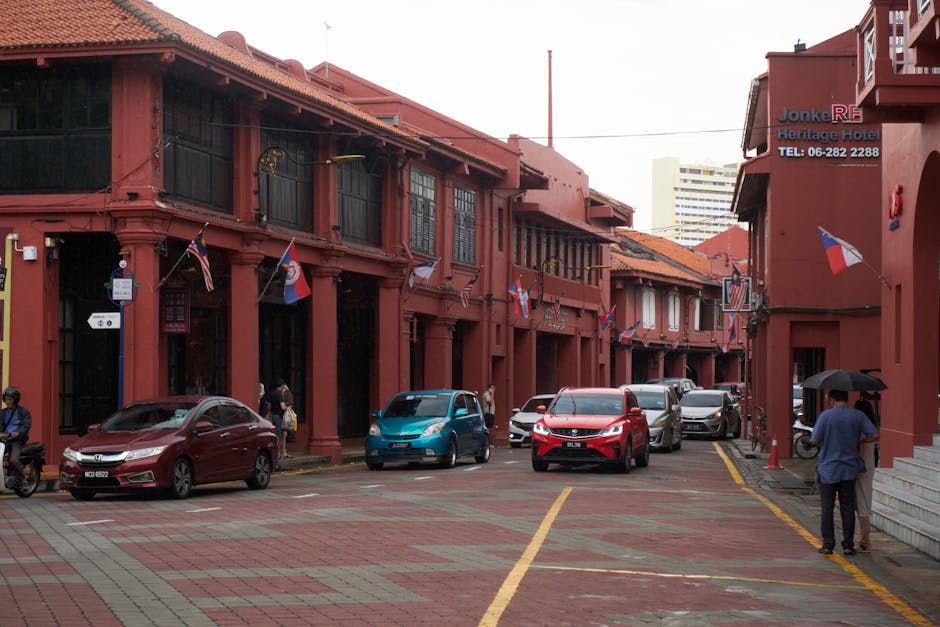
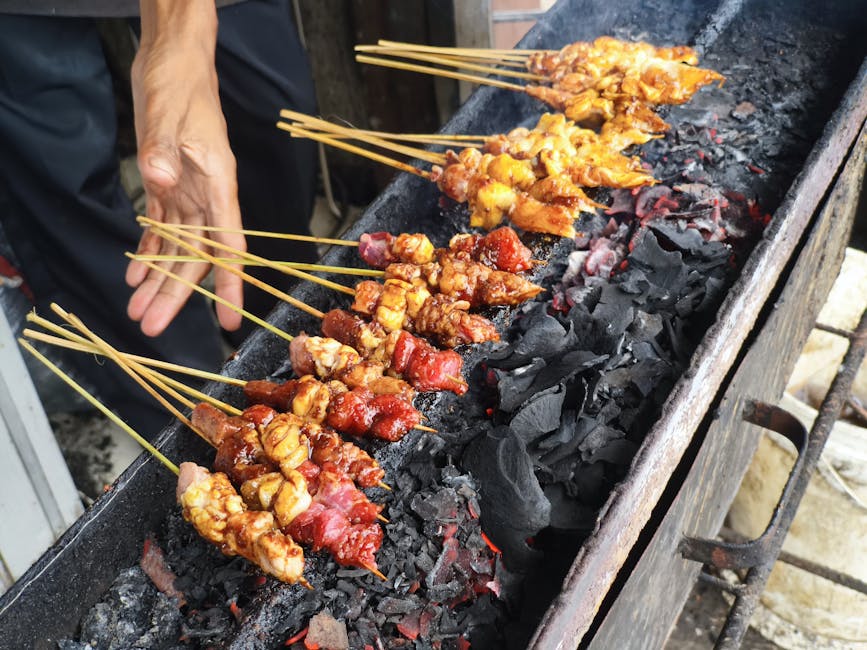
We walked Jonker Street on a Friday night when it transforms into a night market — the entire road becomes a river of satay, coconut pancakes, pineapple tarts, and trinkets. The chicken rice balls are Malacca’s signature — the same Hainanese chicken rice found across Southeast Asia, but here the rice is shaped into small spheres, a tradition born from hawkers who needed portable food for workers. We ate them at Chung Wah, standing at a counter, the rice dense and fragrant and the chicken poached to a silk-smooth texture that required no knife. By day, the same street is a quieter affair of antique shops and cafes in restored shophouses, their five-foot-ways shaded and cool, the tile work on the floors worn smooth by a century of feet.
The river that runs through the old town has been cleaned and lined with murals and walkways. We took a river cruise at dusk, passing under footbridges and past restored warehouses, the street art on the riverbanks telling stories of Malacca’s trading past — Portuguese galleons, Chinese junks, spice merchants, and the inevitable cat murals that seem to follow George Town’s lead. The cruise is touristy. It is also the best way to understand how this small city at the narrowest point of the Strait became, for a few centuries, one of the most important trading ports on earth.
St Paul’s Church on the hill above the old town is a ruin now — roofless, the walls open to the sky — but it is where Francis Xavier was temporarily buried before his body was moved to Goa, and standing among the old Dutch and Portuguese tombstones at sunset, looking out over the Strait of Malacca, the weight of centuries settles on you. This hilltop has been a place of worship and power since the Malacca Sultanate, and every civilization that followed simply built on top of what came before. The layers are literal.
The food extends beyond chicken rice balls. Nyonya laksa — coconut-rich, fragrant with laksa leaf and galangal — is the regional version and it is outstanding. Satay celup, Malacca’s contribution to the satay universe, involves skewering raw ingredients and dipping them into a communal pot of bubbling peanut sauce. Cendol from the stalls near the river is among the best in Malaysia. And the Portuguese Settlement, a short ride from the centre, serves grilled seafood on open-air terraces overlooking the water, the devil curry carrying a heat that lingers long after the meal.
When to go: March to October is driest. Friday and Saturday nights are essential for the Jonker Street night market. A day trip from KL works, but an overnight stay lets you feel the city exhale after dark — and the morning light on the river, before the tourist boats start running, is worth waking early for.