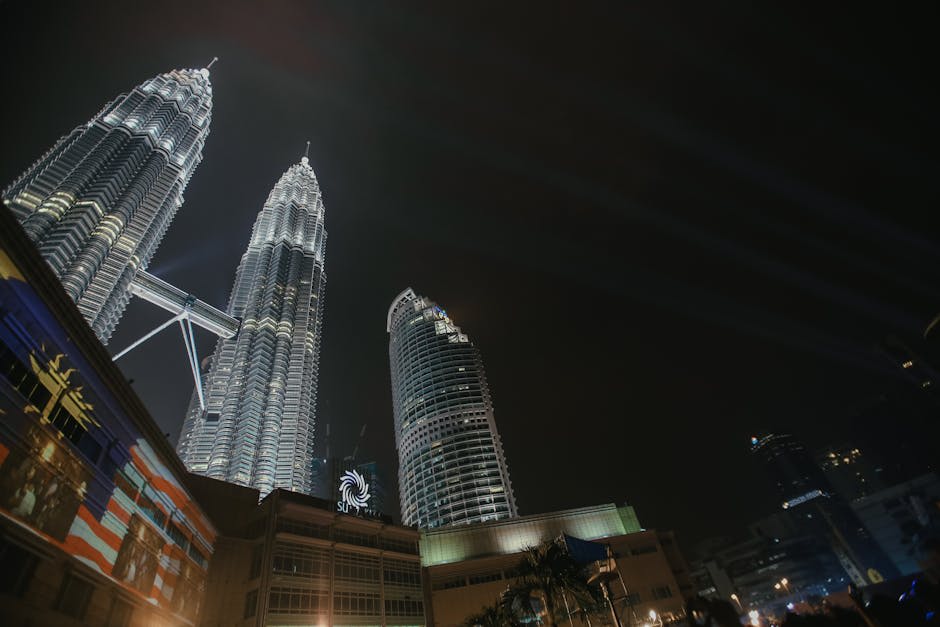
Kuala Lumpur hits you with its contradictions and then dares you to pick a favourite. The Petronas Twin Towers catch the light like two silver needles threading the sky, while at their feet, in the wet markets of Chow Kit, vendors pile dragonfruit and rambutan into precarious mountains. This is a city that has never chosen between tradition and ambition — it simply decided to have both.
We spent mornings in the colonial quarter around Merdeka Square, where the old Sultan Abdul Samad building watches over a cricket green with Moorish arches and a clock tower that would not look out of place in Marrakech. The architecture tells a compressed history — British colonial, Mughal-inspired, Art Deco, and the aggressive modernism of the Petronas Towers, all visible from a single vantage point. The National Mosque nearby, with its umbrella-shaped roof and reflecting pools, is one of the most beautiful modern mosques I have seen anywhere — open, light-filled, and welcoming to non-Muslim visitors outside prayer times.
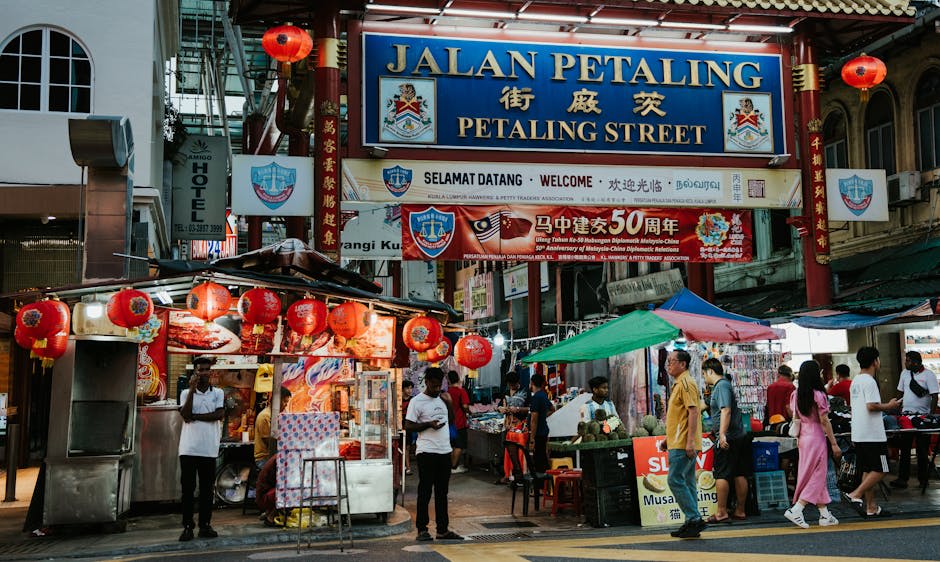
The food scene is where KL becomes genuinely extraordinary. Jalan Alor at dusk is a sensory avalanche — satay smoke, sizzling woks, the clatter of plastic chairs being dragged to tables. We ate our way down the entire street over three nights: grilled stingray wrapped in banana leaf, clay pot chicken rice, and char kway teow that held its own against Penang’s version, though I would never say that in George Town. The banana-leaf restaurants of Bangsar serve what I believe is the best Indian food outside India — rice and curries and chutneys spread on a fresh banana leaf, eaten with your hands, the flavours layered and precise and completely devastating. Brickfields, KL’s Little India, offers a dirtier, more chaotic, more authentic version of the same experience, with dosai and tandoori so good they made me forget I was eight thousand kilometres from Chennai.
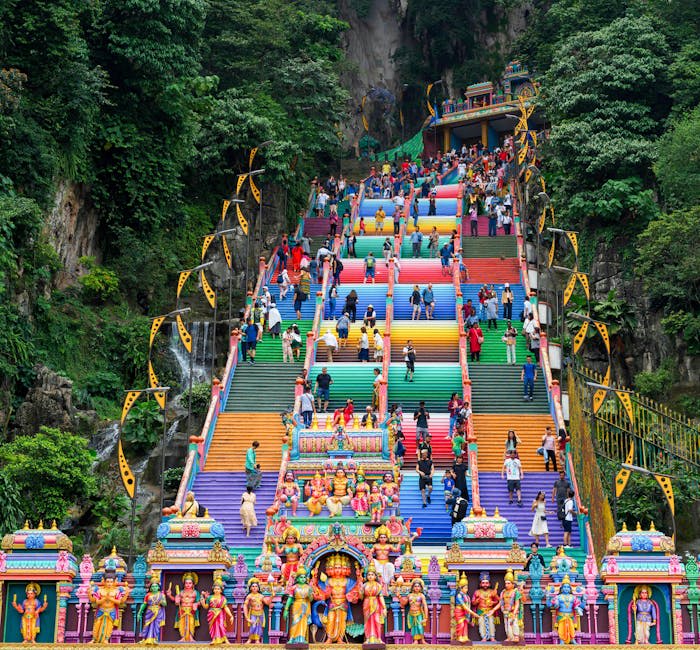
Batu Caves is the day trip everyone makes, and for once the popularity is justified. The 272 rainbow-painted stairs leading up to the cave temple are a cardiovascular challenge and a visual spectacle — Hindu devotees, tourists, and the resident macaques all competing for space on the steps while the golden statue of Lord Murugan presides from below. Inside the main cave, the cathedral ceiling opens to the sky and shafts of light fall on the shrine like something staged. We went early on a Tuesday and had the upper caves nearly to ourselves.
The Islamic Arts Museum, tucked behind the botanical gardens, is one of the most underrated museums in Southeast Asia. The collection of Qurans, architectural models, textiles, and ceramics is presented with a care and curatorial intelligence that would shame many European institutions. We spent three hours there and could have spent six.
For nightlife, the rooftop bars clustered around Bukit Bintang offer cocktails with views that justify the markup. Heli Lounge Bar is literally a helipad on the thirty-fourth floor — no walls, no ceiling, just you and the skyline and a drink. It sounds gimmicky. It is transcendent.
When to go: May to July and December to February offer the driest stretches, though KL’s equatorial showers are brief and theatrical. Avoid major holidays if you prefer thinner crowds. Ramadan transforms the city’s food scene — the Ramadan bazaars are worth planning around.