Borneo Rainforest Lodge
"The Borneo rainforest is so alive that sitting still inside it for an hour constitutes a full day's entertainment."
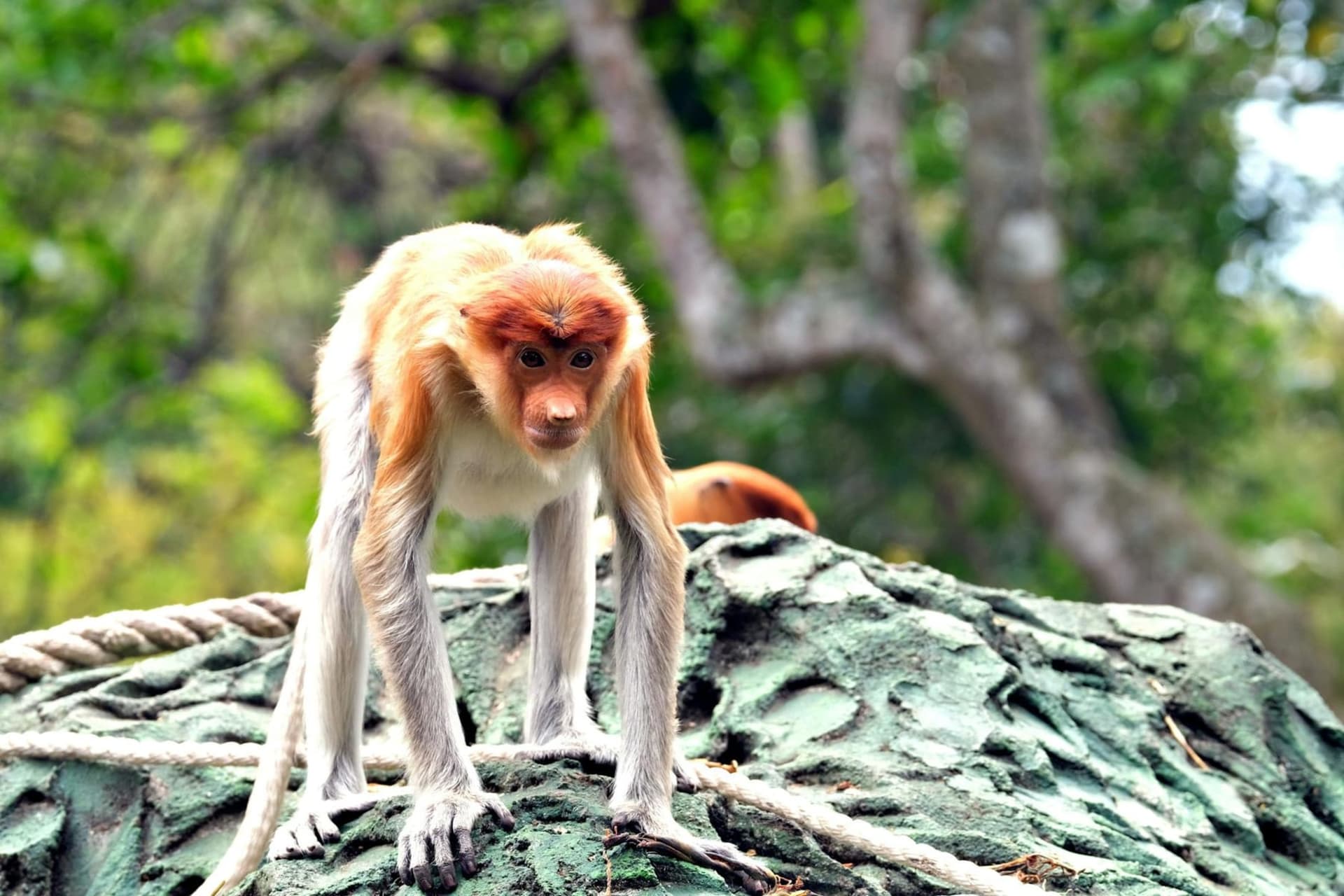
Ancient Borneo forest with river cruises past proboscis monkeys and orang-utans at tree-line height.
The boat leaves the Kinabatangan River dock at Sukau before five in the morning. No coffee, no conversation — the guide, a young Kadazan man named Jeffery, communicates entirely by pointing. Within fifteen minutes we are watching a family of proboscis monkeys arrange themselves in a riverside fig tree, the males with their improbable fleshy noses catching the first amber light of the day. Lia reaches for my arm without looking away from the bank. Neither of us says anything. There is nothing to add.
The River and What Lives On It
The lower Kinabatangan is one of the last places on Borneo where the river wildlife has not yet receded beyond the treeline. Orang-utans nest in the canopy above the water, building fresh sleeping platforms each evening from broken branches — you can spot the previous night’s abandoned nests by their slightly browned leaves. Pygmy elephants move in herds along the muddy banks in the early morning, enormous and oddly delicate, their tracks still pressed deep into the clay when we drift past after sunrise. I had expected to appreciate Borneo intellectually. I had not expected to feel implicated in it, as if the forest were watching us back.
The lodge itself — a cluster of wooden chalets on stilts above the flood plain — smells of damp earth, lemongrass, and something sweeter I cannot identify. The cook prepares nasi lemak with sambal from dried Kinabatangan river prawns each morning, and for dinner, ikan patin in a turmeric broth that turns the rice golden. Everything tastes of somewhere very specific.
What I Did Not Expect to Find
The genuine surprise came on the second afternoon. Jeffery led us into the forest on foot — off the main boardwalk, through secondary growth that had reclaimed an old logging track, where the undergrowth pressed close enough to brush both shoulders. He stopped at a strangler fig roughly four metres across, growing from the ruins of a dipterocarp it had outlasted by decades. Wedged into a root buttress at knee height was the fresh, still-warm print of a Sunda clouded leopard — an animal so rarely encountered that most guides go entire careers without seeing one. We did not see it either. But we stood there for a long time looking at the print, which felt like enough.
The rainforest makes its case not through the dramatic but through accumulation. A rhinoceros hornbill landing on a branch twenty metres up. The sound of the forest at two in the afternoon — not silence but layered noise, insects and birds and something dripping. A flying lizard extending its membrane wings between two mahogany trunks and sailing, improbably, fifteen metres to the next.
Getting There and Getting Lost
Sukau is reached from Sandakan — a three-hour drive east along the Kinabatangan valley — or more conveniently by small van from Kota Kinabalu, a journey of roughly five hours. The road from Lahad Datu skirts oil palm plantations that press right to the forest edge, and for much of that drive the scale of what has been lost makes the river corridor feel all the more improbable and urgent. The lodge handles all transfers from Sandakan.
When to go: March through October offers the driest conditions and the highest wildlife visibility along the Kinabatangan, though the river is navigable year-round. The period from July to September is peak season for orang-utan sightings as fruiting trees attract them to the riverbanks.