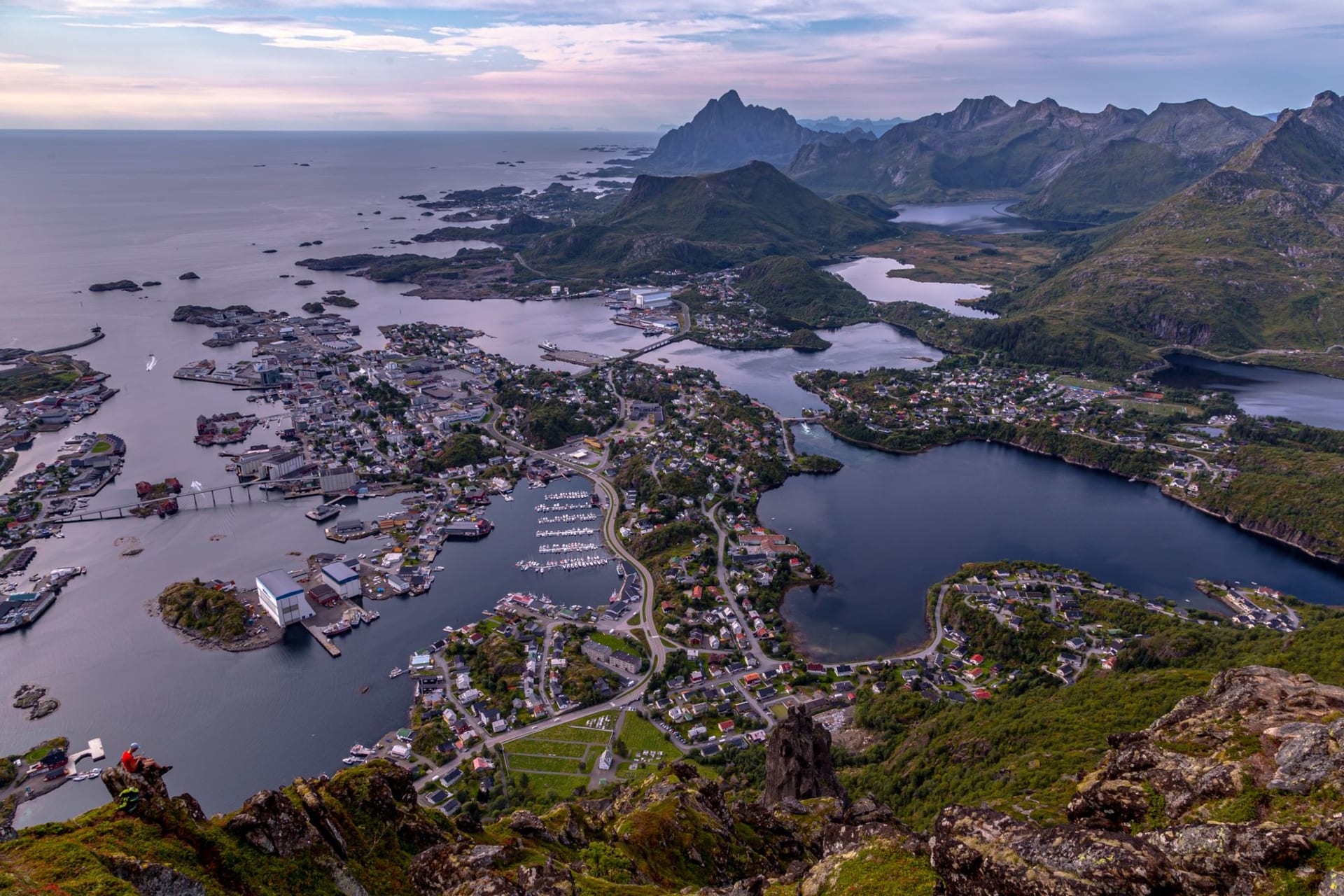
Henningsvær
"There is a football pitch here that is also, essentially, a dock — which tells you everything about Henningsvær's relationship with the sea."
The water taxi from Svolvær drops you at a small quay and then immediately reverses out into the fjord, and suddenly you are standing in Henningsvær with nowhere to go but forward. Which turns out to be exactly the right approach. This village — built across a cluster of tiny islands connected by bridges barely wide enough for a car — operates on a different logic than the rest of Lofoten. It is compact where the rest of the archipelago is vast. It is dense with art galleries, bakeries, and climbing gyms where other Lofoten villages have rorbu and silence.
The famous football pitch sits at the southern edge of the village, its touchlines running up to railings at the edge of the sea. On a clear day, looking down the pitch from the goal, the mountains of Vestvågøy rise on the far side of the water. I watched a local boy kick a ball against the post in a thick January fog and thought about what it must do to your sense of scale to grow up playing football with the Norwegian Sea as your sideline.
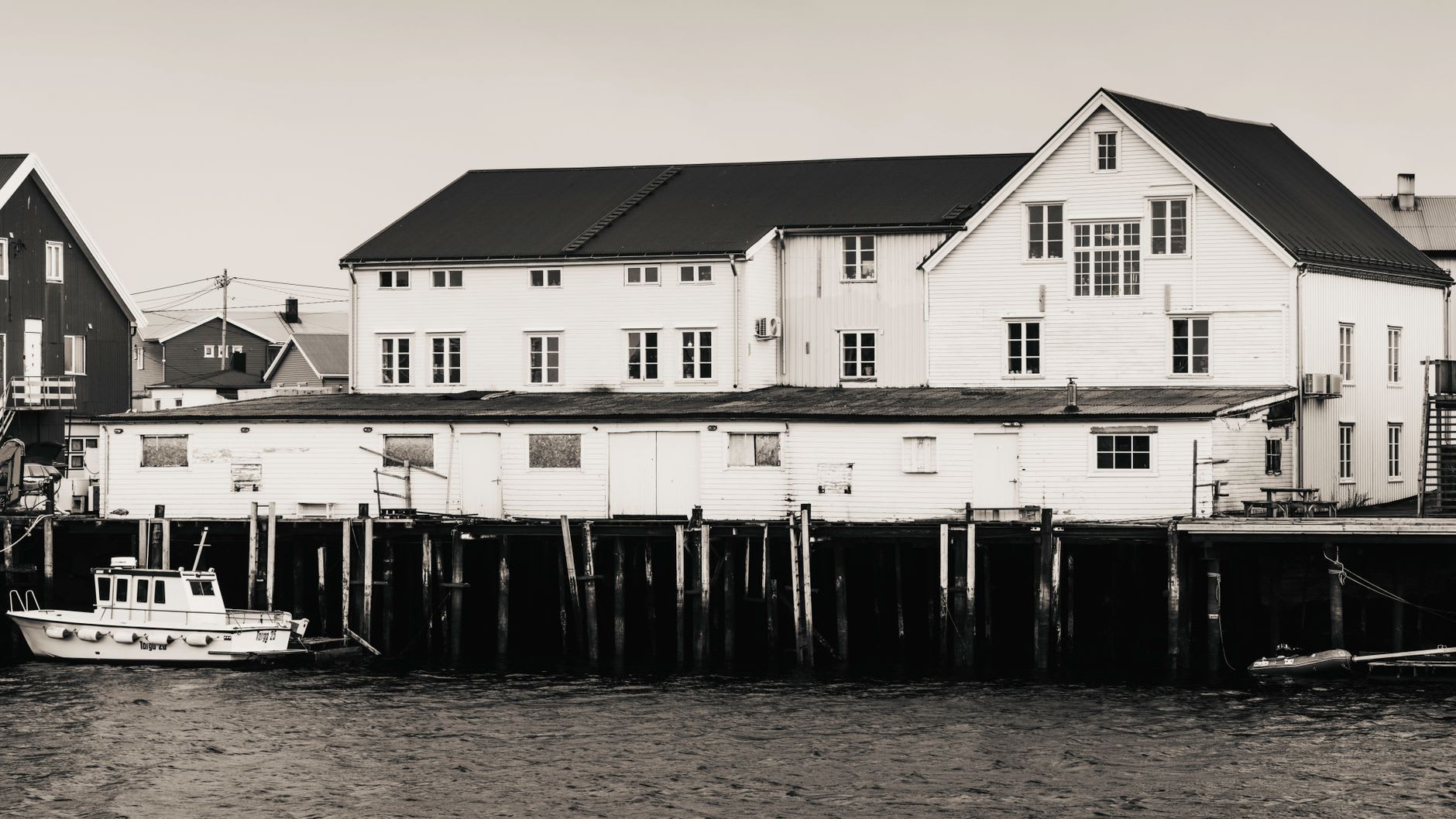
The Lofoten Kulturhus gallery, housed in a former fish warehouse on the waterfront, shows contemporary Norwegian art in rooms that still smell faintly of the sea. I spent an hour there with a woman who ran the space and made coffee on a small hob in the back office. She told me the building had processed stockfish for over a century before it became an arts centre. You could still see the hooks in the rafters. The art on the walls — big, abstract, often dealing with weather and light — felt exactly right for a space that had been shaped by those things for so long.
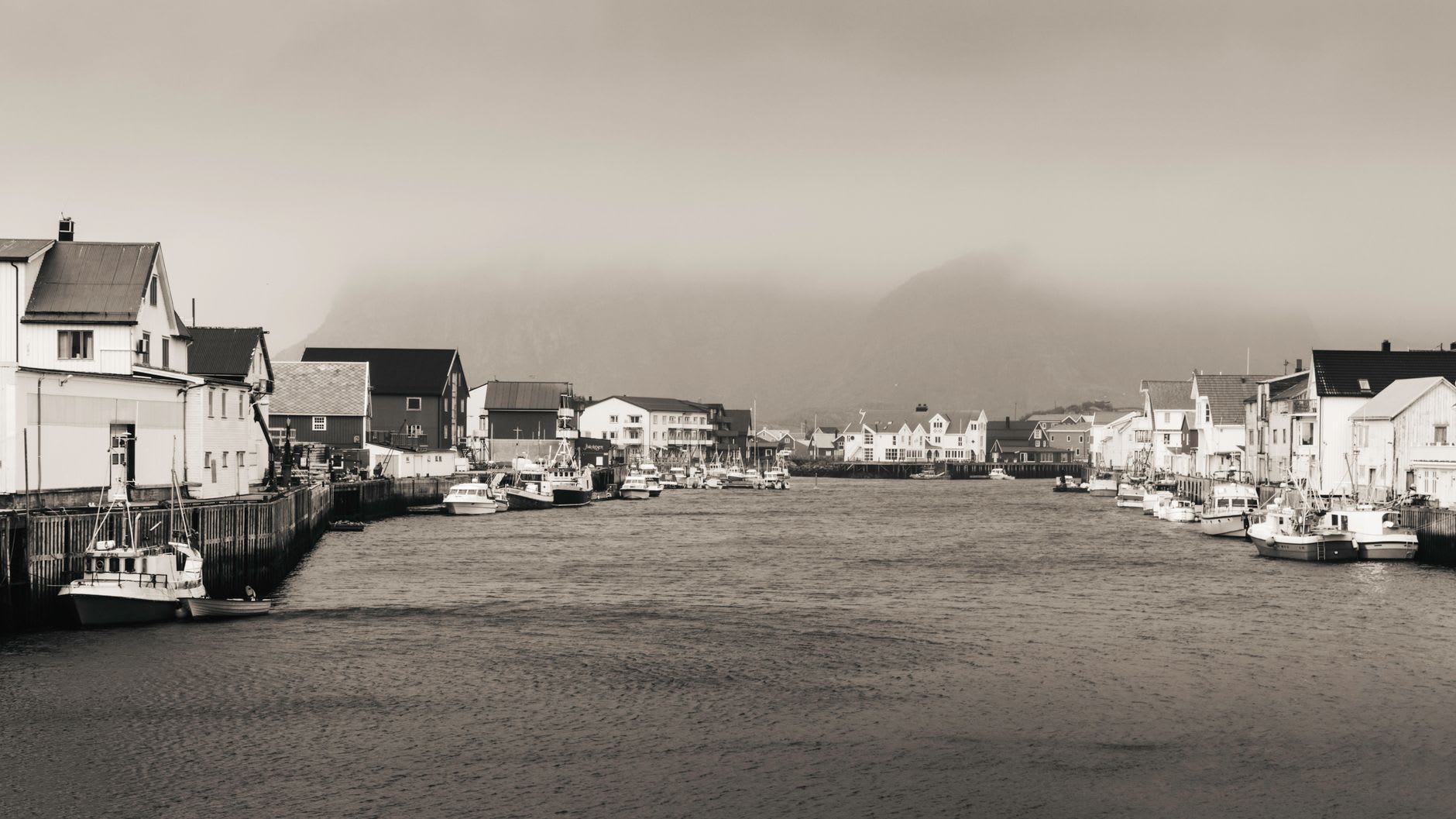
The bakery on the main bridge makes cardamom buns that come out of the oven around nine in the morning and are gone by eleven. I know because I arrived at half past eleven on my first day and had to come back the following morning and stand outside in the cold waiting. They were worth it — soft, warmly spiced, the kind of thing that makes you immediately grateful for being exactly where you are. There is no clever way to describe a very good bun. You simply have to eat it in the cold, on a bridge, with the smell of salt water rising from below.
When to go: Henningsvær works in every season but earns its most photogenic hours in winter, when the low Arctic light turns the white houses gold around midday. Summer brings crowds that can overwhelm the narrow bridges, though the climbing gym at Lofoten Aktiv draws a quieter, more outdoorsy crowd year-round.