Vilnius Old Town
"I have stood on a lot of old town hills. None of them felt quite this much like arriving somewhere that hadn't been waiting for me."
I came to the old town before sunrise on my second morning in Vilnius, partly because I couldn’t sleep and partly because I had a feeling that the streets would be different without people in them. I was right. Walking up from the river on Pilies gatvė at six in the morning, with the paving stones still wet from overnight rain and the light coming in low and amber over the rooftops, the old town felt like something you weren’t supposed to see. No tour groups, no posted signs pointing toward the cathedral, just the buildings themselves — centuries of baroque ambition stacked against each other in various states of renewal and dignified decay.
Cathedral Square is the place to start, and also the place where Vilnius shows you both its grandeur and its contradictions. The neoclassical cathedral is vast and severe, rebuilt for the dozenth time over a pagan temple, over a medieval church, over an earlier church that burned. In front of it, a mosaic tile set into the square marks the spot where, in 1989, two million people held hands across the three Baltic states in one of the longest human chains ever formed. The tile says “stebuklas” — miracle. I stood on it at sunrise with nobody watching and felt something I couldn’t quite name.

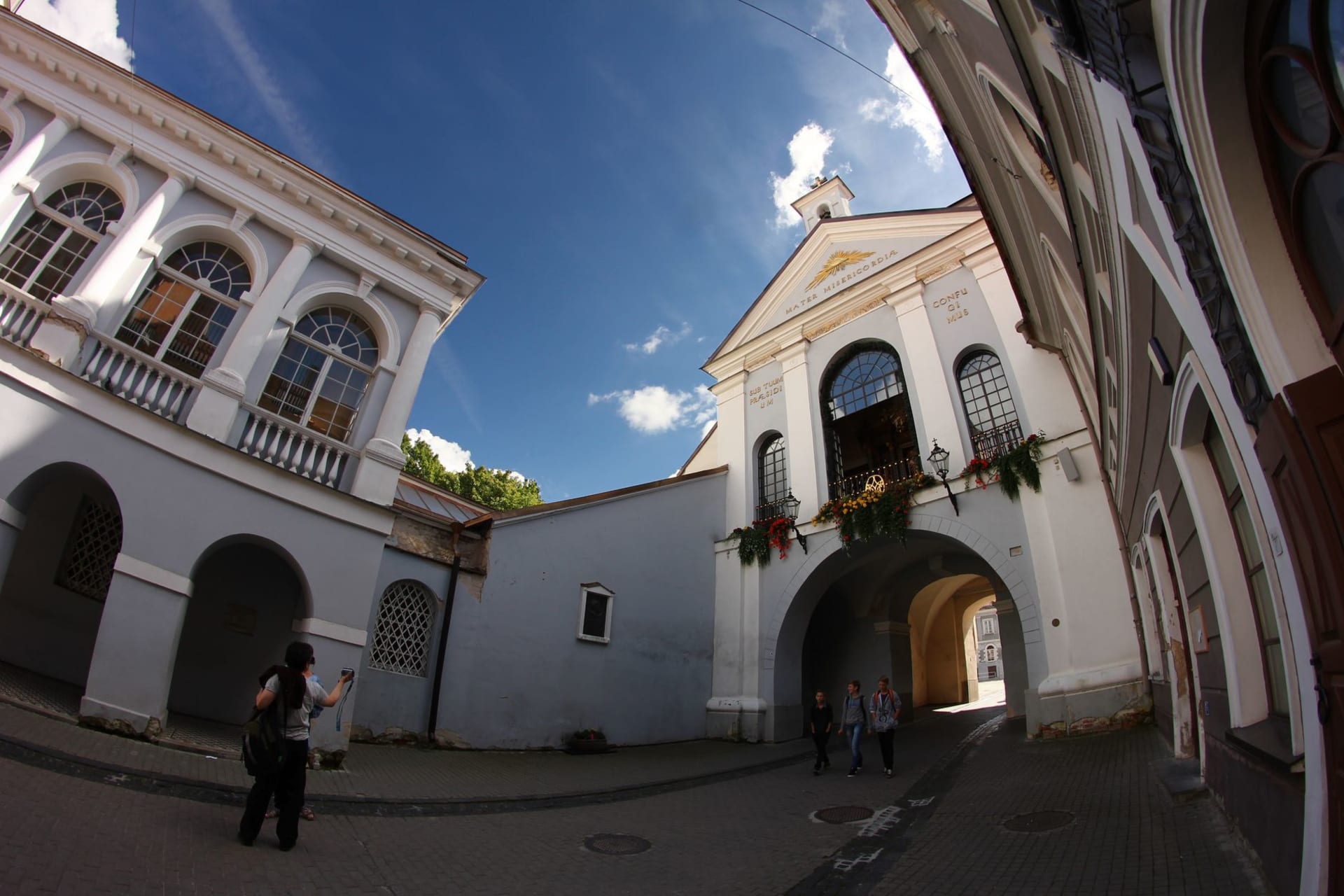
The streets south of the square are where the real texture begins. The old town here is not tidy in the way that Tallinn or Prague are tidy — there are courtyards with exposed brick and patched plaster, narrow passages that open unexpectedly into small squares, doorways with handwritten signs and peeling paint alongside freshly restored facades that gleam in the morning light. I stopped at a bakery on Literatų gatvė for an almond pastry and a coffee that came in a glass, the way I like it, and ate standing at the counter while the owner sorted invoices at a desk in the back and a cat regarded me from the window ledge. The Gate of Dawn at the southern end of the old town stops you — not for its architecture, which is handsome but not extraordinary, but for the energy around it. The chapel inside the gate holds a Madonna icon that Catholics and Orthodox Christians have prayed before for centuries, and at nearly any hour there are people climbing the stairs to kneel before it, arriving from coaches and arriving alone.

What I kept noticing, and what no amount of reading had prepared me for, was how the scale of everything fits the human body. The old town is enormous by area — the largest baroque old town in northern Europe, they say — but its streets are narrow enough and its buildings low enough that you feel held rather than overwhelmed. I spent three full days in it and still found corners I hadn’t been. There is a particular light at five in the afternoon in June, when the sun angles down the east-west streets and the honey-colored baroque plaster glows almost from inside. I sat at a café table on the street and just watched it happen, not taking a photograph, just watching the light move.
When to go: May through June is ideal — the lindens along the main streets bloom and the air carries their scent, the light is long, and crowds are present but not overwhelming. September is equally compelling: the tourist summer empties out, the old town returns to its workday self, and the low autumn light on baroque plaster is extraordinary. Winter evenings around Christmas bring a different quality of beauty — candles in windows, ice on the cobblestones, the spires lit against dark sky — but come prepared for cold that drops well below zero.