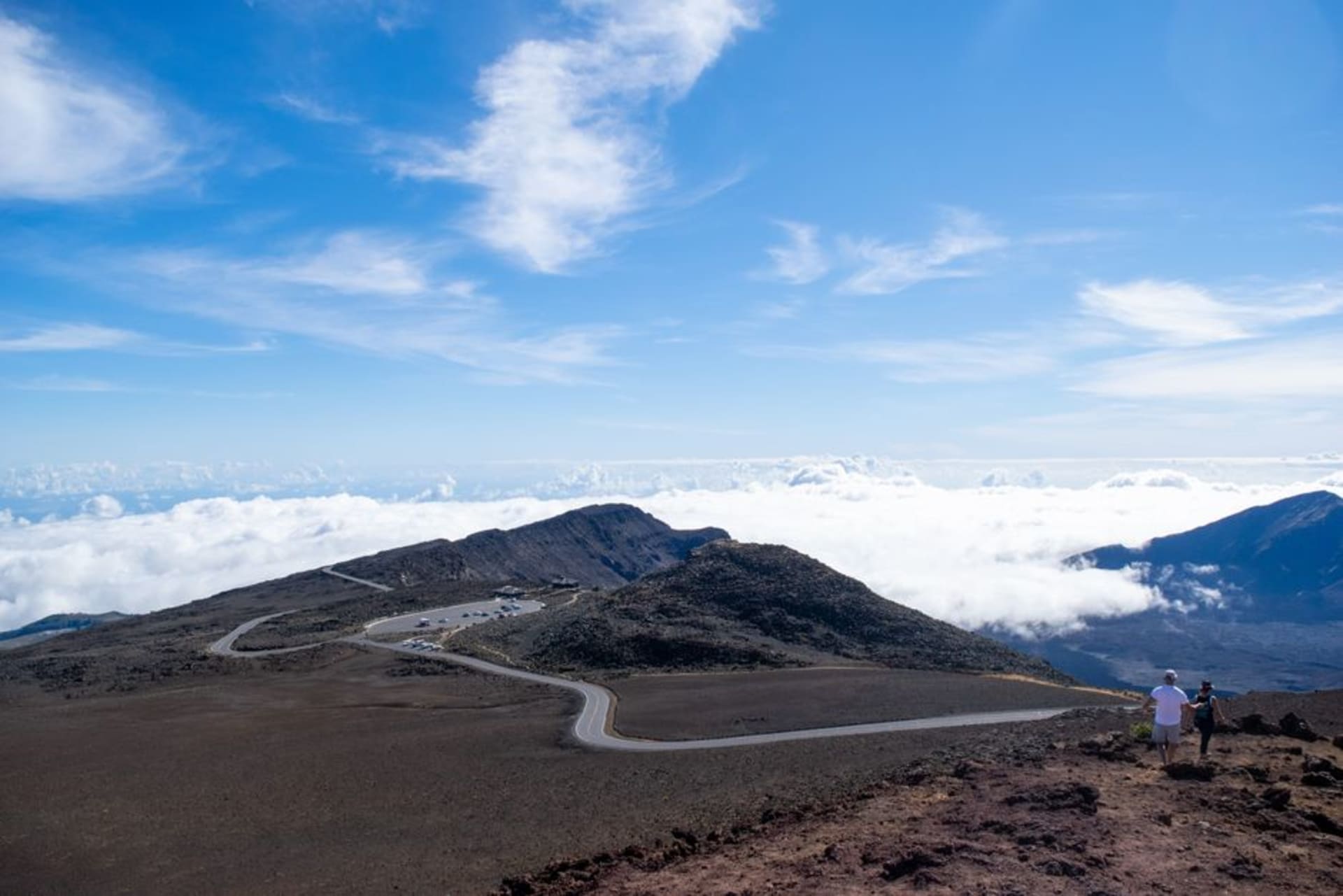
A 3,000-meter volcano where you drive from sea level into the cold before dawn to watch the sun rise above the clouds.
We set the alarm for 2:45 a.m., which is the kind of hour that only makes sense when you have already convinced yourself something extraordinary is on the other side of it. Lia made instant coffee in the condo kitchen in Kihei while I loaded the car in the dark, and by 3:30 we were climbing — actually climbing, the road switching back on itself in tight hairpins, the temperature dropping a degree every few minutes until the tropical night we’d left behind at sea level had become something closer to an alpine one.
The Reservation Nobody Reads the Fine Print On
Haleakalā requires a sunrise reservation now, booked weeks in advance through the National Park Service, and I mention this first because I’ve met more than one traveler turned away at the gate at 4 a.m. with nowhere else to be. Book it before you book your flights, honestly. The ranger checked our permit with a flashlight, and past the gate the road kept climbing until the last switchbacks put us above 3,000 meters, ears popping, breath shortening slightly in the thin air.
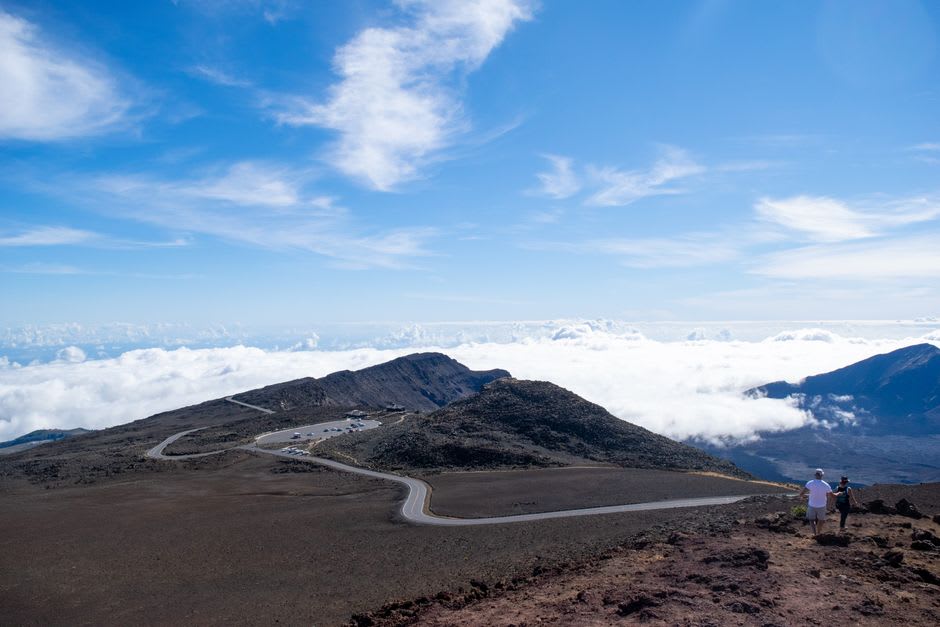
We found a spot along the crater rim wall, wrapped in every layer we’d brought — a puffer jacket feels absurd to pack for Hawaii until you’re standing at the summit at 4:45 a.m. with frost forming on the railing. The crater itself, invisible in the dark, is enormous: nearly twelve kilometers across, big enough that early explorers assumed it was an impact site rather than a volcanic depression. Cinder cones rose out of the blackness below us like something from a different planet entirely.
What Actually Happens at Sunrise
The light arrives slowly and then all at once. First a thin grey seam along the horizon, then the clouds below the summit — because you are standing above them, which is the detail that photographs never quite convey — catch fire in pink and gold, and the whole crater floor turns the color of rust. Nobody around us was talking. A woman near the railing was crying, quietly, and I understood it. There is something about watching the sun arrive from above the weather that reorders your sense of scale.
I found out afterward that the Hawaiians who first named this place understood exactly what they were describing. Haleakalā means House of the Sun, tied to the legend of the demigod Māui who lassoed the sun here to slow its journey across the sky. Standing at the rim at dawn, the myth stops sounding like folklore and starts sounding like reportage.
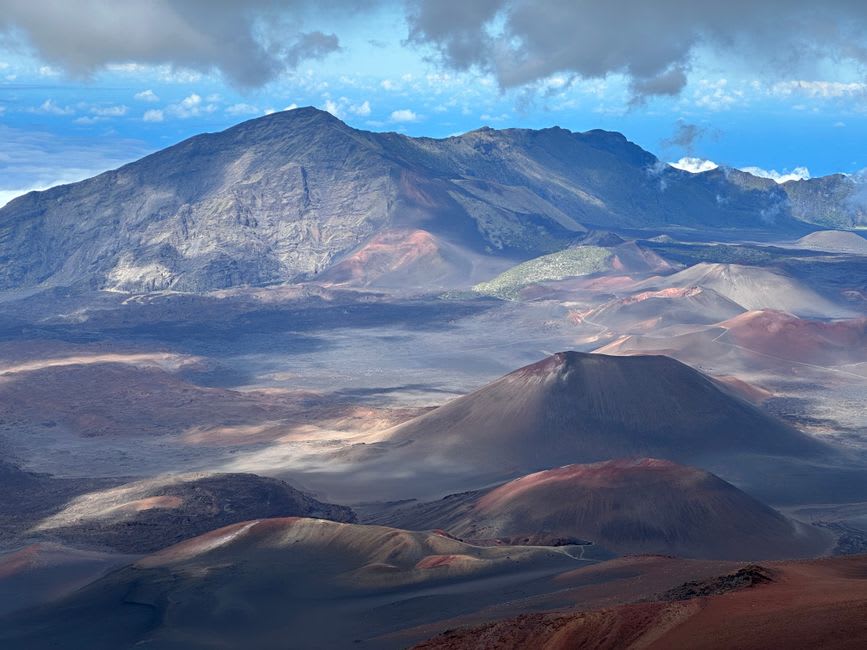
Afterward we drove the Sliding Sands Trail trailhead just to walk twenty minutes into the crater itself — the silence down there is total, the red and black cinder crunching underfoot, and it felt less like Hawaii than anywhere else on the island. If you have the legs and the layers, the Kalahaku Overlook a bit lower down gives a second, less crowded view on the way back, and by the time we descended below the cloud line the temperature had climbed thirty degrees and the tropical Maui we knew was waiting for us again.
When to go: Book the sunrise reservation online exactly sixty days ahead — slots vanish fast. April through October gives the most reliable clear skies; winter brings a real chance of cloud cover or closure from cold fronts at elevation.
Keep exploring
More from Hawai'i
 hawaii
 Hamakua Coast
Forty miles of sea cliffs, waterfalls, and old sugar towns on the Big Island's wild, wet windward shore.
Explore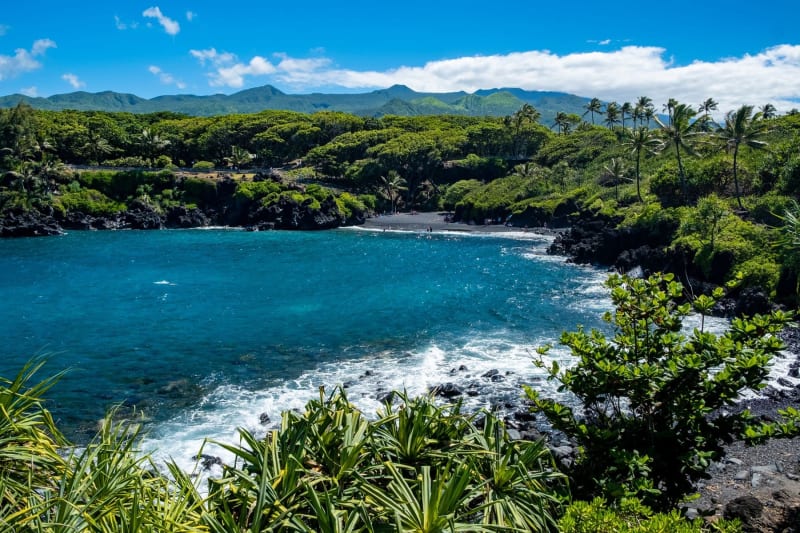 hawaii
 Hana Coast
Maui's legendary winding road past 617 curves, 59 bridges, and waterfalls pouring into black-sand pools.
Explore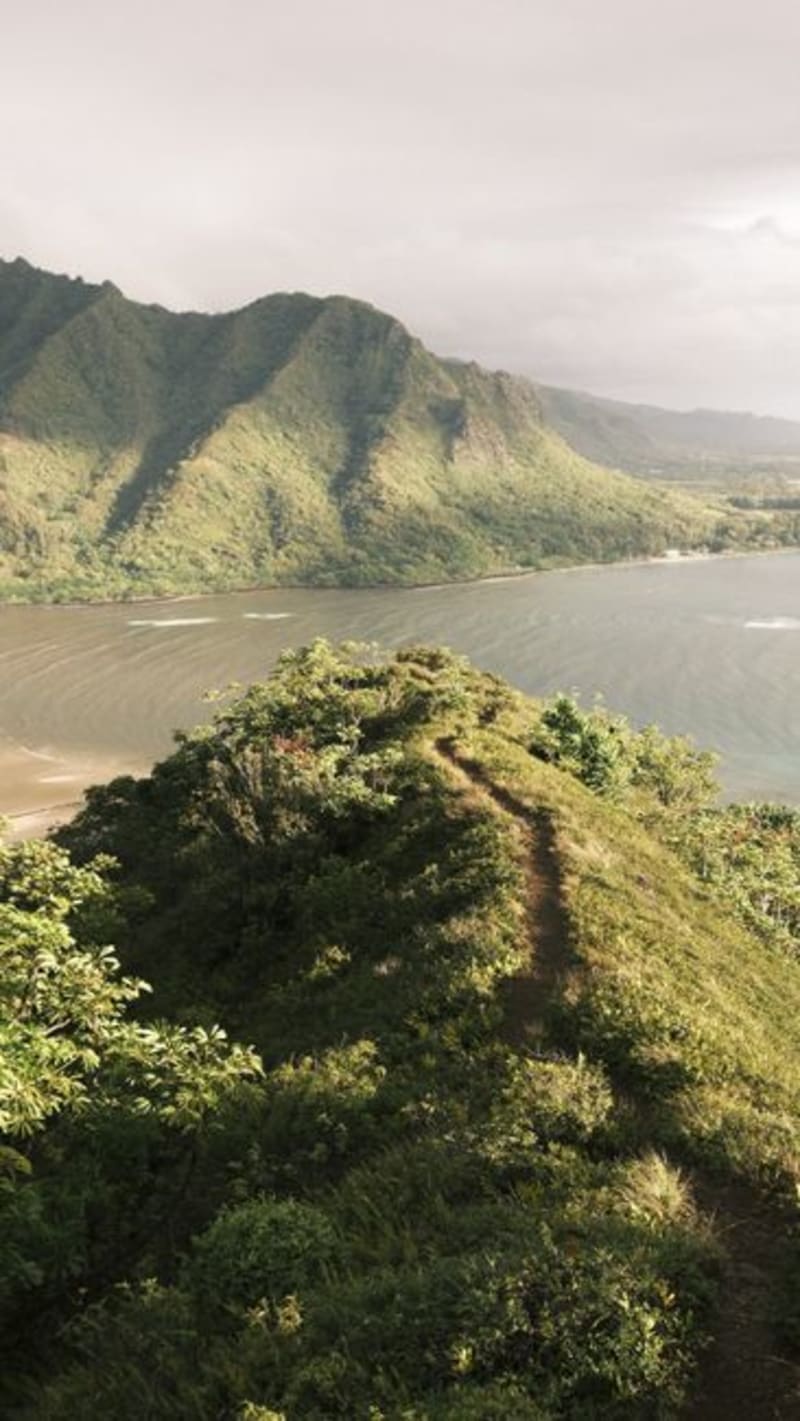 hawaii
 Hanalei Bay
The crescent bay and mountain-backed pier that launched a thousand sunset photos — and the small town that somehow still feels unhurried.
Explore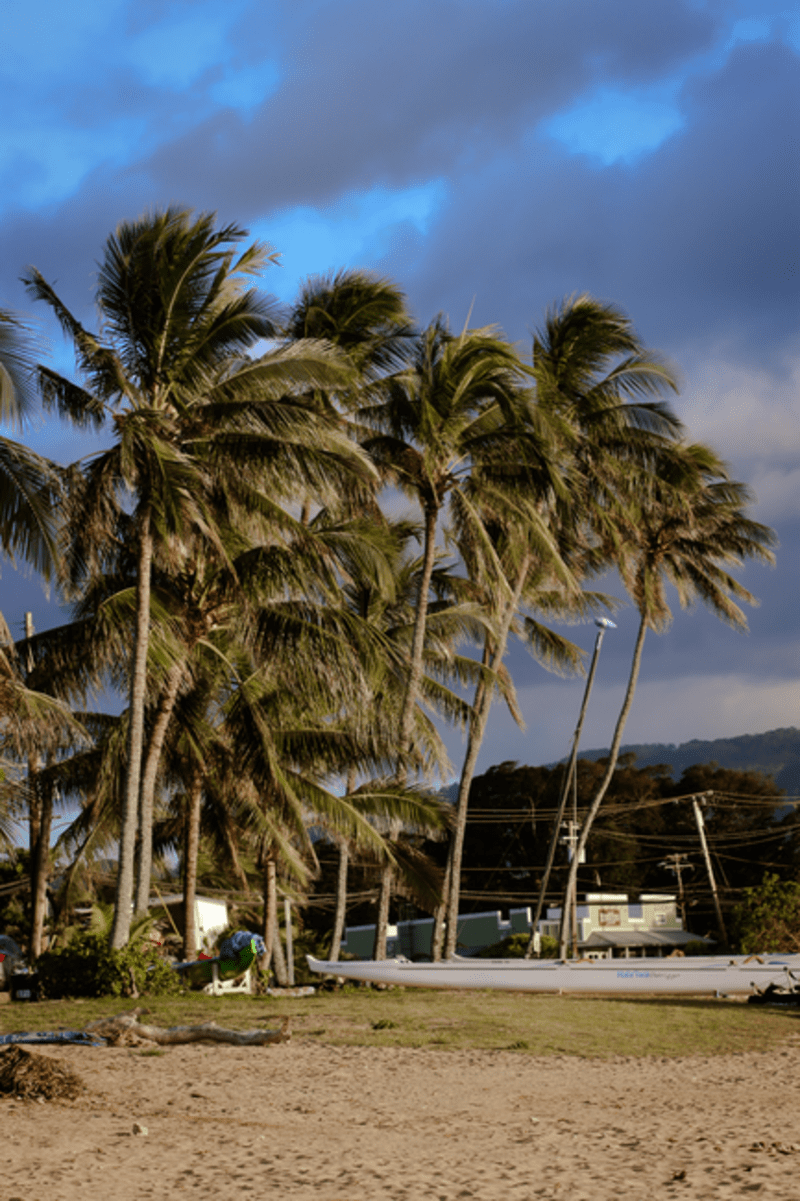 hawaii
 Hanapepe
A one-street plantation town on Kaua'i's west side that calls itself Hawai'i's biggest little town, and means it without irony.
Explore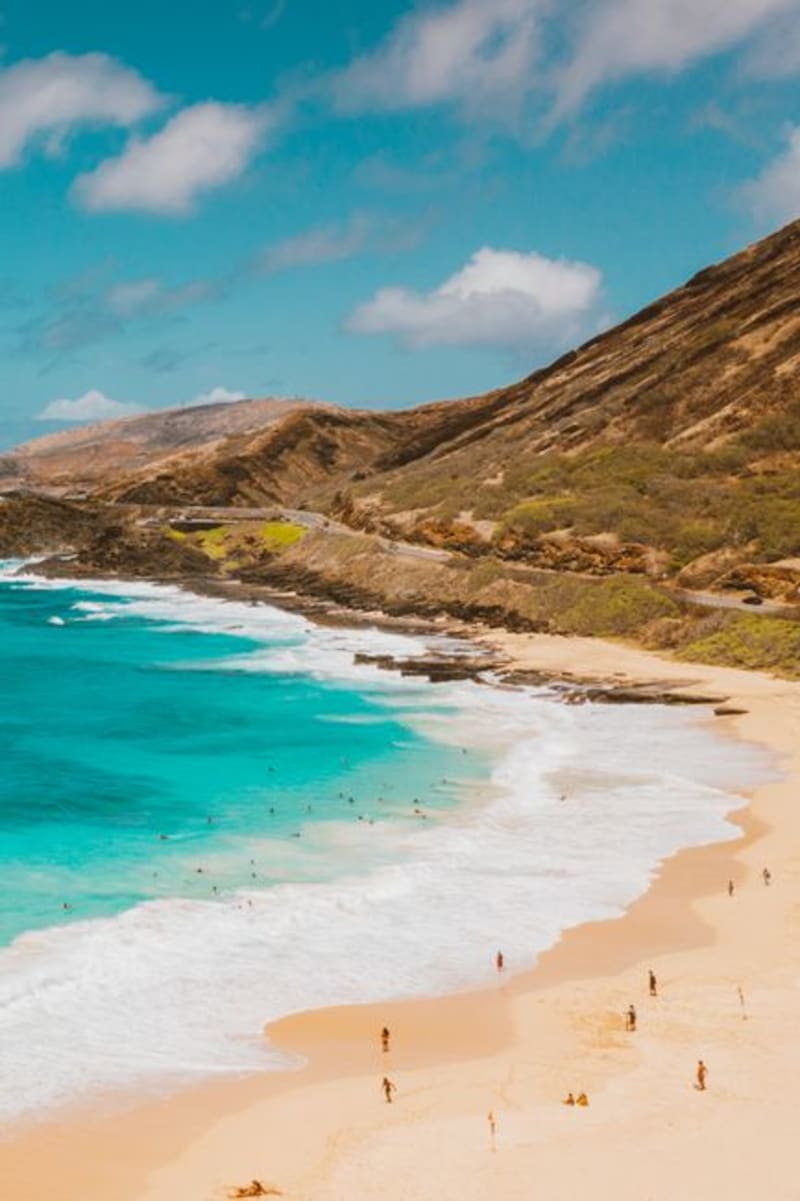 hawaii
 Hanauma Bay
A collapsed volcanic crater turned marine sanctuary, where a mandatory nine-minute video buys you an afternoon among sea turtles.
Explore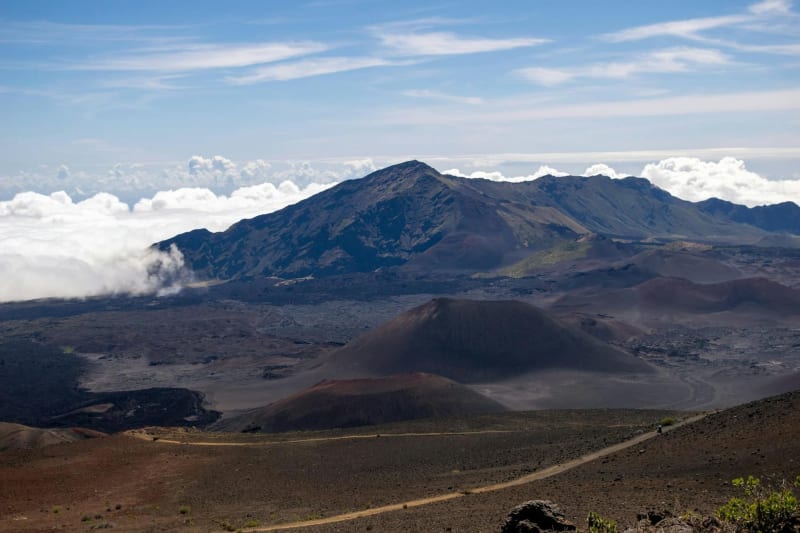 hawaii
 Hawaii Volcanoes
Where Kilauea's lava flows into the ocean in clouds of steam — the only place to watch an island being built.
Explore