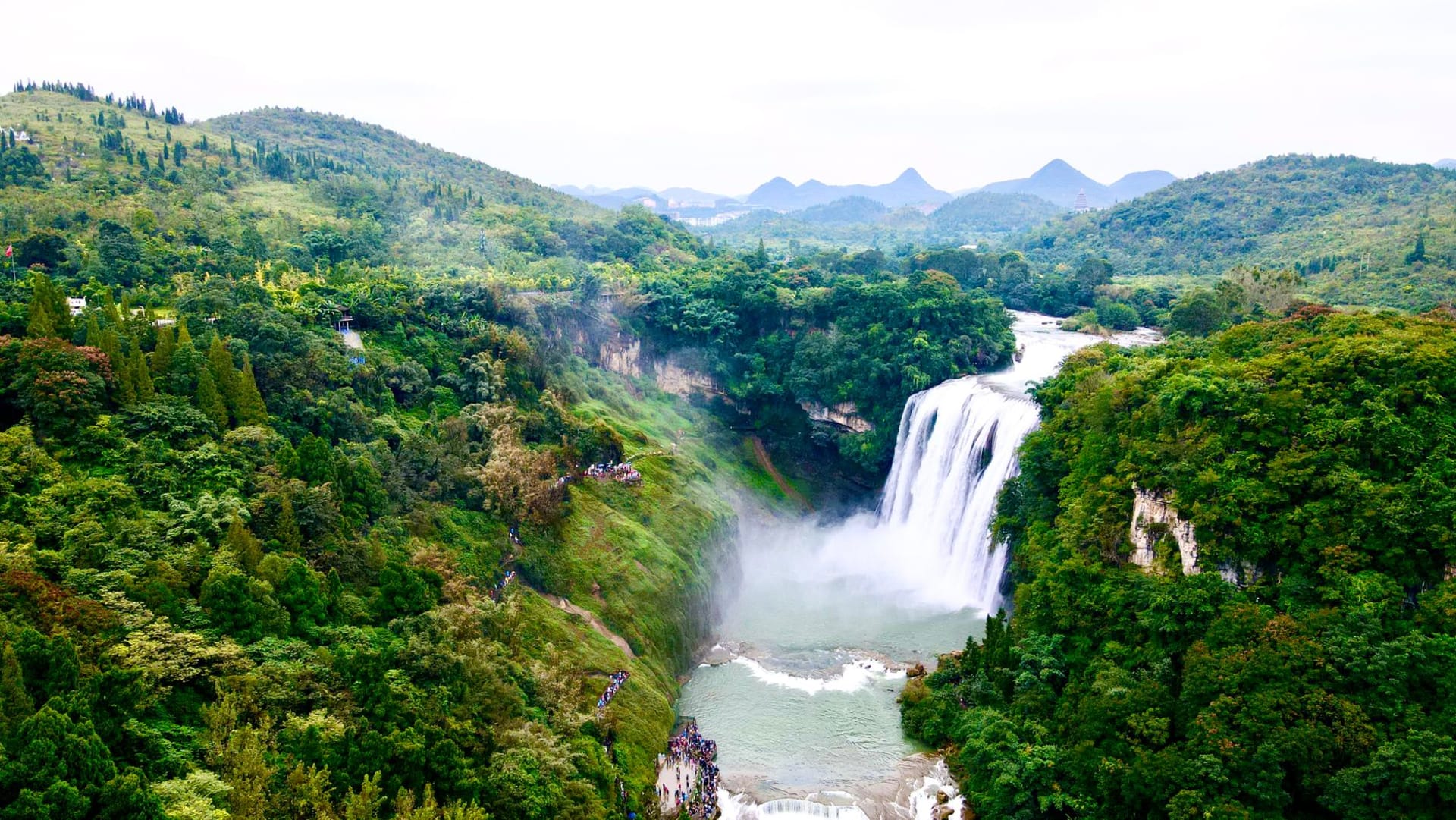
Zhenyuan
"The Wu River runs green here, and the whole town leans over it like it's listening."
Zhenyuan arrived at me in reverse: I saw the river first, from the train, that impossible emerald green of the Wu River cutting through limestone bluffs, and only then noticed the town pressed into the narrow strip of land between cliff and water. The train stopped and I got off without having planned to. That is the right way to arrive at Zhenyuan.
The old town occupies both banks of the Wu River, connected by ancient stone bridges and a newer iron one, and it unfolds in the logic of a place that never had much room to expand. The streets are narrow, the buildings close together, the second floors of old wooden merchants’ houses extending out over the lanes on carved brackets. Some of these structures are six hundred years old and appear to be held up primarily by habit. Walking them at dusk, when the lanterns come on and the river turns orange, is an experience that operates somewhere below the rational mind.
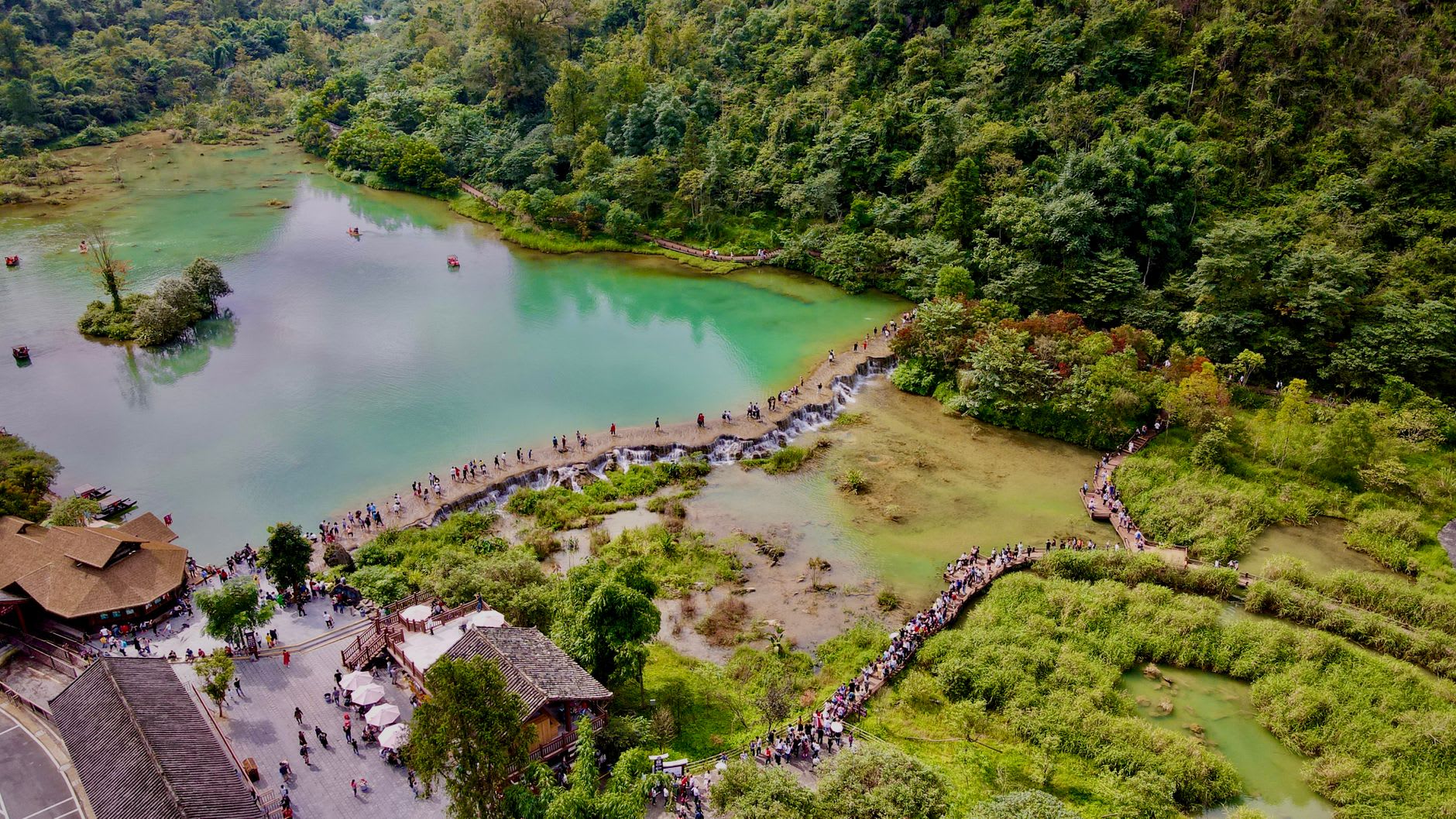
The garrison walls on the north bank climb the cliff in a series of stairs that would have been punishing for any invader and are merely punishing for tourists. But the view from the top — the river below, the tile rooftops of the old town, the limestone hills stretching into haze — rewards the effort in a way that simple beauty rarely does. I sat up there for an hour with a thermos of tea a woman had pressed into my hands at the gate, and watched the light move across the valley.
The food is the great surprise of Zhenyuan. The sour fish soup I had heard about in Kaili is perfected here, where the river provides fish that are genuinely fresh — something that sounds obvious but makes an enormous difference. The preparation involves fish fermented in rice wine and chili paste, then cooked in a broth that is so aggressively sour it makes your jaw ache on first contact. I ate it at a restaurant that was, genuinely, a platform built out over the river, the water moving darkly beneath the floorboards, and the sourness of the soup tasted appropriate for that vertiginous situation.

The Qinglong Cave complex, carved into and through the cliff face on the east bank, is one of those architectural achievements that Guizhou seems to produce without drawing much attention to itself. A Daoist temple, a Confucian academy, and a Buddhist temple are all assembled into the same hillside in a series of pavilions and pathways that stagger up the rock face. The building techniques involved — structures cantilevered off cliff faces, tunnels cut through solid limestone — are engineering feats that would be celebrated anywhere else. Here they are simply where the locals go to burn incense on weekday afternoons.
There is very little English spoken in Zhenyuan, and even less patience for visitors expecting to be catered to. I found this clarifying. You eat what is put in front of you, gesture your way through accommodation negotiations, and walk where the streets go. The town does not perform for visitors. It simply continues.
When to go: September and October are ideal — the summer rains have ended, the river runs clear, and the light in the gorge turns gold in late afternoon. The Qingming festival in April brings the town alive with ceremony. Avoid July and August, when the river sometimes floods and the humidity in the narrow streets becomes genuinely unpleasant.