I did not expect to fall for Kaili. I had read enough to know it was a transit hub, a provincial city of the kind China mass-produces — wide boulevards, new apartment blocks, a KFC near the station. But the slow train from Chongqing pulled in after dark, and by the time I found a guesthouse and stepped back out into the night market, I had already changed my plans and added three days to my stay. The streets smelled of wood smoke and pickled vegetables and something fermented I could not name, and from a speaker somewhere down the block came the sound of a reed pipe playing a melody that did not resolve, that kept circling, as if it was searching for something.
Kaili is the capital of the Qiandongnan Miao and Dong Autonomous Prefecture, and that bureaucratic mouthful contains multitudes. The city itself is a functional, unglamorous place, but what surrounds it — within an hour in any direction — is some of the most layered minority culture still functioning anywhere in China. I used Kaili as a base for almost a week, and each morning I would board a minibus heading to a different valley and return each evening with more questions than I had left with.

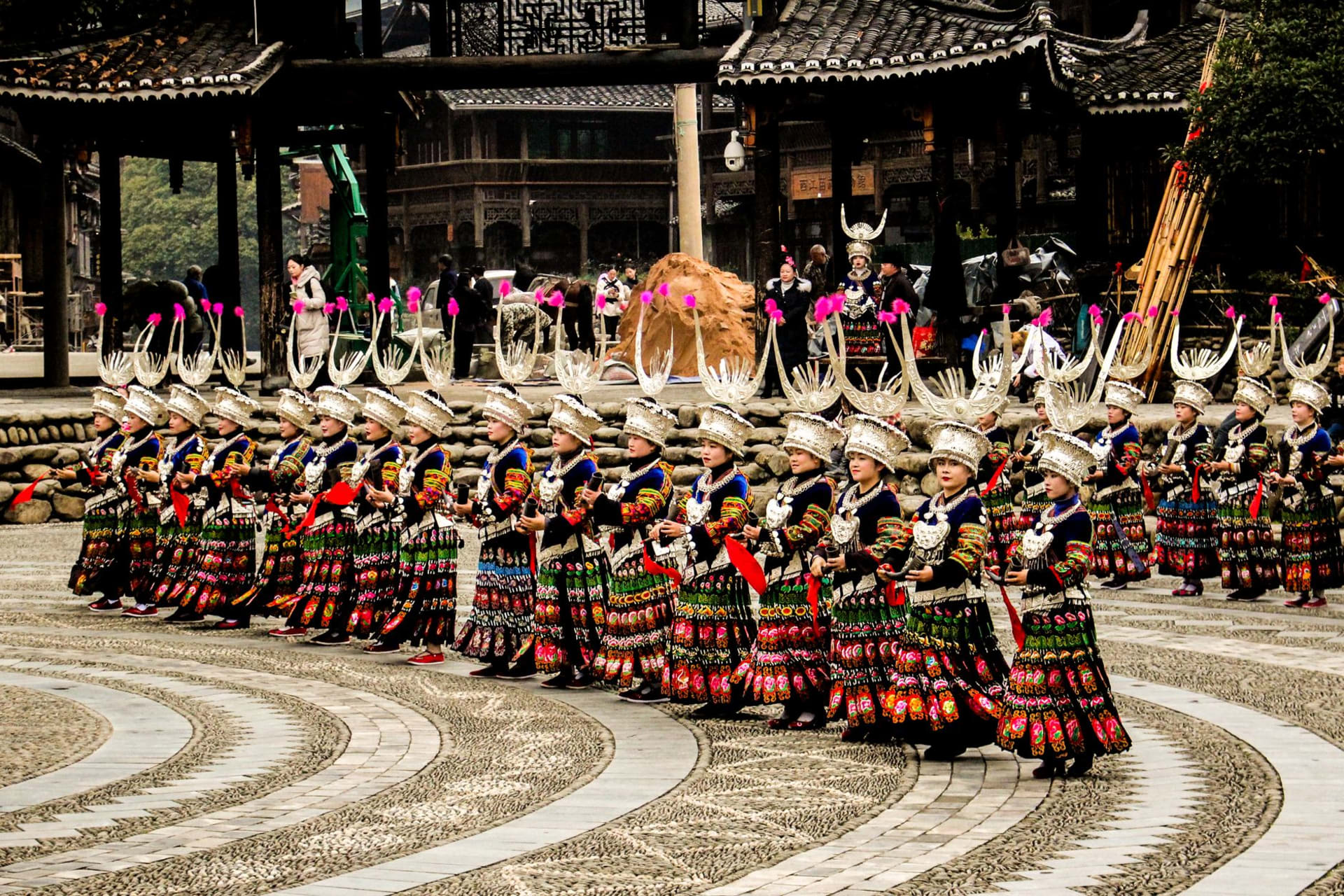
The Saturday market in the old quarter is where Kaili reveals itself properly. Women come in from surrounding villages wearing their clan’s specific style of embroidery — the Miao have no written language, and their textile patterns carry genealogical and mythological information encoded over centuries. I spent two hours at one stall where a woman in her seventies was selling embroidered panels, and through a young translator I pieced together that the birds stitched into a particular piece represented a migration story from several hundred years ago. The pattern was also, she explained without emphasis, her grandmother’s work. She wanted forty yuan for it — about five dollars. I paid four times that and still felt I had gotten away with something.
The food in Kaili is confrontational and magnificent. The local specialty is sour soup — a clear broth built on lacto-fermented tomatoes and rice water, fiercely acidic, served with river fish and topped with chili oil. The first spoonful shocks you. By the third, you understand that this is exactly the right food for this climate, this altitude, this damp air. The sourness clears something in your chest. I ate it for breakfast twice.

The Kaili Museum of Ethnic Minority Cultures is worth half a day — not because it replaces the villages, but because it contextualizes them. The collection of Miao silver is staggering: headdresses that weigh four kilograms, necklaces that stack twelve layers deep, breastplates that catch the light like armor. You see them in the museum and understand them intellectually. Then you see a woman wearing an equivalent set at a festival and understand them in your body instead.
What I kept coming back to was the ordinariness of the extraordinary. Old men playing cards outside a tea house with a silver pipe. A teenager in school uniform walking home past a drum tower. A grandmother dyeing fabric indigo in a plastic basin on her front step. Life here accommodates its own history without performing it.
When to go: The Kaili Spring Drum Festival (March by the lunar calendar) and the Miao New Year (November) are the peak cultural events, worth serious planning to attend. April and October offer the best weather for village-hopping — cool, clear, and free of the summer humidity that turns the valleys into steam rooms.