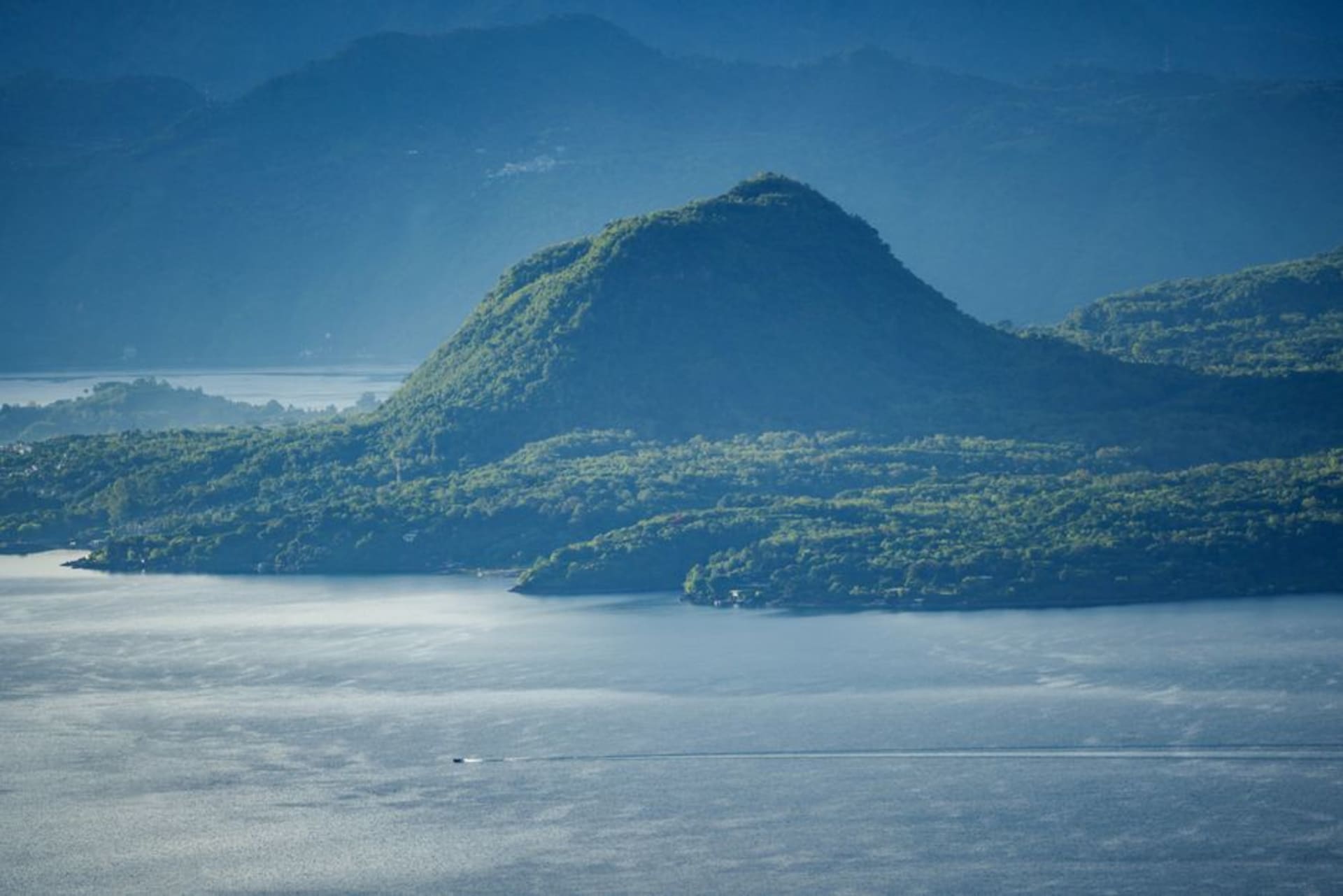
Lago de Izabal
"I have swum in a hot spring pouring directly into a cold lake, and I will never stop telling people about it."
Guatemala's largest lake, guarded by a pirate-era stone fort and fed by hot springs where the jungle steams straight into the water.
The boat driver cut the engine halfway across the lake so we could just drift for a minute, and the silence that followed was the kind you don’t get in the highlands — no wind, no birdsong competing for attention, just the slap of water against the hull and heat pressing down from a sky gone white with humidity. Lago de Izabal is Guatemala’s largest lake, a slow, brown-green inland sea in the country’s hot eastern lowlands, and it moves at a completely different pace than the volcanic drama of Atitlán three hours to the west.
The Fort That Watched for Pirates
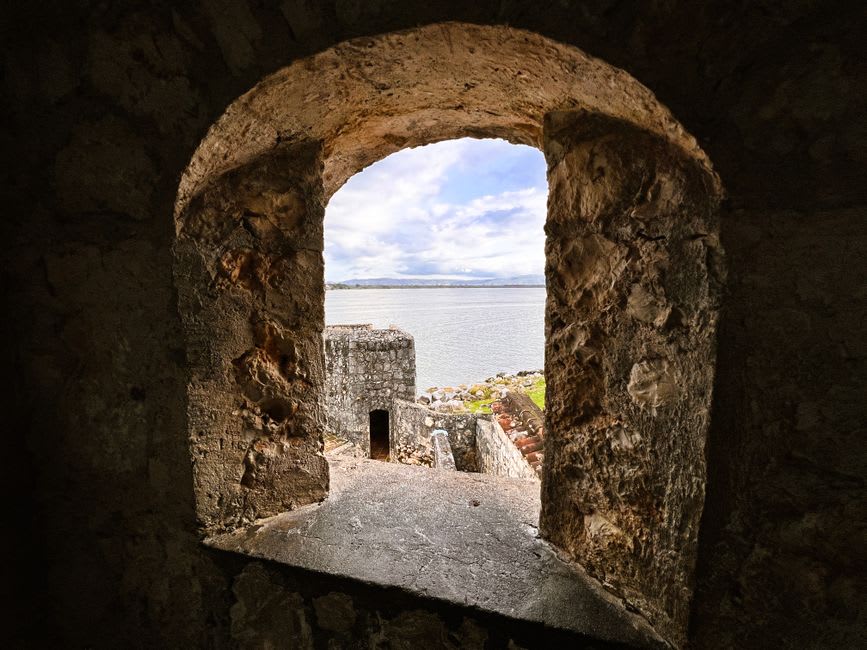
Our first stop was Castillo de San Felipe de Lara, a squat stone fortress built by the Spanish in the seventeenth century to guard the narrow channel connecting the lake to the Caribbean via the Río Dulce. Pirates — English, Dutch, whoever was working these waters that decade — kept slipping past to raid the towns upriver, so the crown built this to choke the passage. Walking its ramparts, cannons still pointed out over the water, I liked that it wasn’t roped off into a stage set; kids from a nearby village were fishing off the fort’s own dock, using the four-hundred-year-old defensive wall as a casual afternoon hangout.
Hot Water Into Cold
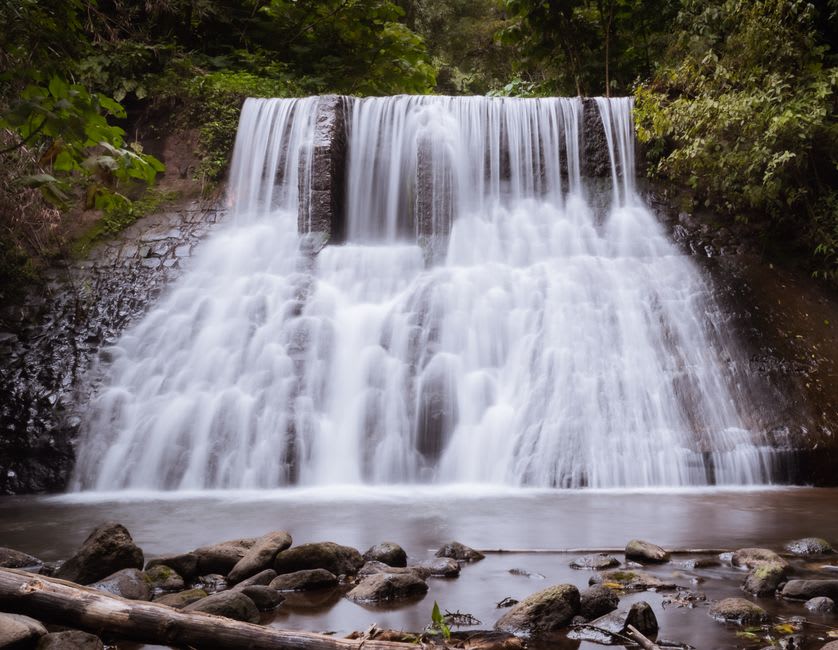
The real reason people detour here, though, is Finca El Paraíso, where a waterfall of naturally heated spring water pours over a rock ledge directly into a cool pool connected to the lake. I climbed up under the falls and let scalding water hit my shoulders while my legs, submerged in the pool below, stayed almost cold — a strange, full-body argument between two temperatures that I never quite resolved. Locals go there to bathe as much as tourists do; an older man next to me was scrubbing his arms with a bar of soap as unhurried as if he were in his own bathroom.
The lake itself is also one of the last strongholds for manatees in Central America, though I’ll admit I never saw one — our guide insisted they’re shyest at midday, which is of course when we were out there. What I did see was enough: egrets working the shallows, fishermen in dugout cayucos, and a horizon of jungle hills with no development pushing up against them yet. Izabal feels like the version of tropical Guatemala nobody’s finished discovering.
When to go: The dry season from February to April offers the calmest water for boat trips between the fort, the hot springs, and Río Dulce; rainy season afternoons bring dramatic storms that are worth watching from the shore but not from a small boat.
Keep exploring
More from Guatemala
 guatemala
 Lake Atitlán
Three volcanoes, a dozen Maya villages, and a lake that Huxley called the most beautiful in the world.
Explore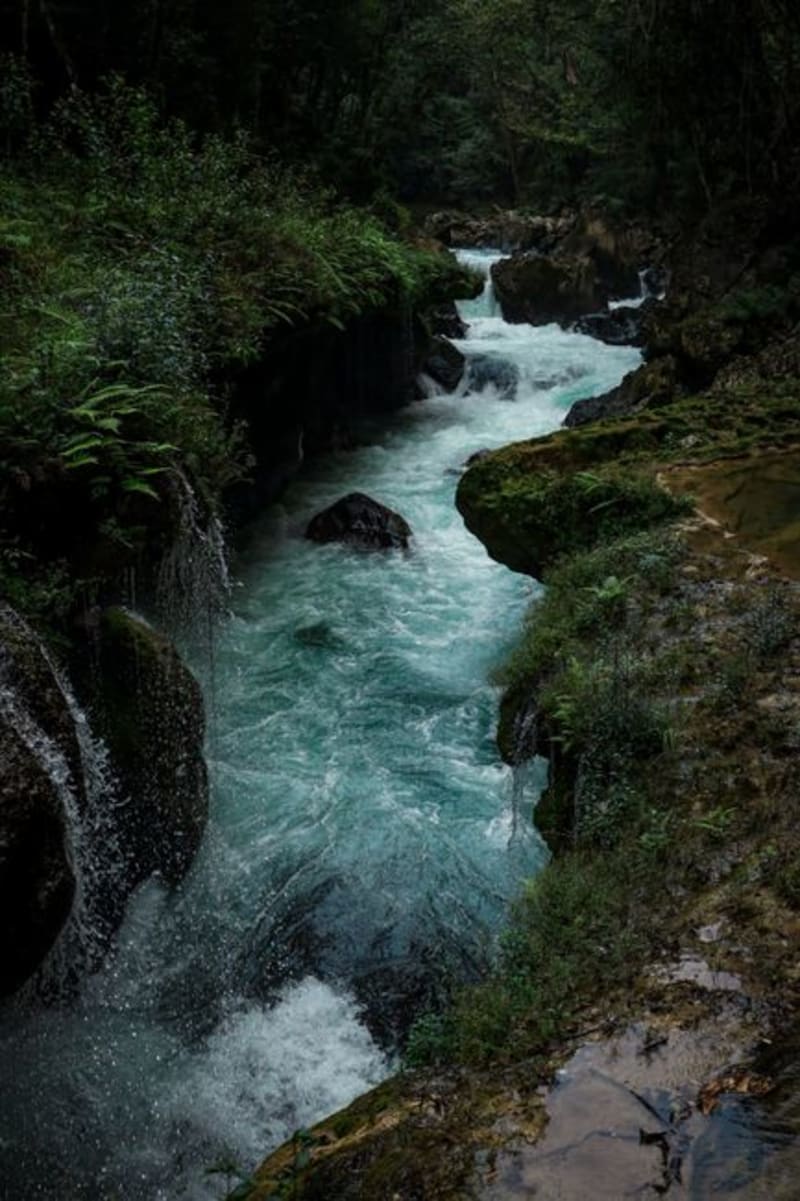 guatemala
 Lanquín
A one-street river town where bats pour out of a limestone cave at dusk and every hostel porch faces the same green valley.
Explore guatemala
 Las Lisas
A fishing village on Guatemala's forgotten southeastern coast, near enough to El Salvador to smell the border, where the black sand runs for miles and almost nobody comes.
Explore guatemala
 Livingston
Only reachable by boat, this Garifuna Caribbean town on the Rio Dulce estuary beats to its own drum — literally.
Explore guatemala
 Mixco
A colonial hill town turned capital suburb, all steep cobbled streets and unbroken views over Guatemala City, its own history distinct from the ruined fortress at Mixco Viejo up north.
Explore guatemala
 Mixco Viejo
A ruined K'iche' fortress-city hidden in dramatic ravine terrain near Guatemala City, conquered by Alvarado in 1525 after a siege the Spanish nearly lost.
Explore