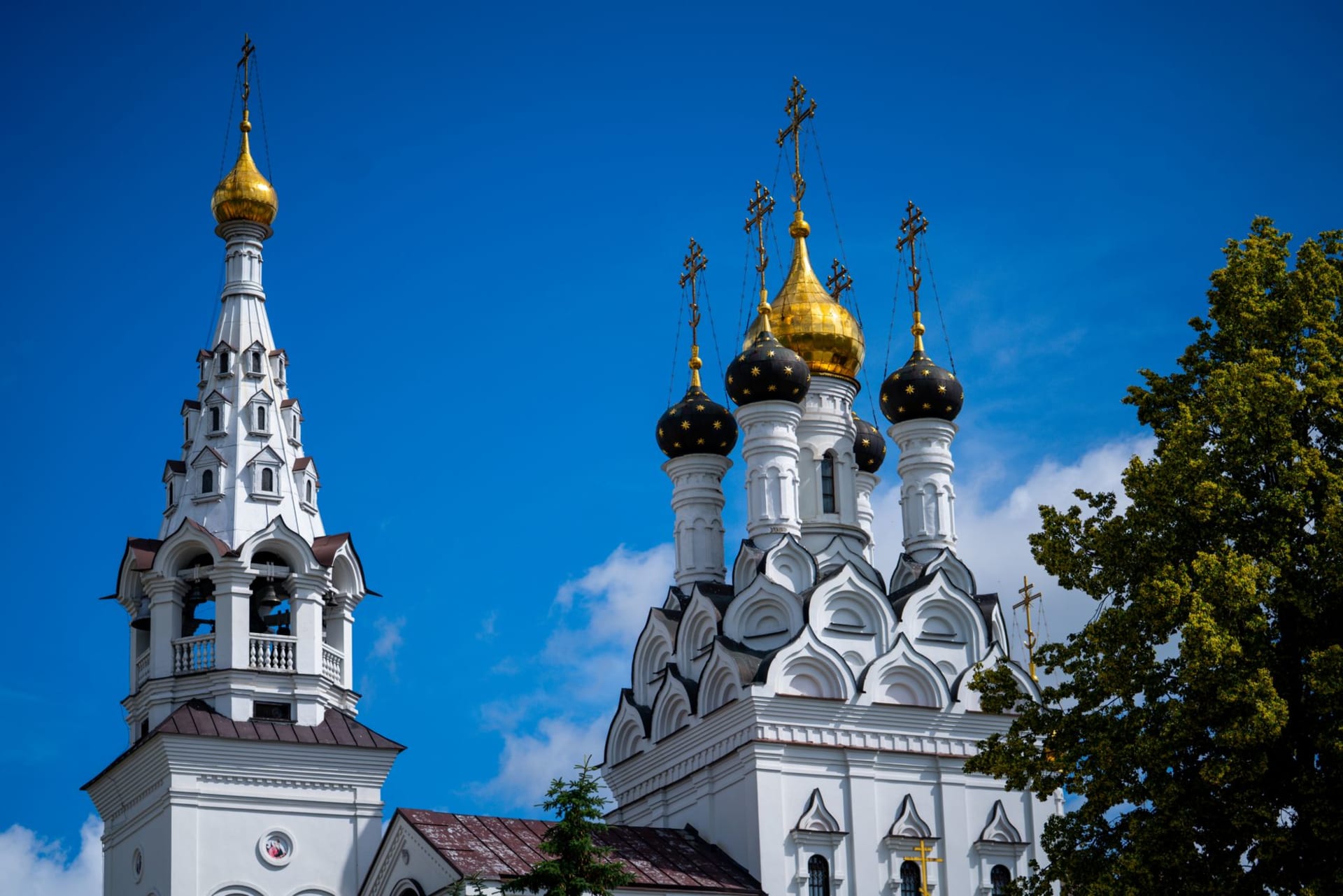
Bogolyubovo
"They built it in a meadow that floods every spring and the flooding only makes it more beautiful — some accidents are too good to correct."
The Church of the Intercession on the Nerl is the kind of building that makes you question why anyone bothers with any other kind of architecture. It stands alone in a river meadow eleven kilometres east of Vladimir, a small white-stone church from 1165, its single dome rising above the surrounding willows and birches with a composure that suggests it has never doubted its own right to be exactly there. To reach it you walk a forty-minute path across fields from the village of Bogolyubovo, and the approach is entirely deliberate: as you get closer, the scale reveals itself slowly. It is not large. It was never meant to be large. It was meant to be exactly this — one perfect shape on a flat horizon, white against whatever colour the sky happens to be.
I arrived in late April, which turned out to be spectacularly good timing. The Nerl River had flooded its banks in the spring melt, and the meadows around the church were several centimetres deep in still, clear water that reflected the sky and the church’s white walls with the precision of a mirror. The path disappeared into the flood about three hundred metres out, so I took off my boots and waded the last stretch with my trousers rolled to the knee through water that was very cold in a way that felt significant. There were three other people on the little mound of dry ground around the church. We acknowledged each other with the particular nod of people who have done the same slightly embarrassing thing for the same very good reason.
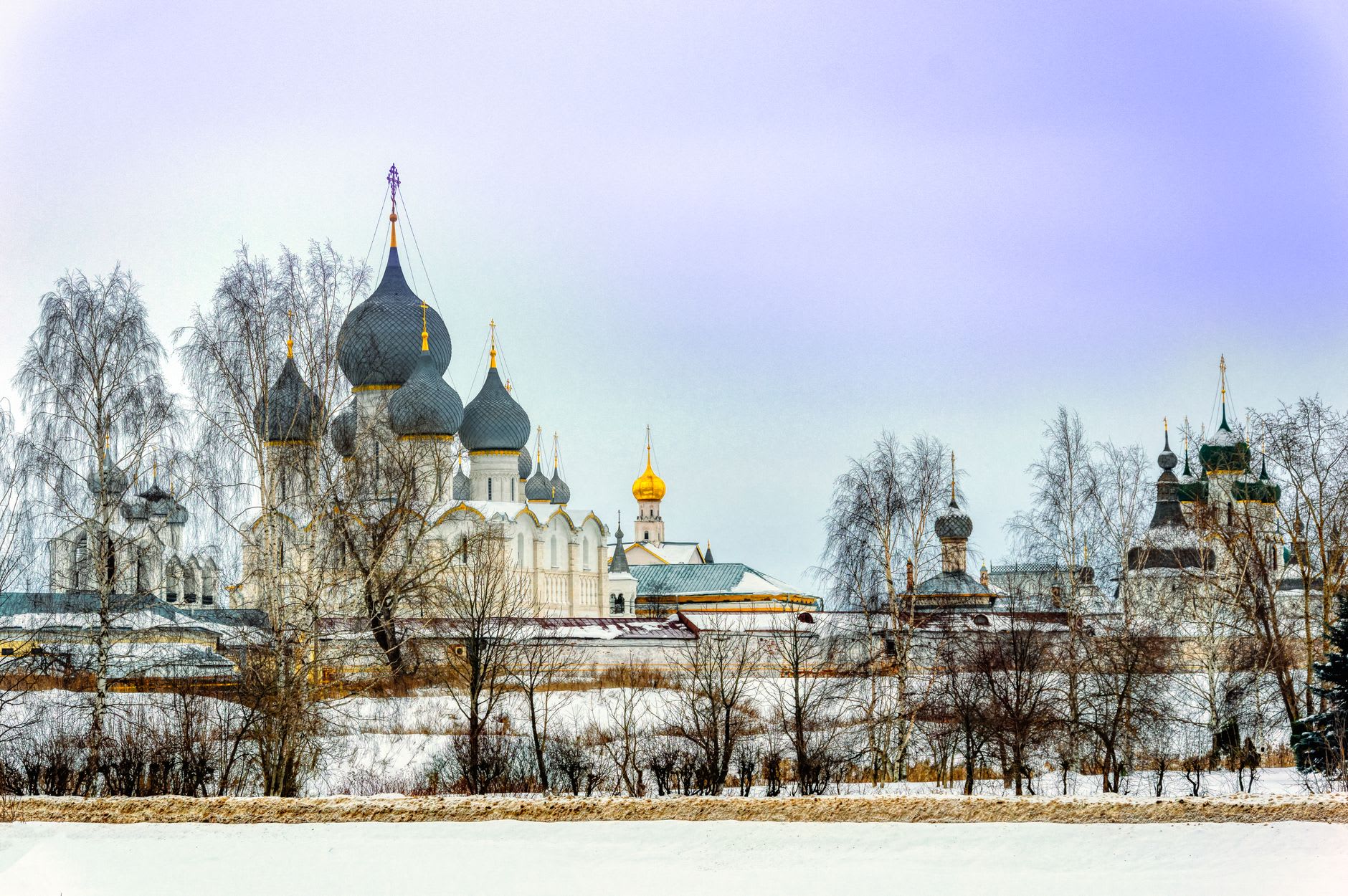
The church was built by Prince Andrei Bogolyubsky in 1165, reportedly in memory of his son Izyaslav who died in battle. The carvings on the exterior walls are still legible after eight and a half centuries — King David in the central relief on each facade, stone lions and fantastic birds in the blind arcading below, each capital carved with a precision that suggests the artisans were working at a scale of care beyond what the building’s modest size demanded. The interior is small enough to feel private, which is part of why it has been a pilgrimage site for so long. You step inside and the proportions do something to the light — gather it, concentrate it — and the world outside the narrow windows seems to recede to a significant distance.
The village of Bogolyubovo itself holds the ruins of Prince Andrei’s twelfth-century palace complex — the only surviving Romanesque palace architecture in Russia — and the Bogolyubovo Monastery, whose white tower and covered walkway date to Andrei’s time. Andrei Bogolyubsky was murdered here in 1174 by his own boyars, stabbed multiple times in his bedchamber while calling for his sword, which they had removed in advance. The staircase tower where it happened is still standing. History in this part of Russia has a way of being very specific about where things occurred.

The walk back from the church through the flooded meadow, carrying my boots, with the church receding behind me and the sun already past its peak, was one of those experiences that keeps replaying at unprompted moments — on trains, in kitchens, at 3am for reasons I can’t account for. The meadow smelled of cold water and new grass and the particular mineral sharpness of snowmelt. I kept turning around to look at the church one more time, and each time it was slightly smaller and slightly more perfect.
When to go: Late April through early May for the spring flood — this is when the church-in-water images happen and the meadow is at its most dreamlike. Summer is fine; the walk is pleasant and the fields are green. Winter works beautifully if the snow is right — white church, white snow, very still. Avoid the path in autumn when it can be deeply muddy after rain.