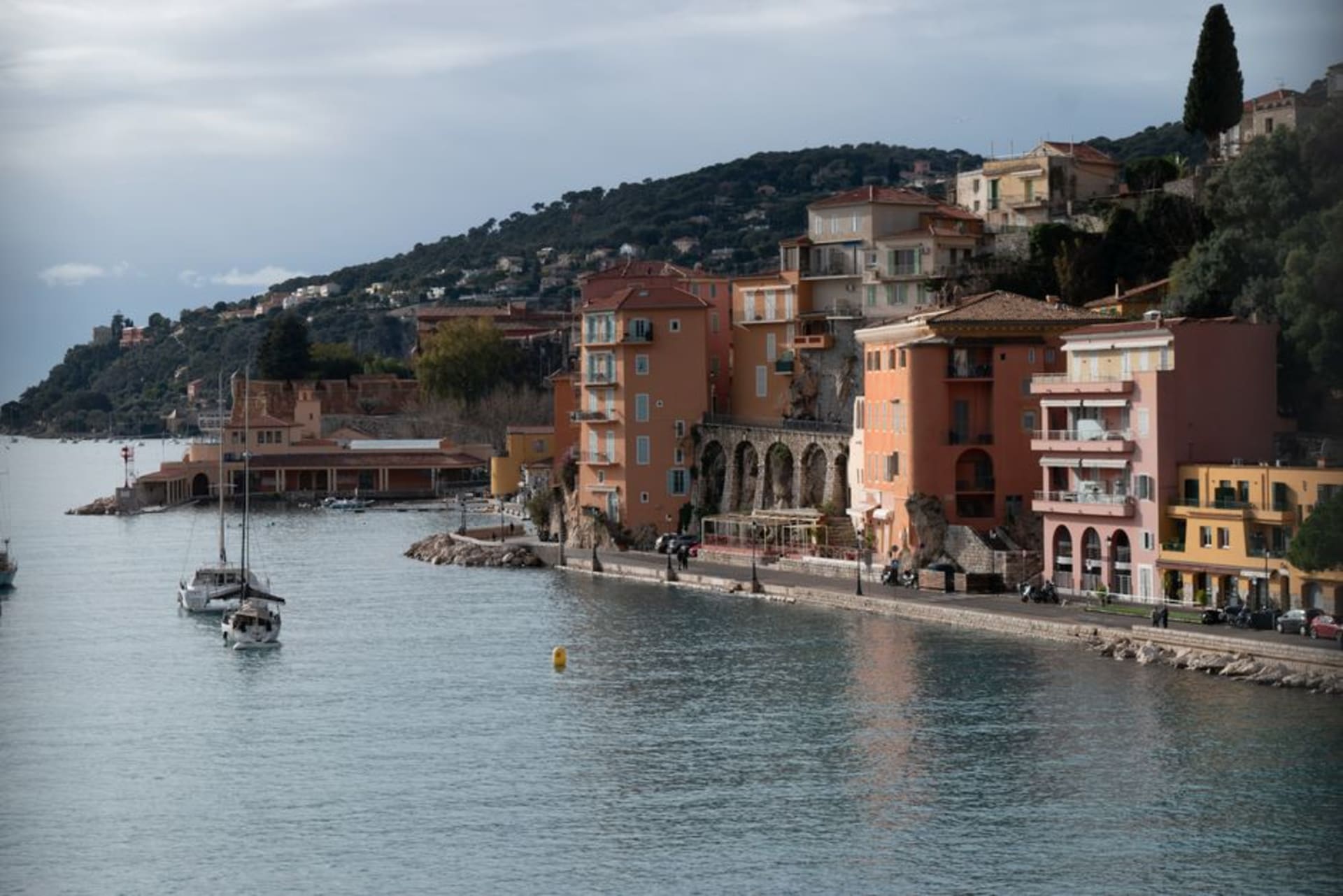
Villefranche-sur-Mer
"The harbour is deep enough for aircraft carriers, and somehow the town underneath it stayed this small."
A fishing town on one of the deepest natural harbours in the Mediterranean, its old town threaded with vaulted streets and a small chapel Jean Cocteau decorated wall to wall.
Villefranche-sur-Mer sits on one of the deepest natural harbours on the whole Mediterranean, deep enough that US Navy aircraft carriers used it as a base for decades, and yet the town at its edge has stayed a genuinely modest fishing village — pastel houses, a small pebble beach, and a rhythm that felt slower than either Nice or Monaco, its wealthier neighbours a few minutes in either direction.
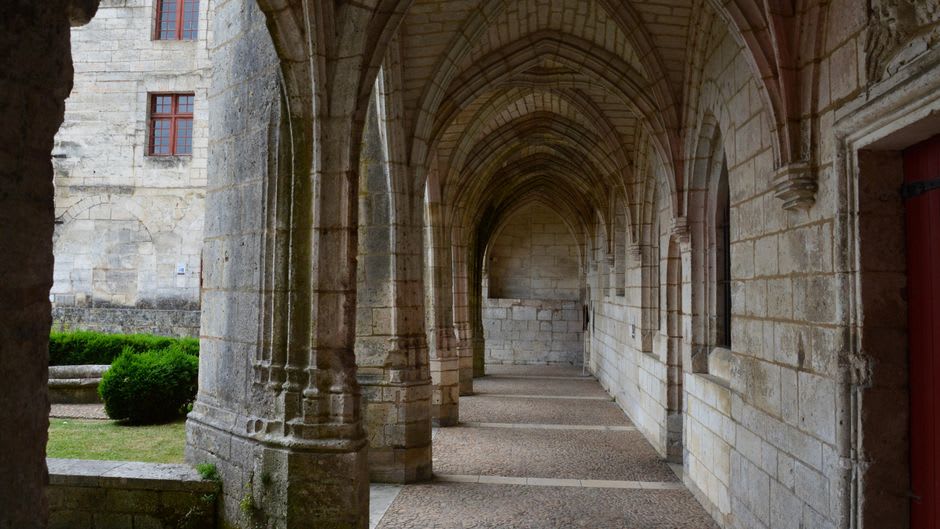
Streets built to hide from pirates
The old town’s Rue Obscure is a vaulted, covered street running the length of the waterfront district, built in the fourteenth century partly to let residents move around unseen during raids, and walking through it — cool stone overhead, the occasional shaft of light from a gap above — feels like passing through the town’s own basement while everyone else lives on the floor above you. It’s one of the strangest and most memorable streets we walked on the whole coast.
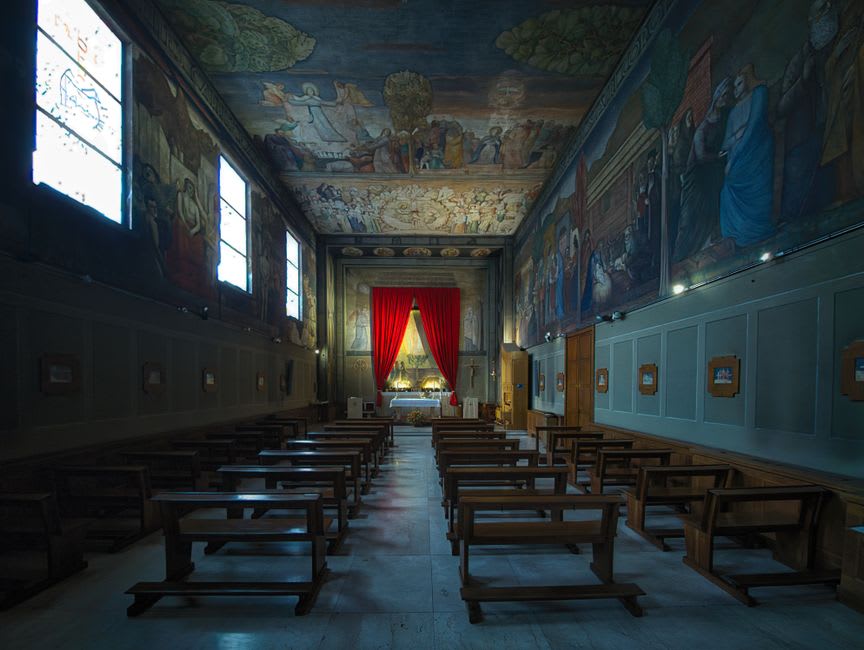
A fisherman’s chapel, entirely reimagined
On the harbourfront, a small fourteenth-century chapel once used to store fishing nets was given over to Jean Cocteau in the 1950s, and he covered every interior surface — walls, ceiling, altar — in murals of eyes, fish, and figures from the life of Saint Peter, done in a spare, almost cartoonish line that somehow suits the tiny stone space perfectly. It takes ten minutes to see and stays with you a lot longer than that.
When to go: Any season works for the town itself, but pair a visit with a swim in late spring or early autumn, when the harbour water is warm and the cruise-ship crowds that occasionally anchor offshore in summer haven’t arrived.