Villandry
"I have never in my life found a vegetable garden beautiful until Villandry made a liar out of me."
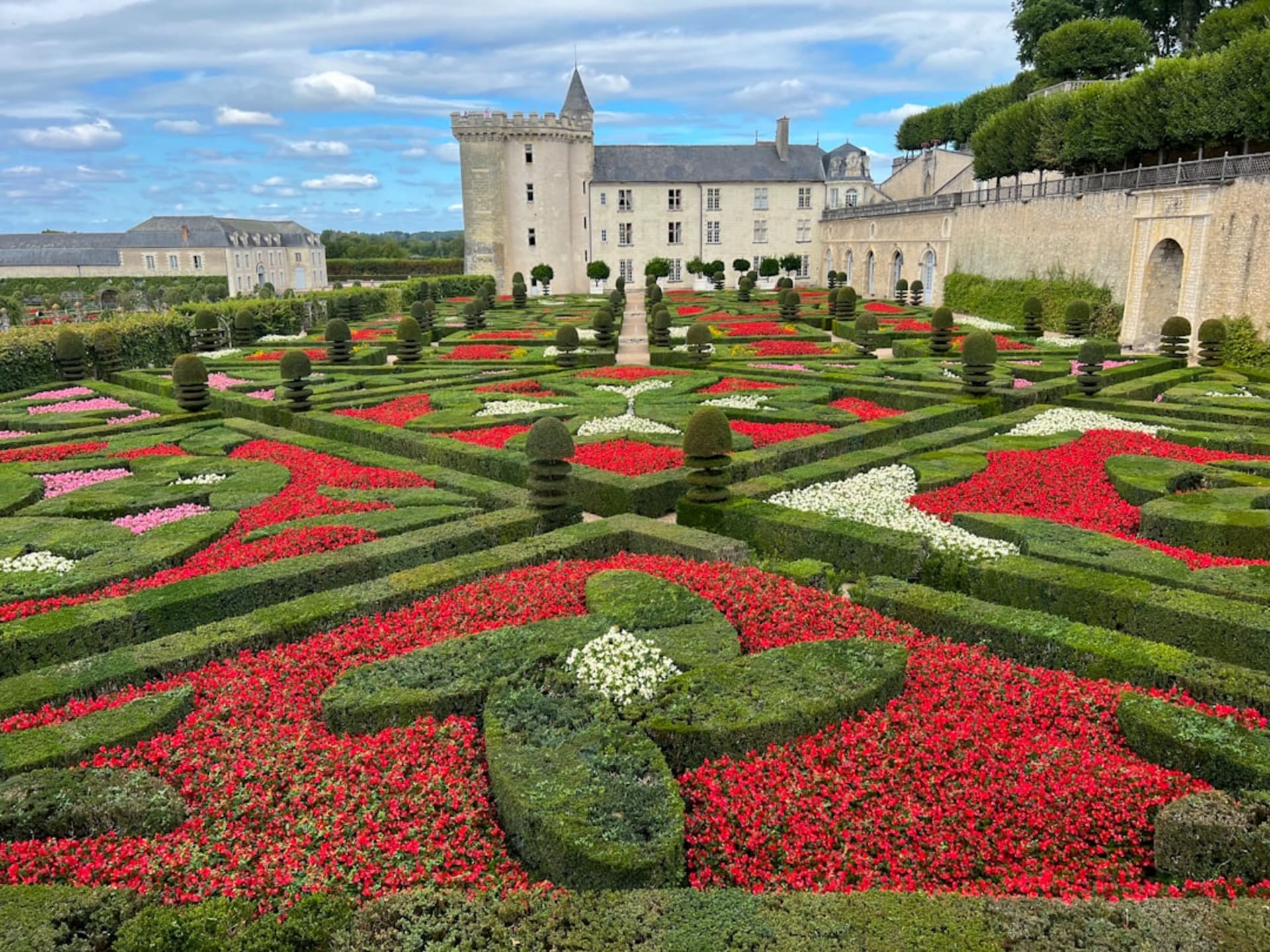
A small village known for exactly one thing, but it's a spectacular one — the last great Renaissance château garden in the Loire, still laid out as ornamental vegetable beds by the family that saved it a century ago.
I told Lia before we went that I was skeptical about driving forty minutes out of our way for a garden attached to a château we weren’t even planning to tour properly, and she reminded me of that comment for the rest of the trip, because Villandry turned out to be one of the best afternoons we had in the whole Loire. The village itself is barely a village — a church, a bakery, a scatter of houses — entirely overshadowed by the six hectares of gardens next door, which is, in fairness, exactly the correct order of priorities.
A vegetable garden as art
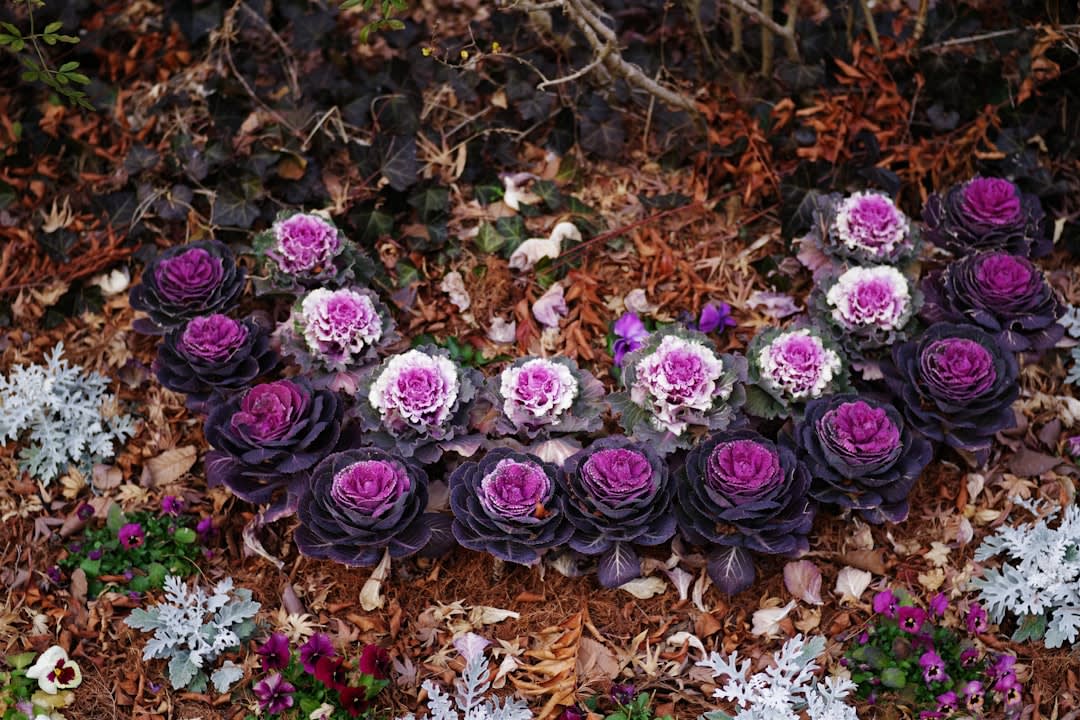
The Jardin Potager at Villandry is the reason people come, and it is unlike any garden I’ve seen: an entire acre of vegetables — cabbages, leeks, beetroot, chard — planted not in rows but in geometric compartments, each block a different color and texture, arranged so the whole thing reads as an abstract pattern when seen from the terrace above. The design dates to the Renaissance obsession with order imposed on nature, but the garden that exists today is largely the work of Joachim Carvallo, a Spanish doctor who bought the crumbling château in 1906 and spent decades restoring the gardens to something close to their sixteenth-century logic, using old engravings as his guide.
We climbed to the raised terrace along the garden’s edge specifically to get the aerial view, and it’s worth doing before you walk the beds at ground level — from above, the color blocks and box-hedge borders resolve into a genuinely striking pattern, something between a painting and a puzzle.
The ornamental and the working, side by side
Beyond the potager, Villandry has a full sequence of gardens — a water garden with a large still pool, a sun garden, and an ornamental love garden where the box hedges are clipped into symbolic shapes representing different kinds of love, tender, passionate, fickle, and tragic, a piece of pure sixteenth-century whimsy that a guide walked us through with a straight face. What struck me most, though, was how working the potager still is — the vegetables are genuinely harvested and, I was told, some of it goes to the château’s own kitchen and to local food banks, so the spectacle and the practical purpose haven’t been separated the way you might expect.
We finished at a small café on the garden’s edge with a glass of Vouvray and a view straight down the central gravel path, watching gardeners in blue coveralls hand-weeding beds that must take a genuinely enormous amount of maintenance to keep this precise.
When to go: Mid-to-late summer, when the vegetable beds are at full color and fully planted — late June through August is peak, which is unusual advice for the Loire, where I’d normally steer you away from high season.