Vézelay
"Bernard of Clairvaux preached the Second Crusade from this hill. You feel the weight of that before you even reach the church."
A hilltop pilgrimage village in the Yonne crowned by a basilica so significant it launched a crusade, and one of the few places I've visited that felt genuinely worth the climb before we'd even reached the top.
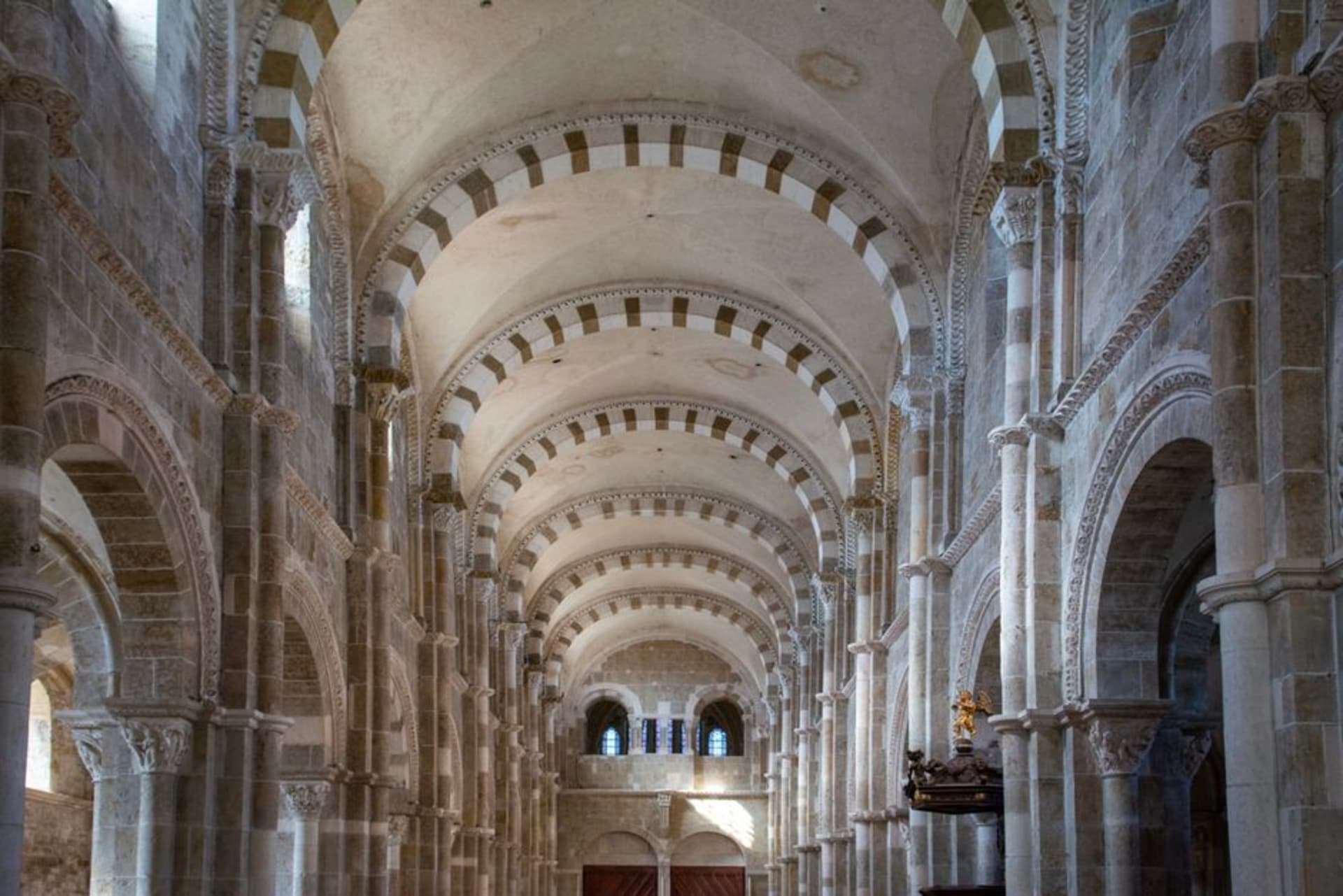
Vézelay sits on an isolated hill rising out of the Burgundy countryside, and the single street up to the basilica climbs steadily enough that by the time we reached the top, out of breath and slightly annoyed at ourselves for not pacing better, the building at the summit felt like it had been earned rather than just arrived at. That’s apparently by design, or at least by centuries of accumulated pilgrim tradition — Vézelay has been one of the four great starting points of the Camino de Santiago pilgrimage routes since the Middle Ages, and people have been climbing this exact hill on foot for the better part of a thousand years.
The hill that launched a crusade
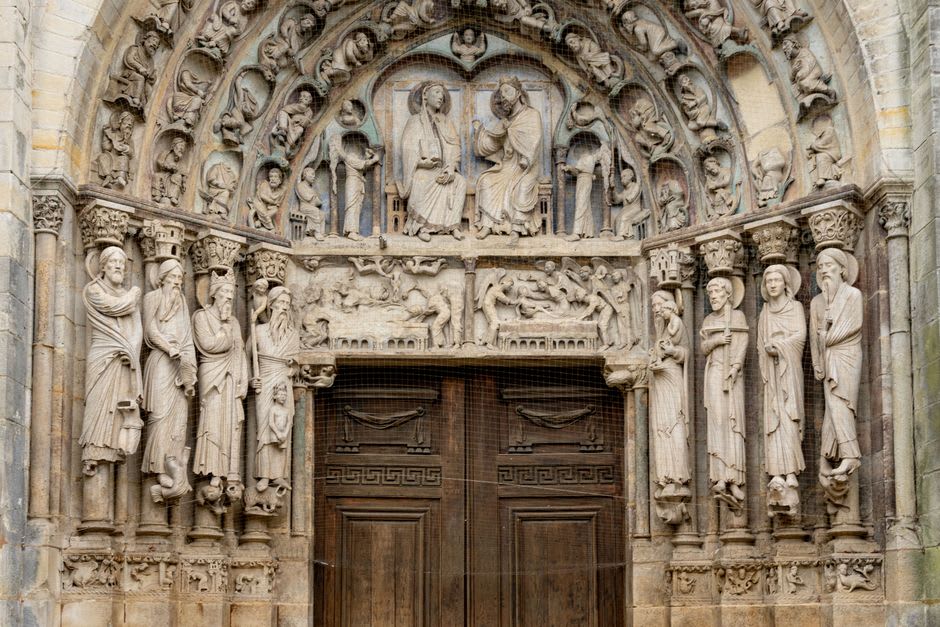
The Basilique Sainte-Marie-Madeleine, a UNESCO World Heritage site, was believed for centuries to hold the relics of Mary Magdalene, which made Vézelay one of medieval Christendom’s most important pilgrimage destinations, and in 1146 Bernard of Clairvaux stood on this hill and preached the sermon that launched the Second Crusade in front of King Louis VII of France. The basilica’s tympanum, the carved stone arch above the main door, is considered one of the masterpieces of Romanesque sculpture in Europe — a dense, almost frantic composition of Christ sending the apostles out to convert the world, surrounded by carvings of the strange and monstrous peoples medieval Europeans believed lived at the edges of the known world. We stood under it for a long time, and even without any particular religious feeling, the sheer narrative ambition of the carving got to both of us.
The view that comes with the climb
Behind the basilica, a terrace looks out over the Cure valley and the rolling farmland of the Morvan regional park beyond, an almost startling contrast after the density of carved stone inside — nothing but green hills, scattered farms, and a long silence. We sat there for a while with bread and a wedge of local Époisses we’d bought lower down the hill, watching the light change over the valley, before wandering back down through the village’s narrow streets, lined with a scattering of artists’ studios that have made Vézelay a small but genuine creative colony since the early twentieth century.
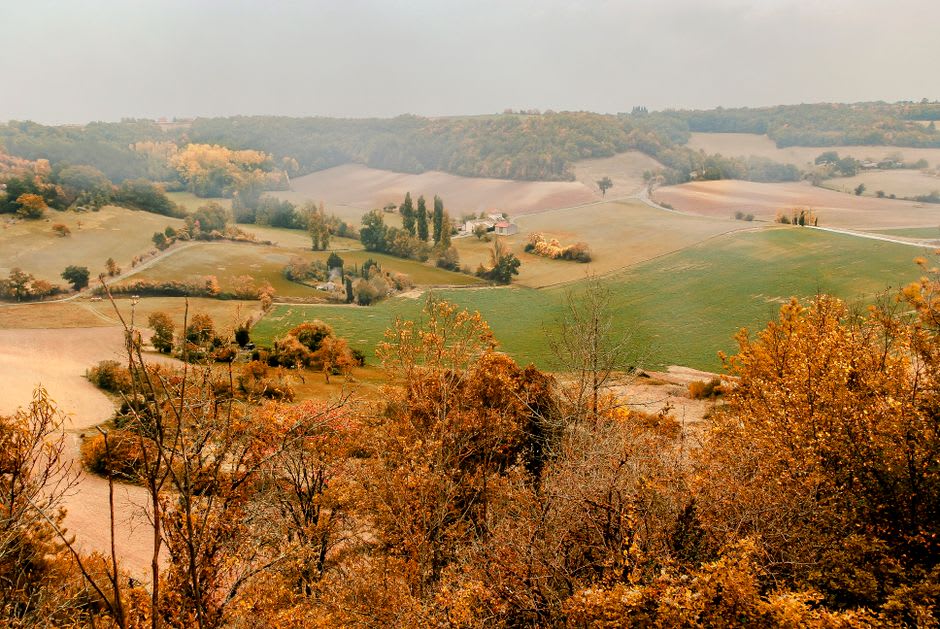
When to go: Late spring or early autumn, when the climb up the hill is comfortable and the valley views aren’t hazed by summer heat. It’s a genuinely peaceful spot outside the July-August peak.