Troyes
"Someone told us the old town is shaped like a champagne cork. We spent an hour trying to prove them wrong and couldn't."
A medieval capital of Champagne whose old town is shaped like a champagne cork if you look at a map, packed with more timber-framed houses than I could count and a stained-glass tradition that outshines Chartres in sheer volume.
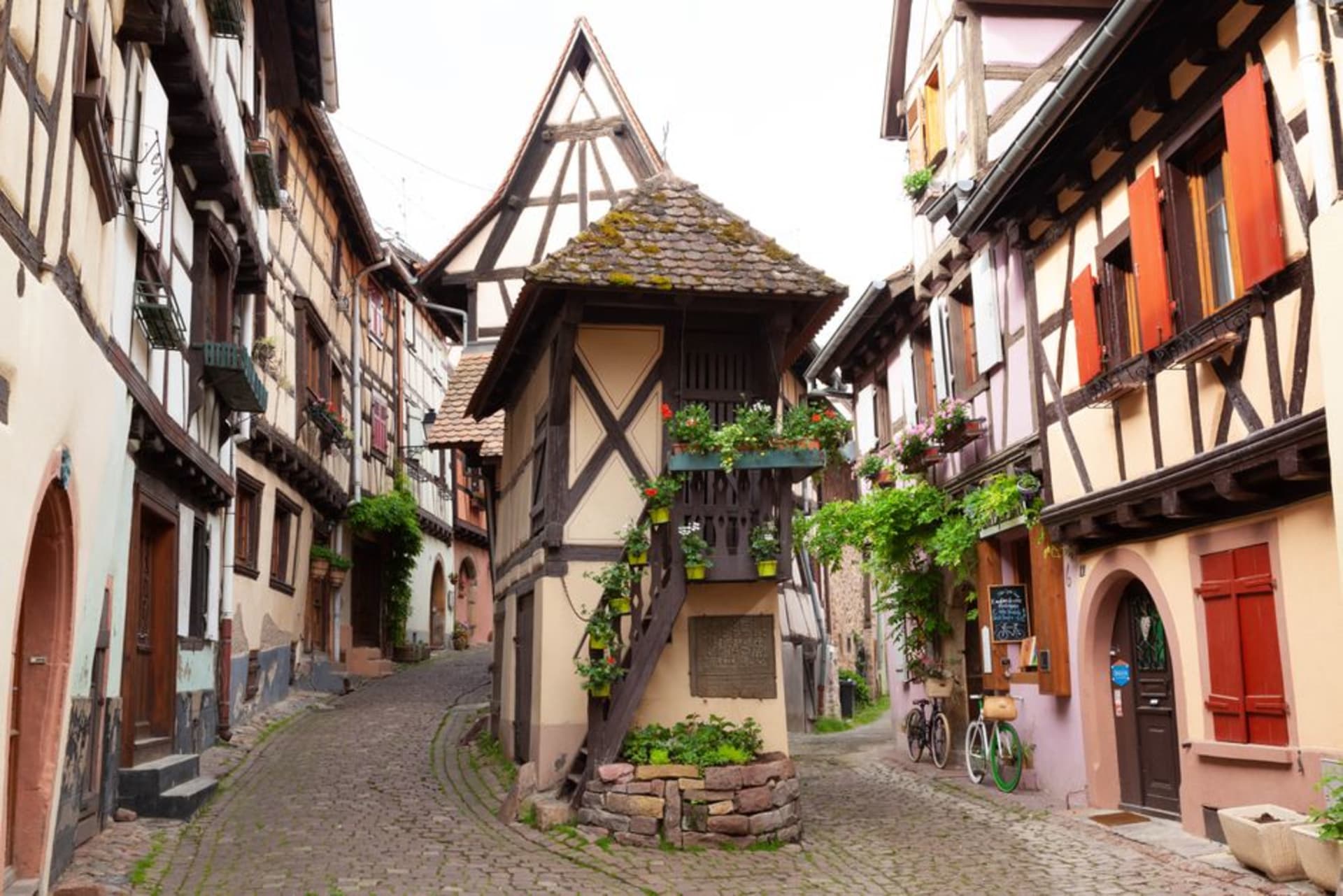
Somebody at our hotel mentioned, almost in passing, that Troyes’s old town is laid out in the rough shape of a champagne cork when seen from above, a coincidence given the region, and Lia spent the rest of our stay trying to trace the outline on every map we passed. Whether that’s deliberate town planning or a pleasant accident of medieval street growth, I never fully settled, but it gave us a reason to keep looking up from street level, which in Troyes is generally where the interesting things are anyway.
Streets that lean toward each other
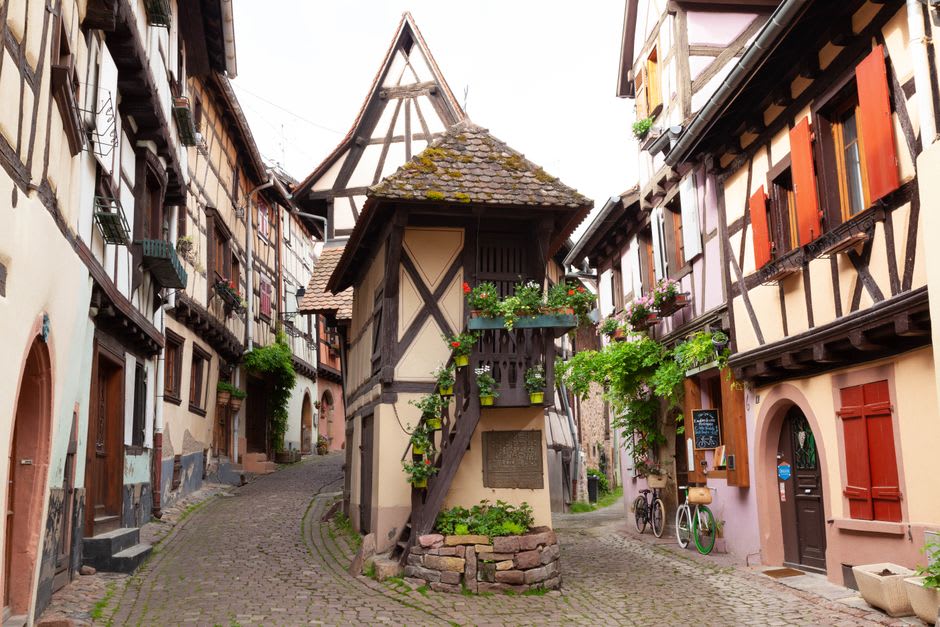
Troyes has one of the largest concentrations of timber-framed medieval and Renaissance houses in France, entire streets of them in the Quartier Saint-Jean and around Rue Champeaux, many leaning so far out over the narrow lanes below that upper floors on opposite sides of the street nearly touch. This wasn’t an accident of decay — medieval builders extended upper storeys outward deliberately to gain floor space without paying tax on ground-level footprint, and the effect five centuries on is streets that feel almost tunnel-like, timber and plaster crowding out the sky. We wandered the Ruelle des Chats, one of the narrowest surviving medieval alleys in France, barely wide enough for two people, named for the cats that supposedly used to leap between the overhanging eaves.
A city of glass
Troyes was a major centre of stained-glass production from the medieval period onward, and its churches hold what local guides claim, with some justification, is more surviving stained glass than any other French city outside Chartres — the Cathédrale Saint-Pierre-et-Saint-Paul alone has windows spanning the thirteenth through seventeenth centuries. We spent a rainy afternoon church-hopping between Saint-Pierre, Sainte-Madeleine, and Saint-Urbain, and by the third one I’d stopped trying to photograph every window and just sat in a pew watching the colours shift as the clouds moved outside. Troyes is also, less romantically, the historic home of France’s factory-outlet clothing industry, and we ended the day at an unglamorous but genuinely useful outlet mall on the edge of town, which felt like a strange but honest way to close out a day built around medieval glass.
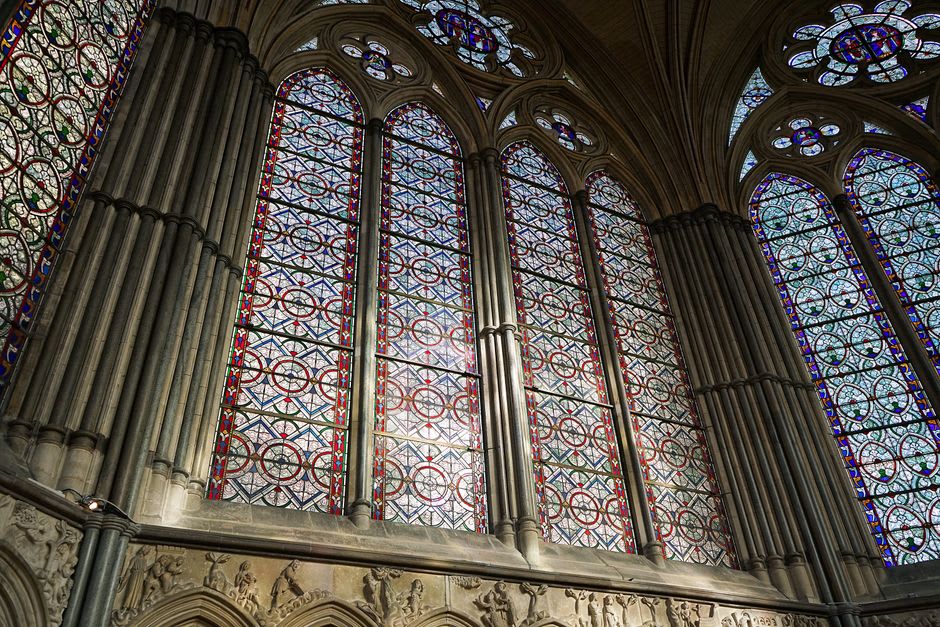
When to go: Spring or early autumn, for comfortable walking weather through the old town’s narrow streets, and preferably a day with some cloud cover to soften the light through the stained glass.