Tours
"Tours was the first place on the whole trip where we ate dinner at eleven and it felt completely normal."
The real capital of the Loire, a lively university city with a half-timbered old quarter, a cathedral of shifting styles, and a student-driven bar scene that makes it feel nothing like the sleepy château towns around it.
After ten days of quiet château towns that shut down by nine, Tours felt like arriving somewhere with a pulse again. It’s a proper city, home to a large university, and that student population changes the entire texture of the place — Lia and I checked into an apartment near the old quarter and within an hour were sitting on a packed terrace at Place Plumereau at ten at night, which had simply not been an option anywhere else on this trip.
Plumereau and the half-timbered core
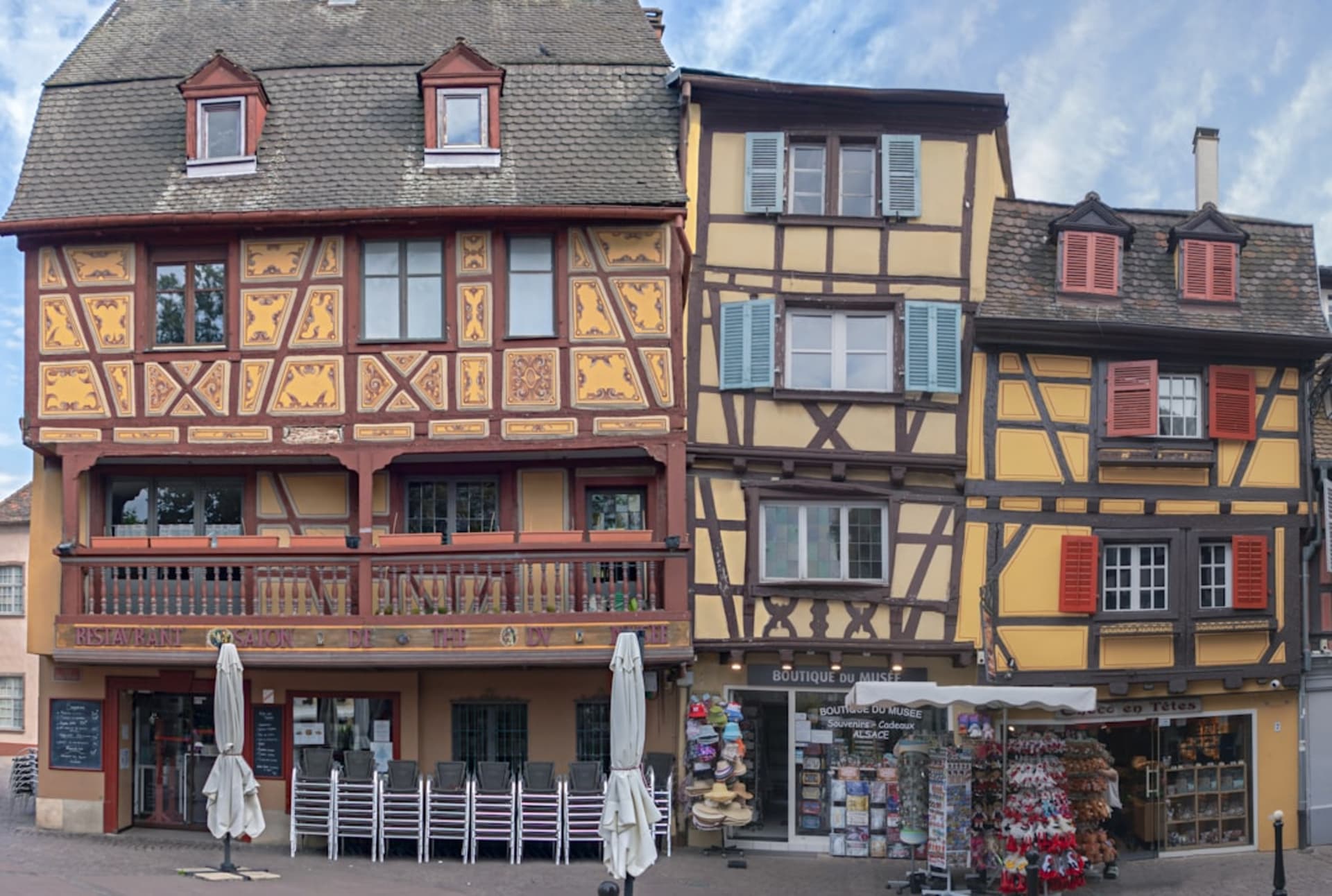
The old town around Place Plumereau, known locally as just “Place Plum,” is a dense knot of medieval and Renaissance streets lined with leaning half-timbered houses, many of them now bars and restaurants with tables spilling across the cobbles. It has a slightly theatrical density to it — beams painted in ochre and grey, carved wooden figures on some of the older facades — but it never felt like a museum piece the way parts of Amboise or Blois occasionally do; it’s genuinely where the city goes out at night.
We wandered from there to the Cathédrale Saint-Gatien, whose facade is a slow-motion argument between styles — the lower portions Gothic, begun in the thirteenth century, the upper towers finished two hundred years later in full Renaissance flourish, so the building visibly changes its mind as your eye travels upward. Inside, the stained glass in the choir dates to the thirteenth century and is some of the oldest surviving glass in France, deep blues and reds that the guide told us have never needed replacing.
Rillettes, wine bars, and a city that stays up
Tours sits at the meeting point of the Loire and the Cher, and the food reflects the whole valley’s produce funneled into one place — we ate rillettes de Tours, a coarser, darker pork spread than the Norman version, at a small bar à vins on Rue Colbert, paired with glasses of Chinon and Bourgueil from producers we recognized from our stops further down the river. The owner, when he heard we’d just come from the cave tastings in Chinon, poured us a comparison glass on the house and asked what we’d thought of it, genuinely curious rather than performing hospitality.
What I liked most, though, was simpler than any of that: walking back to our apartment past midnight, streets still busy, bars still loud, after nearly two weeks of towns that had gone dark by nine. It reset something in both of us before we carried on toward the coast.
When to go: Term time, roughly September through May, if you want the city at its liveliest — the student population thins out considerably in summer. Otherwise any season works; Tours doesn’t live and die by château opening hours the way its neighbours do.