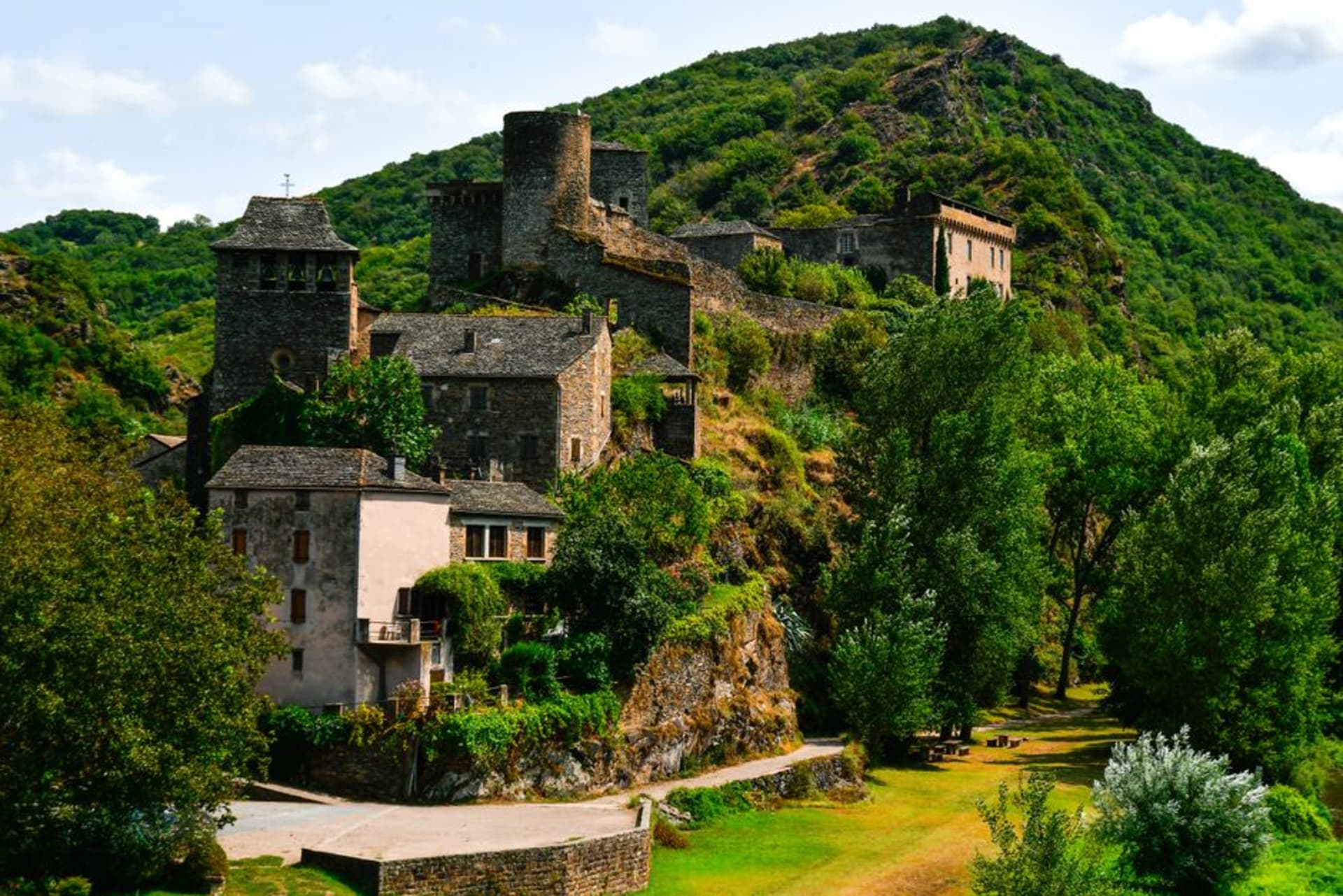
A fortified medieval village in the Cantal highlands built entirely from dark volcanic stone, home to the deep red cattle breed that shares its name and grazes the surrounding pastures in the thousands.
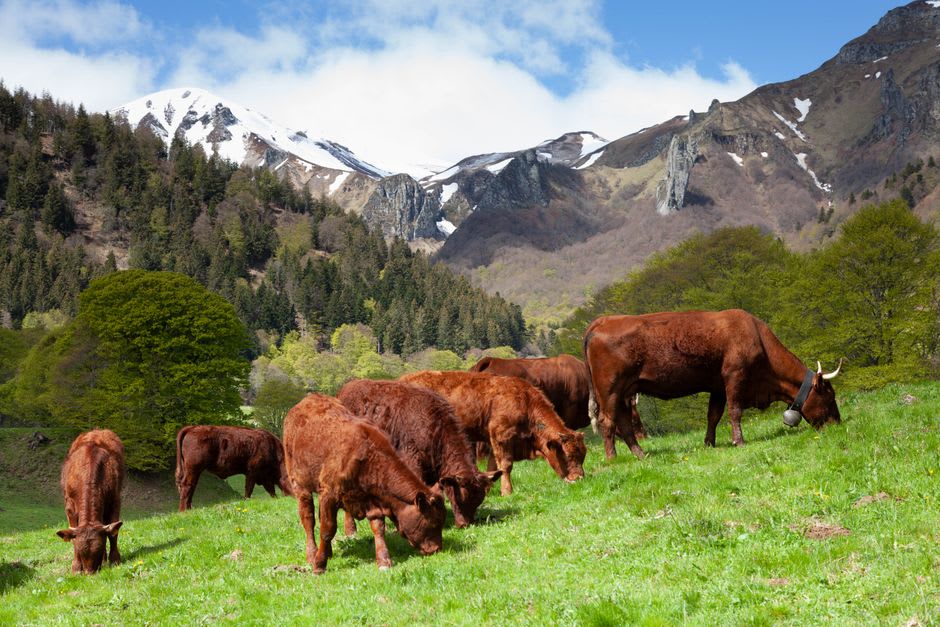
Salers sits on a volcanic plateau in the Cantal, high enough that the air had a real bite to it even in July, and the village looks like it grew directly out of the basalt underneath it — dark grey turreted houses, steep slate roofs, a fortified gate you pass through to reach the central Grande Place. Everywhere around the village, the pastures are dotted with Salers cattle, a deep mahogany-red breed with long lyre-shaped horns that has grazed this plateau for centuries and gives its name, and increasingly its meat and cheese, to half the menus in the region.
A fortress square that never needed the fortress
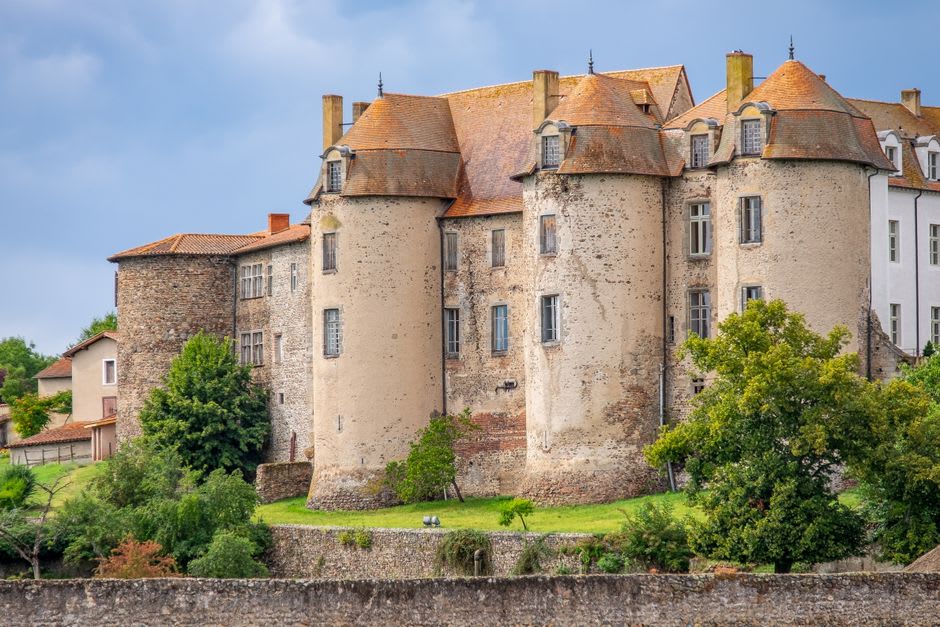
The Grande Place at the heart of Salers is ringed by turreted mansions built by minor nobility and wealthy merchants between the fifteenth and seventeenth centuries, when the village was an administrative seat for the Auvergne. The fortifications — thick walls, a single defended gate — were built for a threat that mostly never materialised, and the square today is calm in a way that belies the defensive architecture around it: a fountain, a few outdoor tables, and views out over the plateau in every direction from the ramparts at its edge.
Cheese cellars and the cattle on the hillside
Salers gives its name to two things: the cattle, and a firm, nutty AOC cheese made from their milk in traditional stone burons scattered across the high pastures. We stopped at a small producer just outside the village where enormous wheels aged in a cool cellar, and the woman running it cut us a slice off a wheel that had been turning for over a year, dense and sharp in a way the young Cantal we’d had elsewhere wasn’t. Driving out, the red cattle were grazing right up against the road, entirely unbothered by the cars slowing to look at them.
When to go: Summer opens up the high pastures and keeps the mountain roads clear; the plateau gets cold and often snowbound well into spring at this altitude.