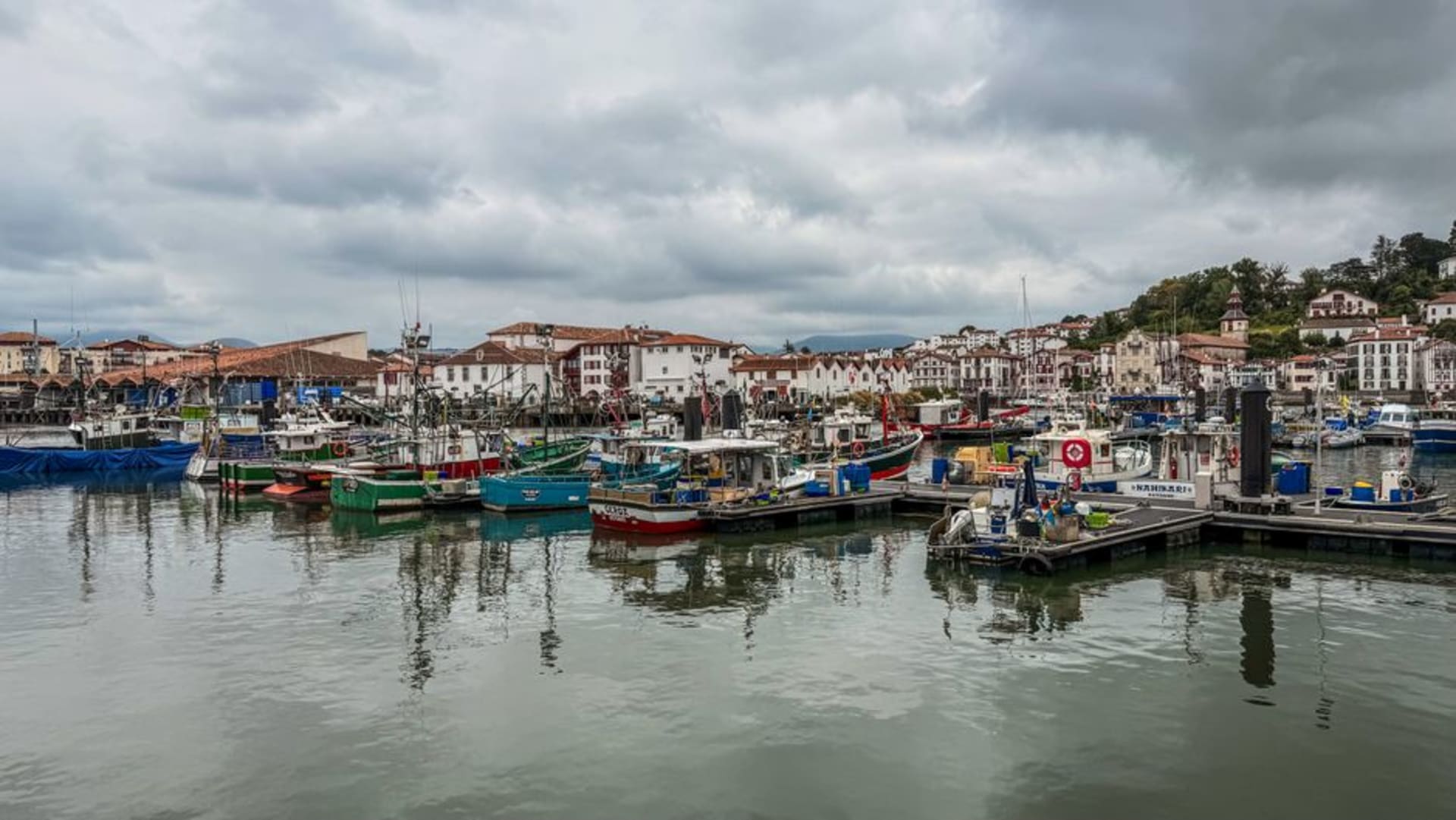
A Basque fishing port on the Bay of Biscay where red-and-white timbered houses face a curved bay calm enough to swim in and a harbour still busy with tuna and anchovy boats.
Lia grew up sailing off Brittany and has strong, mostly unshakeable opinions about French coastlines, so when she stood on the sea wall at Saint-Jean-de-Luz and said “this is a proper bay,” I took it as the compliment it was meant to be. Two breakwaters, built after a string of ships were smashed against the shore in the nineteenth century, tame the Atlantic swell into something almost lake-like, and the town behind it is timbered in the deep red and green of Basque houses, with green shutters that seem to belong to every third building in Iparralde.
The wedding that never left
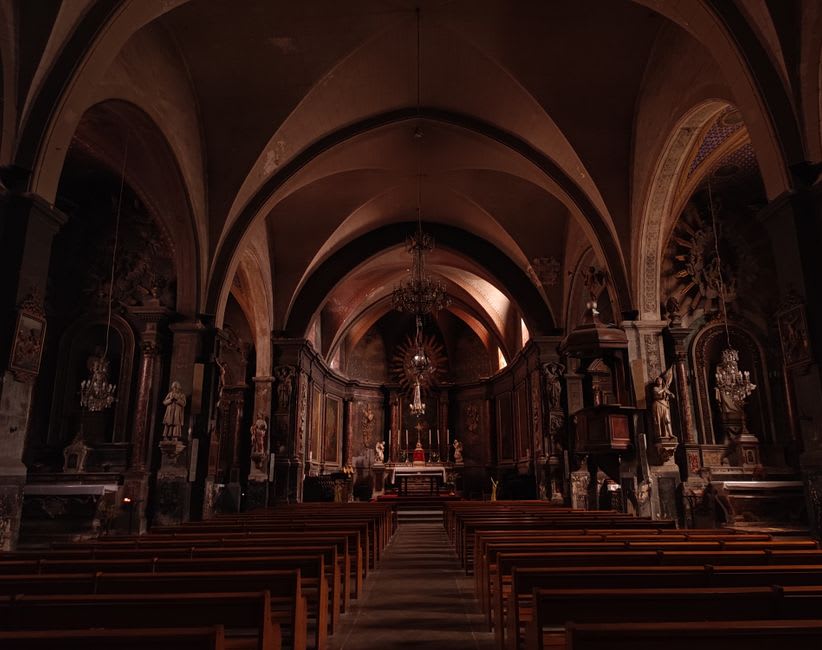
The Église Saint-Jean-Baptiste is where Louis XIV married Marie-Thérèse of Spain in 1660, and the town has never quite stopped talking about it. The door the king used to leave the church was bricked up afterward, the story goes, so no lesser mortal could ever pass through it again — whether that’s true or a very good piece of tourism marketing, nobody in town seemed inclined to spoil it for us. Inside, the church has the wooden galleries typical of Basque country churches, tiers of dark oak balconies running around three sides, originally so men and women could be seated separately. We sat in a pew near the back for a while, mostly to get out of the wind.
Fish, criée, and the walk to Ciboure
Saint-Jean-de-Luz is still a working port, and the criée — the covered fish auction hall down by the harbour — opens most mornings to buyers who arrive before the tourists are awake. We didn’t have anywhere to put a crate of tuna, but we followed the smell of the market halle instead, where a woman sold us ttoro, a Basque fish stew, in a plastic tub we ate on a bench with two plastic forks. Across the small Nivelle river is Ciboure, birthplace of Maurice Ravel, a quieter fishing village you reach by a footbridge in about ten minutes and where the harbour houses lean in even closer than they do on the Saint-Jean-de-Luz side.
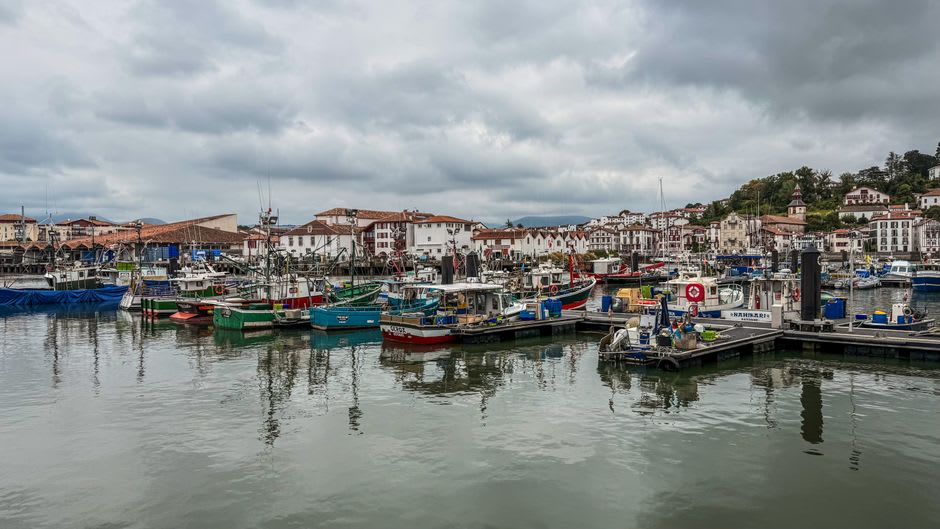
When to go: July and August bring the annual fêtes and the best swimming, but the bay’s calm water and Basque light are just as good — and far less crowded — in late May or September.