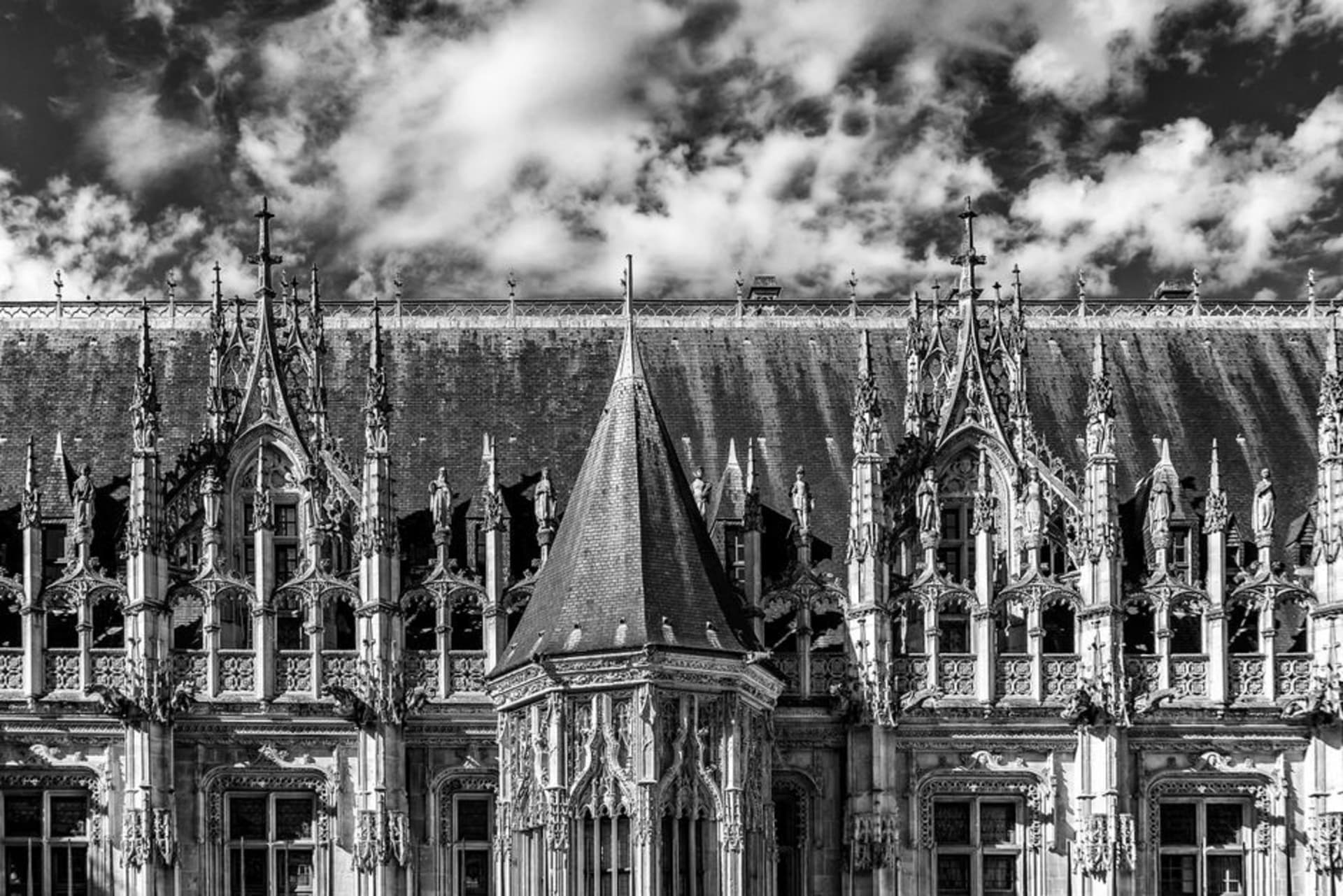
Rouen
"It's the kind of city where a single street corner turns out to have three different centuries stacked on top of each other."
A Seine-side city of half-timbered streets and a cathedral spire that was, for a few years, the tallest building in the world, all built over the spot where Joan of Arc was burned.
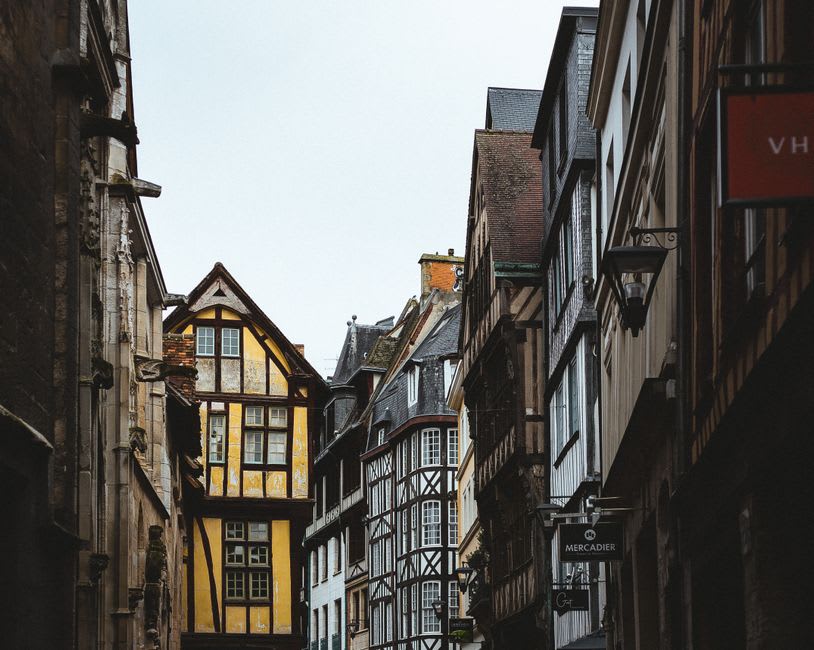
Rouen surprised us. We’d planned it as a stopover between Paris and the coast, one night, and ended up rearranging the rest of the trip to give it two, mostly because the old town’s tangle of half-timbered streets kept unfolding into more of itself every time we thought we’d reached the edge of it.
A clock, a cathedral, and Monet’s obsession
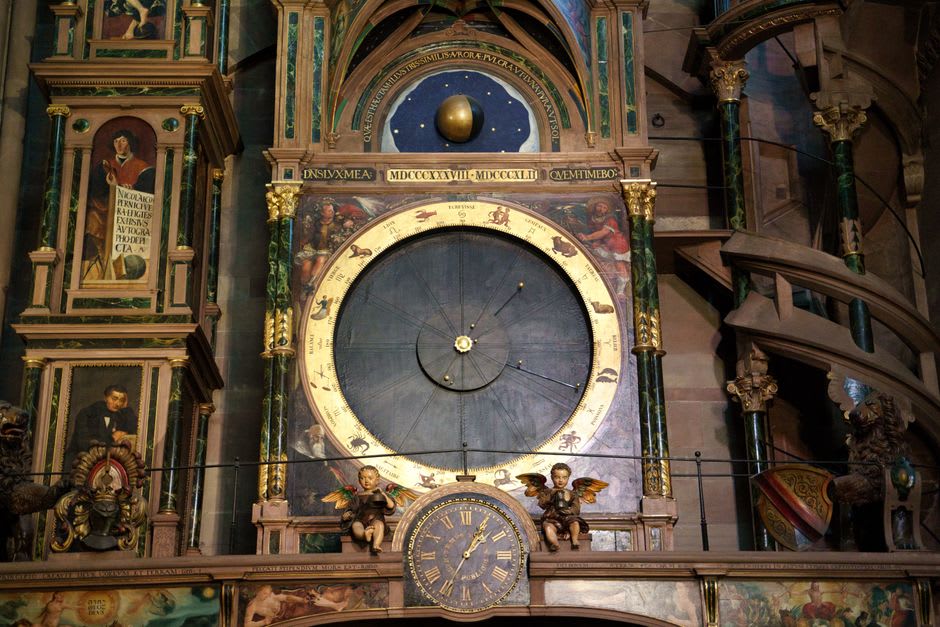
The Gros-Horloge, a Renaissance astronomical clock built into an archway spanning the street of the same name, has been telling Rouen’s time since the 14th century, its single gilded hand and painted dial showing the phase of the moon along with the hour, which struck me as an oddly poetic priority for a public clock. A few streets away, the Cathédrale Notre-Dame de Rouen briefly held the title of world’s tallest building after its cast-iron spire was completed in 1876, and its façade is the one Monet painted more than thirty times in the 1890s from a room across the square, chasing the way its stone changed colour through the day. Standing where his easel would have been, roughly, the cathedral does still seem to shift depending on the light — pale grey in flat cloud, almost gold in the late-afternoon sun we caught it in.
The square where Joan of Arc died
The Place du Vieux-Marché is where Joan of Arc was burned at the stake in 1431, tried and condemned by an English-controlled ecclesiastical court after she’d been captured leading French forces against the English occupation. A modern church, the Église Sainte-Jeanne-d’Arc, stands on the site now, its roofline deliberately shaped like flames, and a simple cross marks the approximate spot of the pyre in the square outside. It’s a strange thing to stand in a lively market square, full of café terraces and people eating oysters at outdoor tables, right where that happened. We sat with a plate of them ourselves that evening, a little uneasy about the juxtaposition and grateful for it anyway, and afterward wandered Rue du Gros-Horloge and the surrounding half-timbered lanes until the shops closed around us.
When to go: Spring and autumn are ideal for wandering the old town without summer crowds, and late May’s Joan of Arc festival, the Fêtes Jeanne d’Arc, is worth timing a visit around if the dates align.