
Riquewihr
"It survived both world wars almost untouched, and walking in feels like stepping into a town that time genuinely forgot."
A walled wine town on the Alsace route des vins so intact it feels frozen in the sixteenth century, ringed by vineyards that climb straight up into the Vosges.
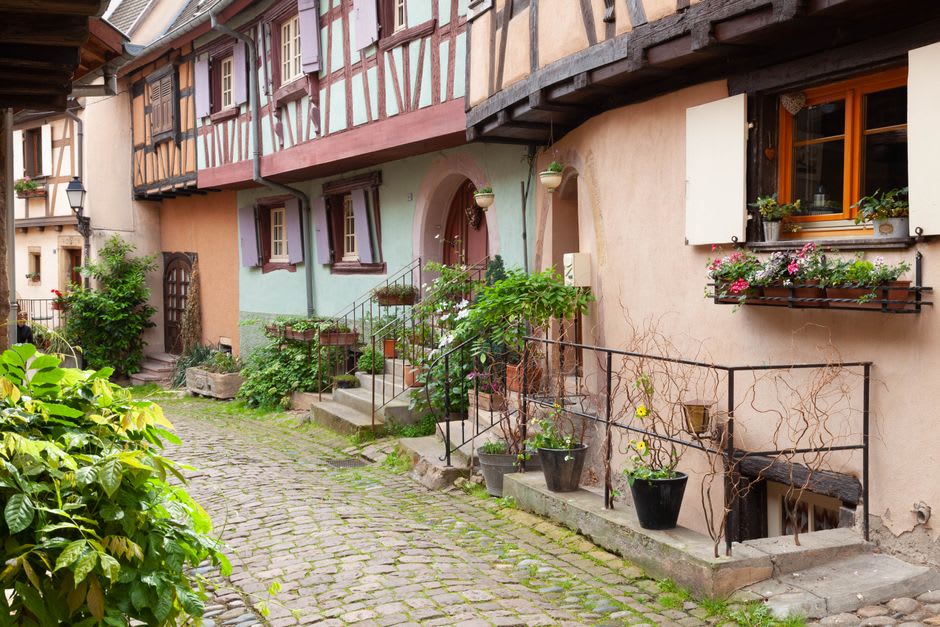
We drove up from Colmar on a grey February morning, off-season on purpose, because a friend who grew up in Alsace told us Riquewihr in summer is essentially a single-file human traffic jam. She was right to warn us and right about the trade-off too — in winter, with no crowds and the vines on the surrounding slopes cut back to bare brown stubs, you can actually look at the town instead of just moving through it. Riquewihr’s old center was spared bombing in both world wars, which is rare in this part of France, and the result is a nearly complete run of fifteenth-, sixteenth-, and seventeenth-century houses that most towns can only fake with new plaster and old paint.
Rue du Général de Gaulle, slowly
The main street is barely wide enough for two people to pass with shopping bags, and every building along it leans slightly, in the specific way of very old timber frames settling over centuries. We walked it twice — once fast, to get our bearings, once slow, actually reading the carved beams and the wrought-iron shop signs, most shaped like the trade behind the door: a key, a boot, a bunch of grapes. Lia found a couple of Renaissance courtyards tucked behind unmarked doors just off the main drag, the kind you only notice because a gate happened to be open, with stone stairwells and carved wooden galleries that most of the day-trippers walk straight past.
The Dolder and the walls that held
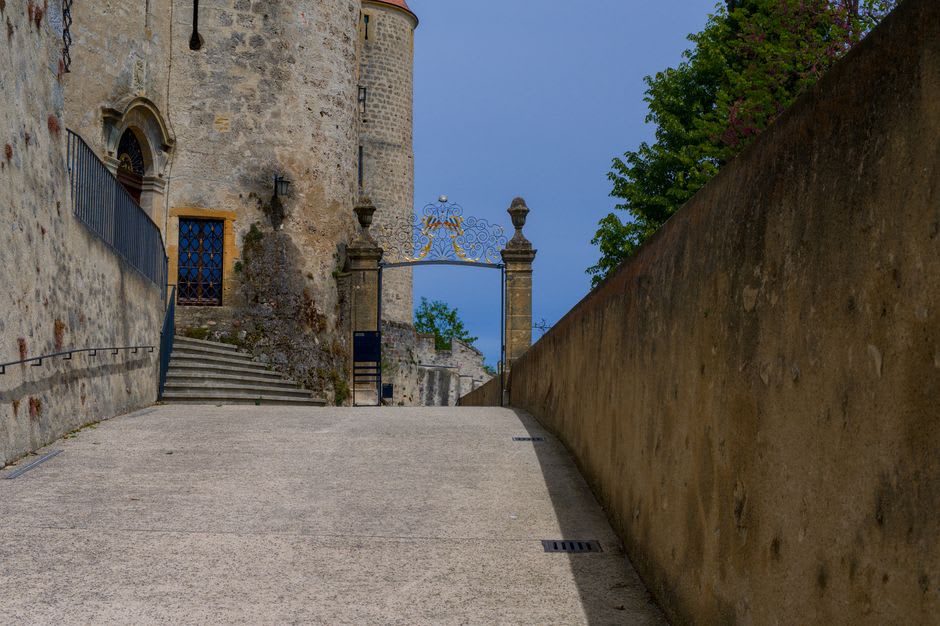
The Dolder, a squat stone-and-timber belfry gate from 1291, marks the entrance to the old town and used to be the only way in — you can still see the machicolations built for dropping things on unwelcome visitors. We climbed the narrow spiral stair inside for a small museum on the town’s defenses and a view over the rooftops toward the vineyards, which from up there look less like agriculture and more like a green staircase leading into the Vosges. Below the Dolder, a stretch of the original ramparts survives almost intact, one of the better-preserved town walls in Alsace, and we followed it around to the quieter, ivy-covered side of town where nobody else had bothered to walk.
When to go: Visit outside July and August if you can — the town is famously small and famously popular, and the crowds change the experience entirely. Late autumn during harvest or the December Christmas market, when Riquewihr is genuinely one of the prettiest in France, are the two times I’d pick.