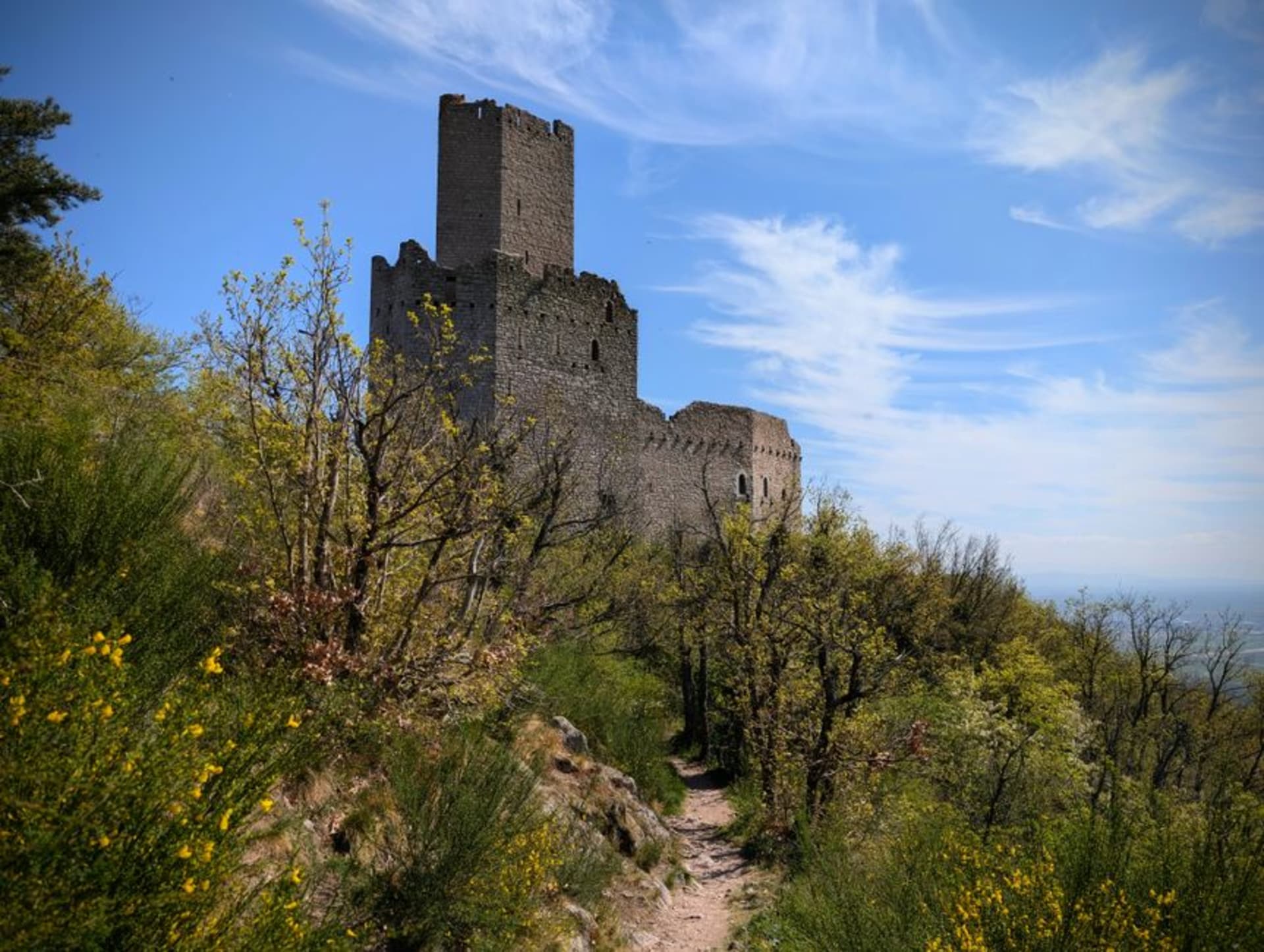
A wine town below three ruined castles on a single ridge, home to a stork colony and a pretzel festival I stumbled into completely by accident.
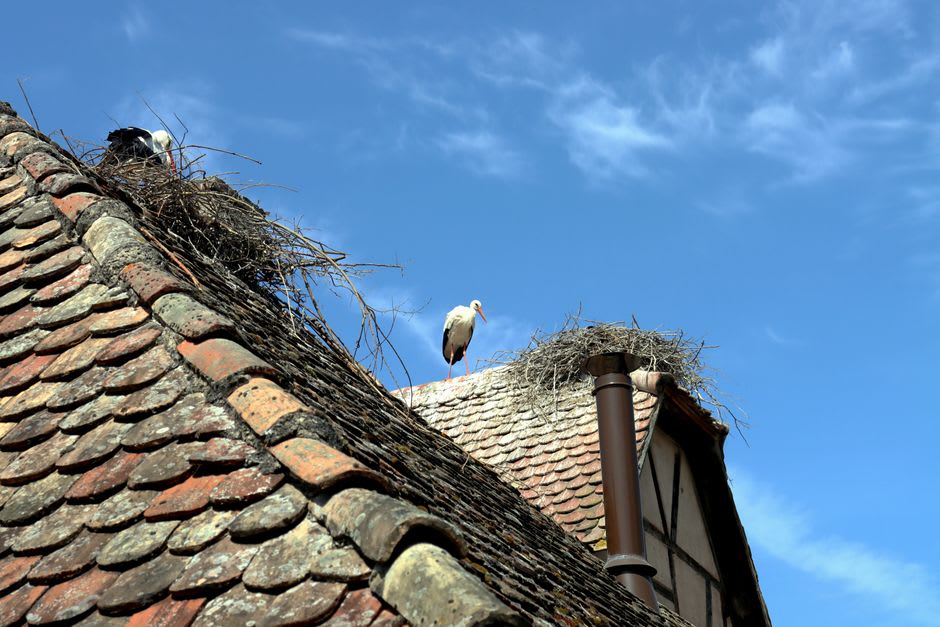
I’d planned Ribeauvillé purely for the hiking — three ruined castles on one ridge above a single town is not a combination you find twice — but what I actually remember most from our two days there is the storks. Alsace has spent decades reintroducing white storks after their population collapsed in the mid-twentieth century, and Ribeauvillé has one of the healthiest colonies in the region; their huge nests sit on chimney pots and church towers all over the old town, and the clattering sound the adults make with their bills, a kind of rapid wooden applause, became the soundtrack to our whole stay.
Three castles, one ridge
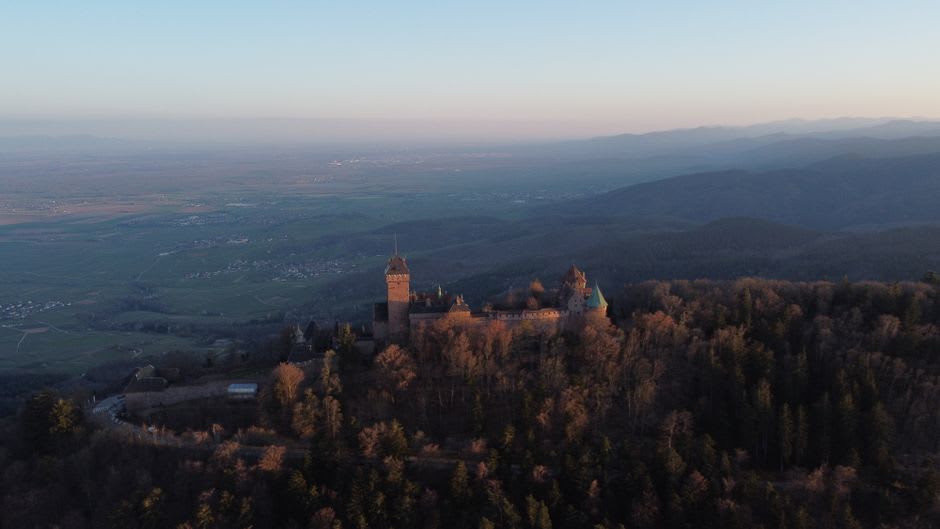
The three Châteaux de Ribeauvillé — Saint-Ulrich, Girsberg, and Haut-Ribeaupierre — belonged over the centuries to the Ribeaupierre family, once among the most powerful lords in Alsace, and they sit strung along the same forested ridge above town like beads on a string, each a different shade of ruin. We hiked to Saint-Ulrich, the largest and best preserved, in about forty minutes from the town centre, and spent an hour picking through its great hall and round tower before continuing on the marked trail to Girsberg, smaller and more overgrown, with roots pushing through what used to be a courtyard. We skipped Haut-Ribeaupierre, the furthest and most ruined of the three, and I still think about going back to finish the set.
Grand’Rue and the pretzel festival
We came down from the castles on the second afternoon straight into the town’s Pfifferdaj — the Fools’ Festival, a centuries-old street festival that we had somehow not clocked when booking, complete with a parade, free wine from a fountain that genuinely ran red for an afternoon, and stalls selling bretzels the size of dinner plates. Grand’Rue, the main street, was already lined with the usual half-timbered houses and the Renaissance Pfifferhus building, but the festival turned it into something closer to a block party, with locals in regional costume and brass bands working their way up from the lower town. We ate more pretzels than was reasonable and Lia bought a small carved stork from a stall, which now sits on our windowsill in Mexico.
When to go: Early September, if you can time it with the Pfifferdaj festival — check the exact date each year, as it moves. Otherwise, spring brings the storks back to their nests and keeps the castle hike cool.