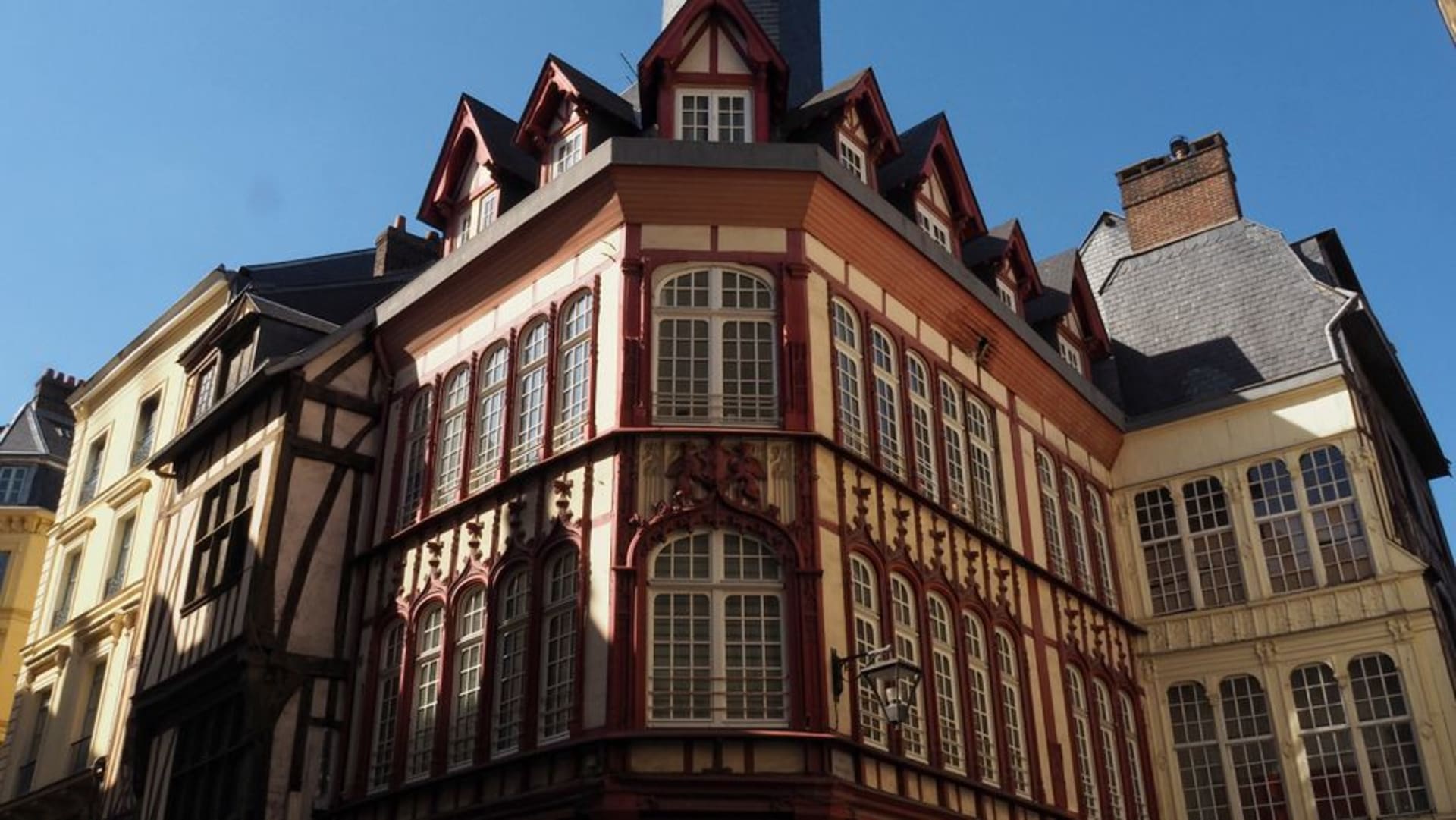
Brittany's capital, where a fire in 1720 burned half the city and left it with an odd, likeable mix of leaning medieval streets and grand stone squares built to replace them.
Rennes was never the plan — we landed there to pick up a rental car and figured we’d kill an afternoon before driving on toward the coast. We ended up staying two nights. It’s a university city with a young, unhurried energy that surprised us after a run of postcard villages, and it has one of the more interesting street plans I’ve walked through in France, entirely by accident of history.
A city rebuilt in two styles at once
In December 1720, a fire that started in a carpenter’s workshop burned for six days and destroyed nearly a thousand buildings in the city centre. What survived, mostly on the western side around Place Sainte-Anne and Rue Saint-Georges, is a tangle of leaning, brightly painted half-timbered houses from the 15th and 16th centuries, packed so close together that upper floors nearly touch across the street. What was rebuilt afterward, on the eastern side, is almost the opposite — wide, orderly stone streets and formal squares designed by royal architects to prevent the next fire from spreading. Walking from one half of the centre to the other is like crossing two centuries in about four minutes. We had dinner on Place Sainte-Anne, all painted timber and crooked rooflines, and I kept looking up expecting one of the buildings to finally give in to gravity.
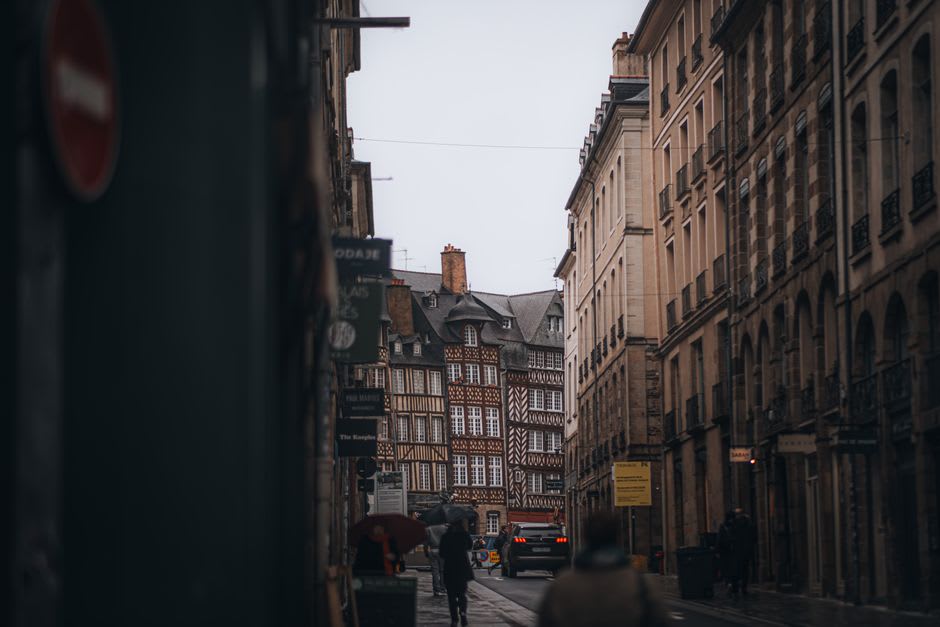
The Parlement, the Thabor, and a proper crêpe
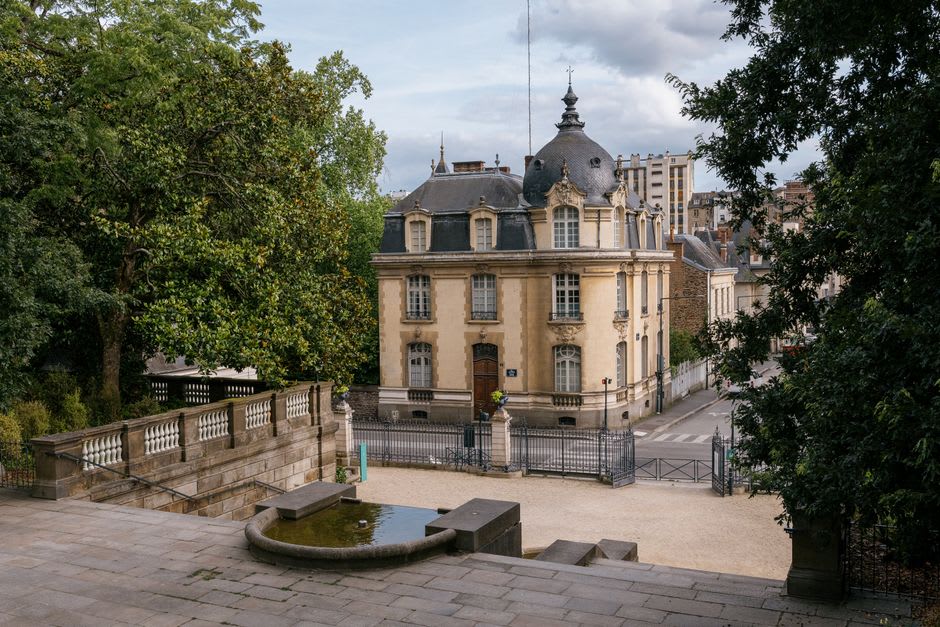
The Parlement de Bretagne, a grand 17th-century building that once housed Brittany’s regional parliament and law courts, sits at the centre of the post-fire stone city, its interior ceilings gilded and painted so ornately that the guided tour felt like walking through a smaller, quieter Versailles. Afterward we walked out to the Parc du Thabor, a former monastery garden turned public park with formal French terraces on one side and a looser, English-style landscape on the other, and spent a lazy hour there watching Rennais families out for a Sunday walk. That evening we found a crêperie on Rue Saint-Georges — a street lined almost entirely with them, which locals told us is not an accident, since Brittany treats the galette-crêpe combination as a full institution — and ate a savoury galette followed by a caramel beurre salé crêpe that Lia still brings up.
When to go: Term-time spring or autumn shows Rennes at its liveliest, with the student population filling the squares in the evenings. The Rennes food market at Place des Lices on a Saturday morning is worth building a visit around.