Quimper
"I went in for one bowl and came out having planned an entire kitchen shelf around it."
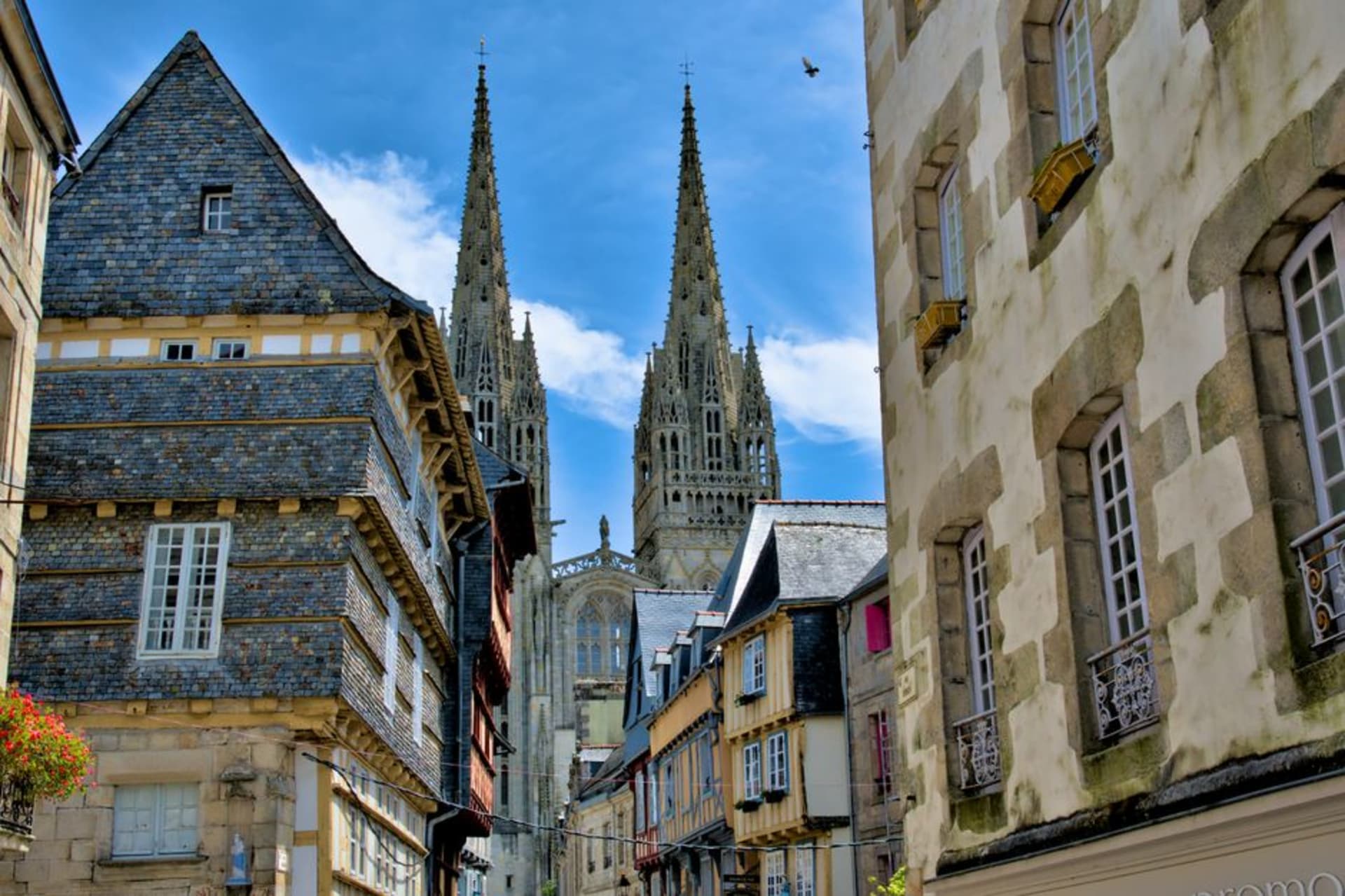
The old capital of Cornouaille where two rivers meet under a cathedral with a crooked spire, and where I bought more hand-painted Breton pottery than we had room for in the car.
Quimper gets skipped by a lot of Brittany itineraries in favour of the coast, which suited us fine — we had the flower-lined footbridges over the Odet nearly to ourselves on a warm afternoon in early June, and the old town’s half-timbered streets felt lived-in rather than curated for visitors. It’s a proper city, the historic capital of Cornouaille, one of Brittany’s traditional regions, and it wears that history without much fuss.
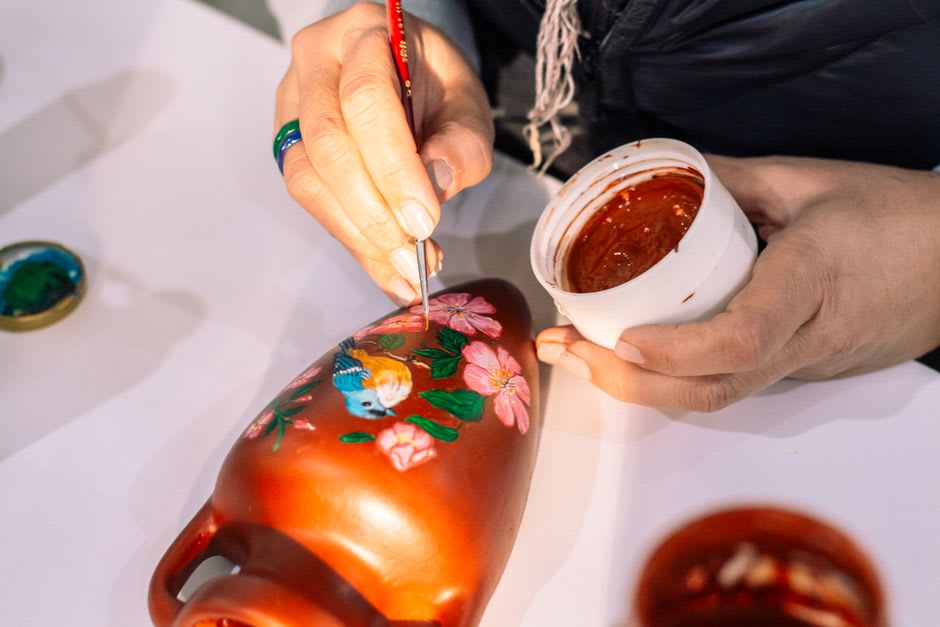
Faience and a family workshop
Quimper has been making faience — tin-glazed earthenware pottery, usually painted in bright yellow, green, and blue with Breton figures in traditional costume — since the late 17th century, when a potter named Jean-Baptiste Bousquet arrived from southern France and found local clay good enough to build a business on. The HB-Henriot factory, descended from that original workshop, still operates on the edge of the old town and runs tours where you can watch painters freehand the same figures — a Breton man in a wide hat, a woman in a coiffe — that have decorated the pottery for three centuries. I bought two bowls I didn’t need and Lia bought a cider pitcher we absolutely did not have room for, and we spent the drive home working out how to wrap it in every soft item we owned.
A cathedral with a lean it never fixed
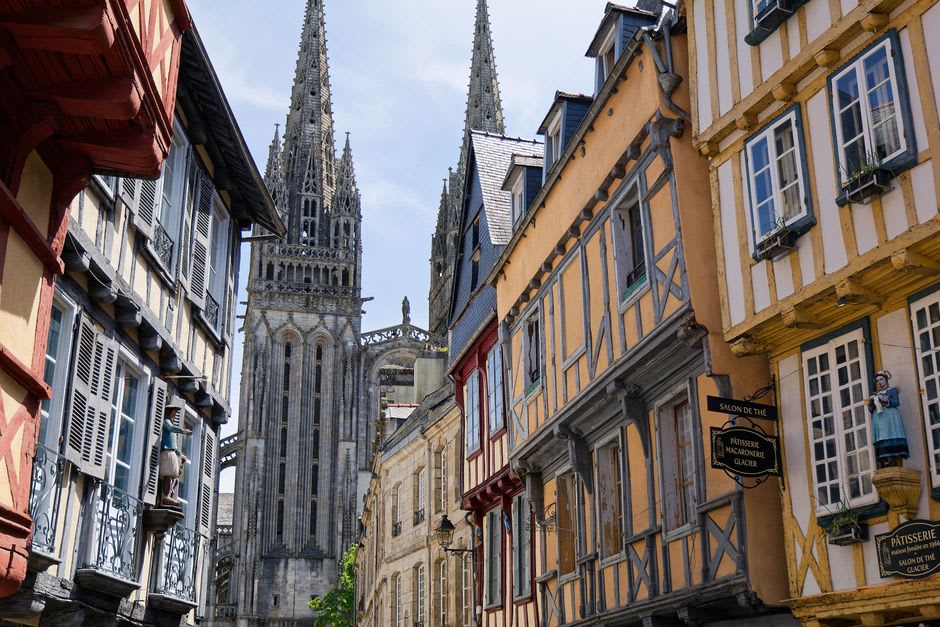
The Cathédrale Saint-Corentin dominates the old town with two soaring spires added in the 19th century, four hundred years after the rest of the building, but the detail that stuck with me is inside: the choir is visibly, deliberately off-axis from the nave, angled a few degrees to one side. Nobody fully agrees on why — theories range from a builder’s error to a symbolic tilt echoing the angle of Christ’s head on the cross — but medieval masons apparently decided not to correct it, and six centuries later it’s still crooked. We sat in a pew near the join for a while just looking down the two misaligned lines of columns. Afterward we walked along the Odet, past the flower-covered footbridges that give the old quarter its postcard view, and ended up at a crêperie on Rue Kéréon eating far too many buckwheat galettes.
When to go: Late spring through early summer gives you the footbridge flowers at their best and mild weather for wandering. The Festival de Cornouaille in July brings traditional Breton music and costume to the streets if you want to time a visit around it.