Monpazier
"Monpazier is the only town on this trip where I actually understood the floor plan just by standing in the square."
The best-preserved bastide town in France, a near-perfect thirteenth-century grid of arcaded streets and a central square, still functioning as an ordinary village rather than a preserved relic.
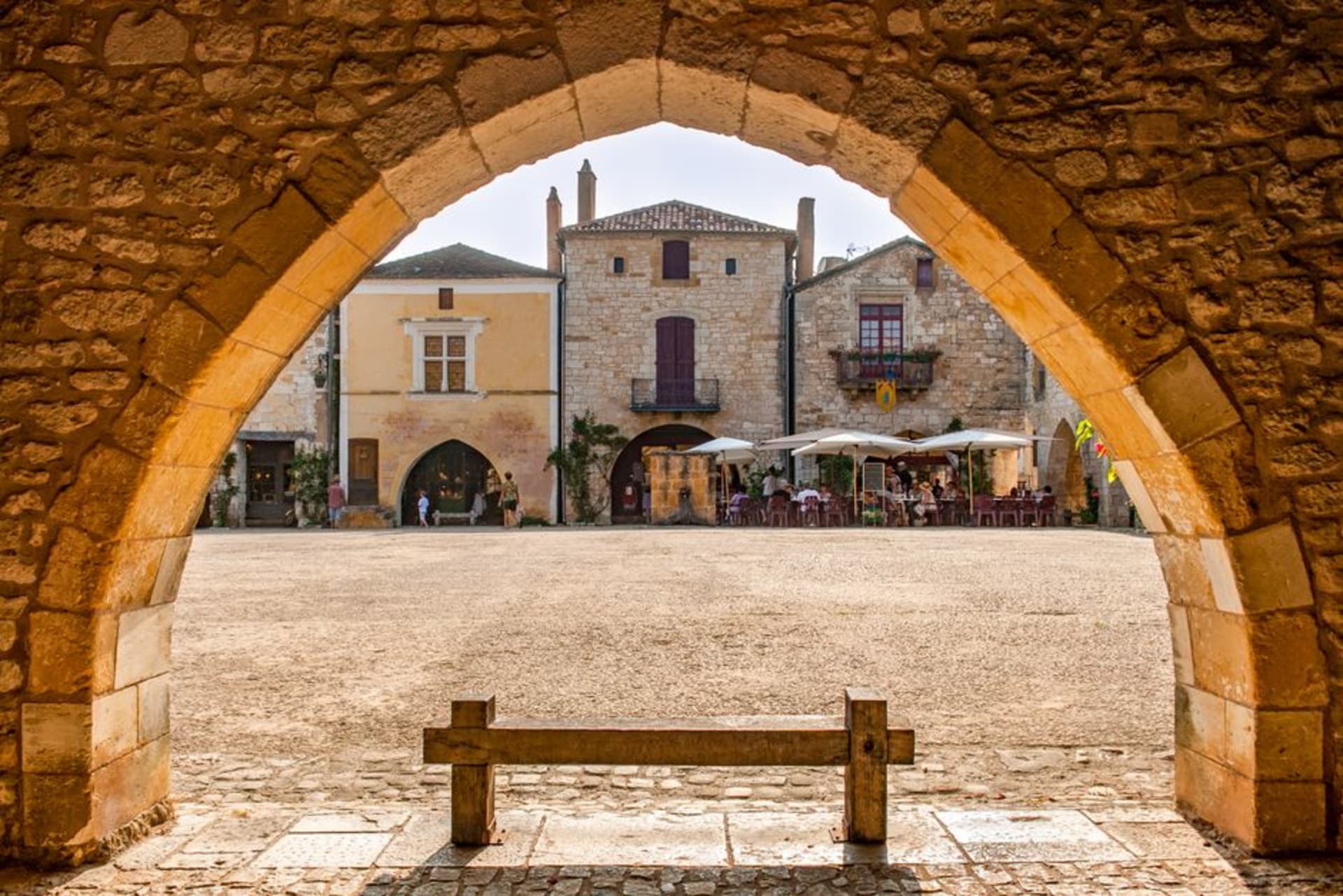
Monpazier is consistently ranked among the most beautiful villages in France, and having now seen a great many contenders for that title, I think the ranking is fair — it’s the best-preserved of the bastide new towns built across southwest France in the thirteenth century, and unlike Domme, whose grid buckles against the hillside it sits on, Monpazier was built on flat ground and kept its original plan almost perfectly intact. Lia and I arrived on a quiet Tuesday and could trace the entire logic of the town’s design just by walking from the church to the square.
A grid built for control, not beauty
Monpazier was founded in 1284 by Edward I of England, who as Duke of Aquitaine controlled this part of France before the Hundred Years’ War pushed the English out of the region, and the bastide design was fundamentally administrative — a rectangular grid of streets, uniform house plots sold to settlers on identical terms, and a central market square meant to concentrate trade, taxation, and control in one legible layout. It’s easy to forget, walking these picturesque arcaded streets now, that the whole town was essentially a real-estate and governance scheme, a medieval planned community with a defensive wall around it.
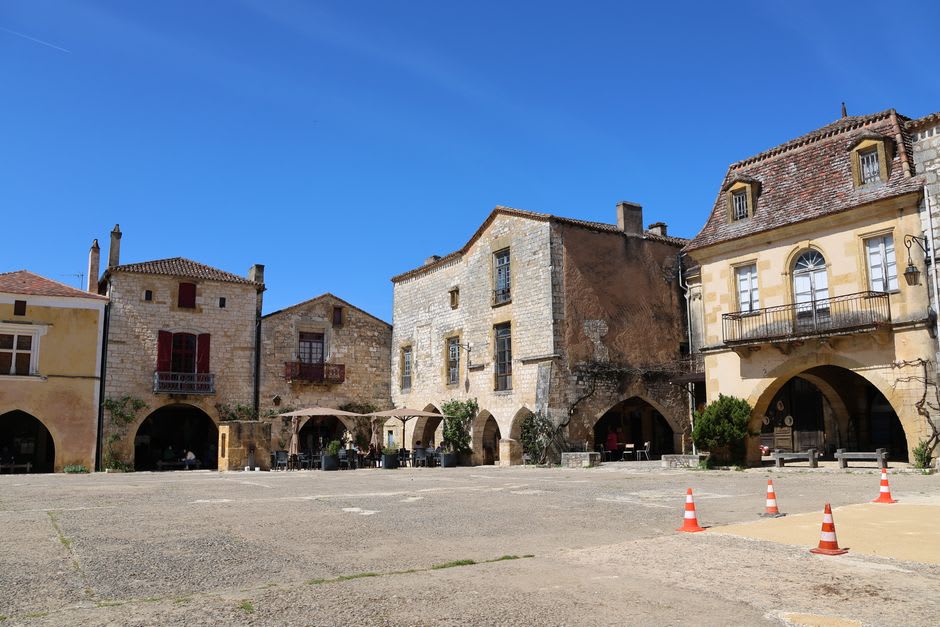
The central Place des Cornières is the clearest expression of that design: a square arcaded on all four sides, covered stone walkways where merchants set up stalls sheltered from weather, with a timber-roofed covered market hall, the halle, standing in the middle, its beams original to the fourteenth century and still marked with the grain measures once used to standardize trade.
Walking the walls a settler once had to defend
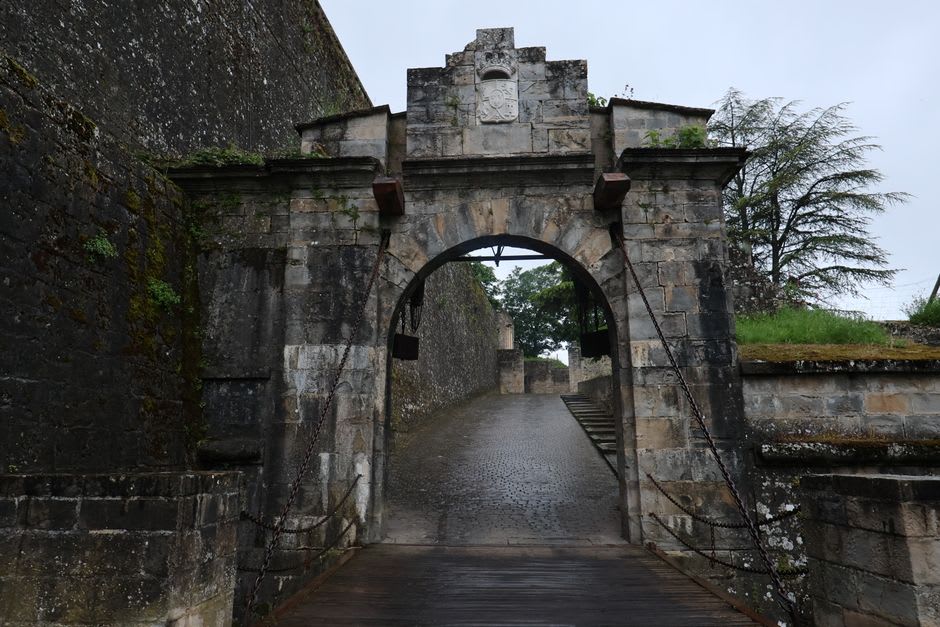
Much of Monpazier’s original fortification is gone, but three of the original six gates survive, and walking the perimeter where the walls once stood, you can still read the town’s edges clearly against the surrounding farmland — a hard boundary between planned town and open countryside that would have mattered enormously to a thirteenth-century settler weighing safety against opportunity.
We had lunch under the arcades at a small café facing the halle, walnut salad with local goat cheese, and I found myself doing what I hadn’t in any of the more organically grown villages: actually picturing the town being laid out, plot by plot, by a royal official with a rope and a plan, eight centuries ago, on ground that had been empty fields the week before.
When to go: A weekday outside peak summer, ideally with the Thursday market running — Monpazier is small enough that even moderate crowds change its character, and the market brings it to life without overwhelming it.