
Lons-le-Saunier
"The national anthem was written by a local, and the town has never let anyone forget it."
A salt-built spa town in the Jura and the birthplace of the man who wrote La Marseillaise, its arcaded main street and thermal park giving it a quieter, more civic charm than the Jura's postcard villages.
Lons-le-Saunier owes both its name and its early wealth to salt — the “saunier” comes from the saltworks that operated here from Roman times through the nineteenth century, drawing brine from underground deposits and evaporating it in vast pans. The town’s other, louder claim to fame is Claude Joseph Rouget de Lisle, born here in 1760, who wrote the words and music of what became La Marseillaise, and the connection is impossible to miss: a statue of him stands in the main square, and the house where he was born, on the Rue du Commerce, is marked with a plaque most passers-by seemed to already know about.
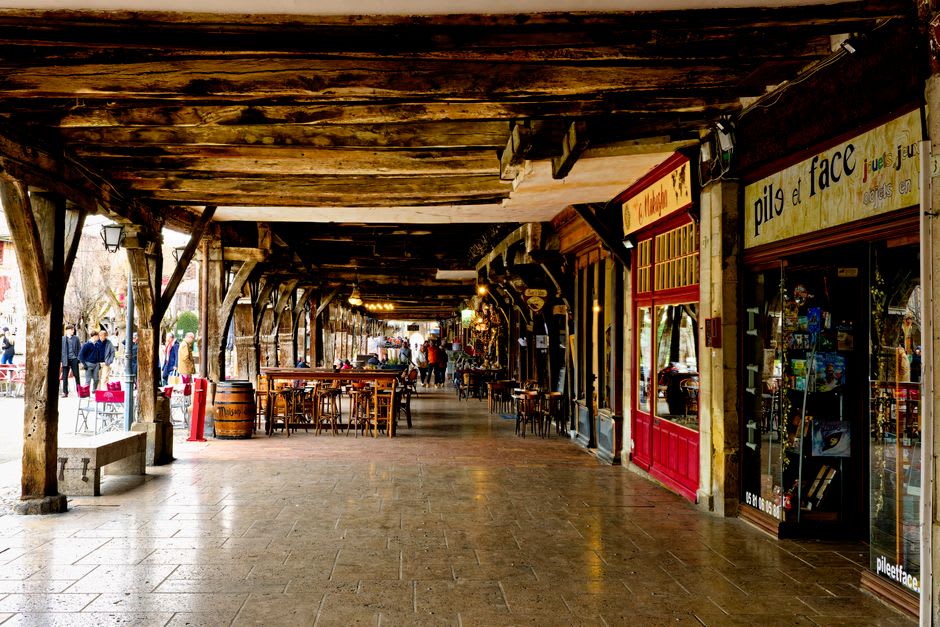
Walking under Les Arcades
The main street through the old town runs beneath Les Arcades, a covered stone gallery of thirteenth-century arcades that shelter shops and cafés from both sun and Jura rain, and gives the town centre a genuinely distinctive feel — we ducked in and out of the shade along it more than once, in the particular way you do when a street is designed for exactly that purpose. At one end, the Église des Cordeliers holds Rouget de Lisle’s tomb, moved here after his remains were returned from Paris.
Thermal water and a very old dinosaur
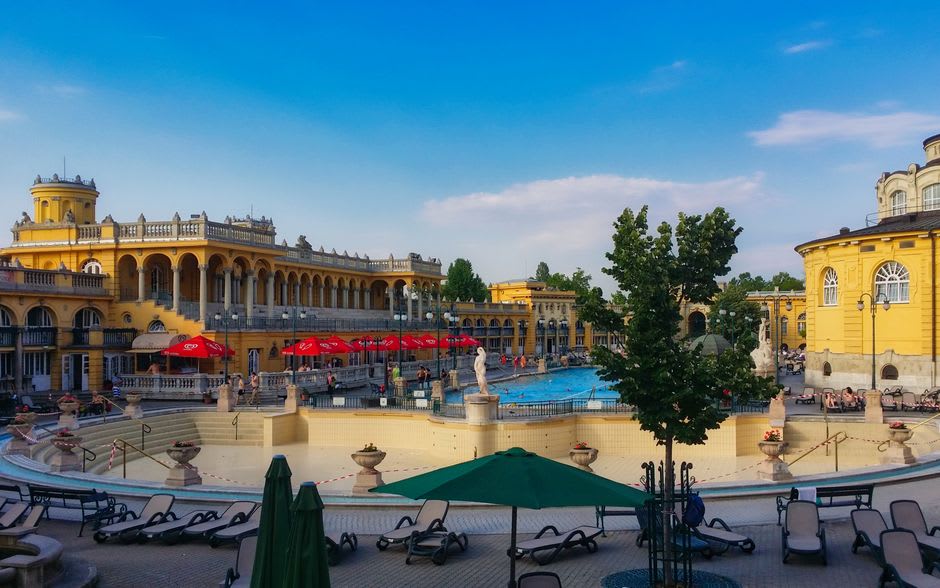
Lons-le-Saunier’s saline thermal springs are still used at the Parc des Bains, a green space built around the old bathhouse where locals walk, run, and occasionally still take the waters for respiratory treatment. More unexpectedly, the town’s museum holds the fossil of Plateosaurus, one of the earliest well-preserved dinosaur skeletons found in France, discovered in the surrounding countryside in the 1930s — a genuinely strange detour from salt and anthems that we hadn’t expected to find in a Jura market town.
When to go: Spring through autumn suits the town well, and it makes a practical, well-connected base for exploring the wine villages and reculées of the southern Jura.