Locronan
"It's small enough to see in an hour and rich enough that we didn't leave for six."
A tiny granite village in Finistère so uniformly beautiful that it's been used as a film set a dozen times, and where we spent an entire afternoon without covering more than three streets.
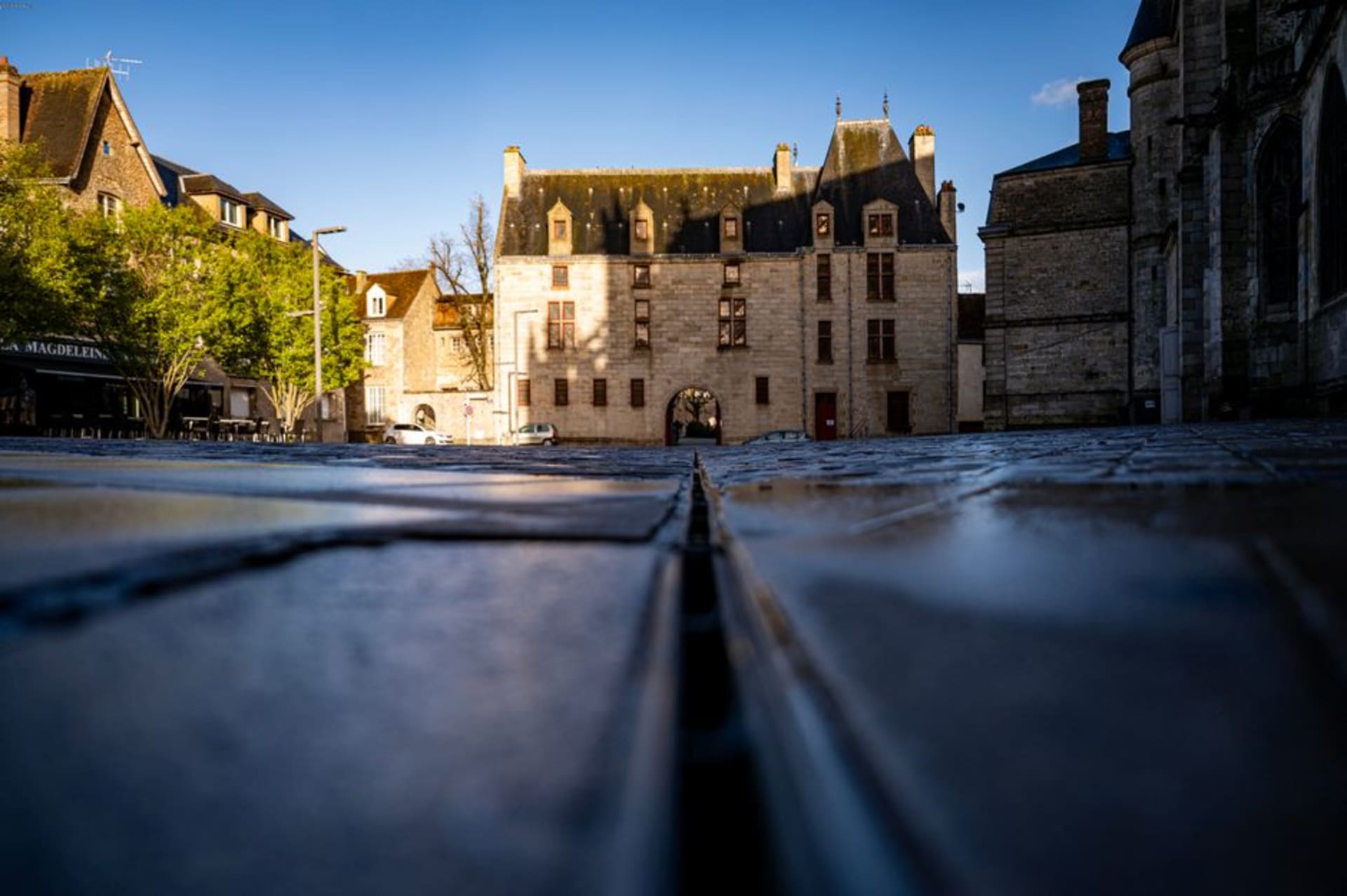
Locronan is one of those places where I understood the appeal within about thirty seconds of parking the car and then spent the rest of the day trying to figure out why it worked so well. It’s tiny — a few hundred people, a single sloping main square, a handful of radiating streets — and every building on that square is the same weathered grey granite, roofed in the same dark slate, with no jarring modern intrusion to break the effect. Lia’s first comment was that it looked like a film set. It’s been one, repeatedly.
A village built on cloth, not stone
Locronan’s wealth wasn’t tourism, it was sailcloth. From the 15th through the 17th centuries the village grew rich weaving and exporting toile — heavy linen canvas — much of it sold to the French royal navy for ship’s sails, and the grand granite houses ringing the square, with their stone mullioned windows and steep dormers, were built by the weaving merchants who profited from it. The trade collapsed with the rise of cotton in the 18th century and the village essentially stopped growing, which is the accidental reason it looks the way it does now — nobody had the money to modernise it, so it just sat there, intact, until film directors and then tourists discovered how photogenic that neglect had become.
The Troménie and a church built for pilgrims
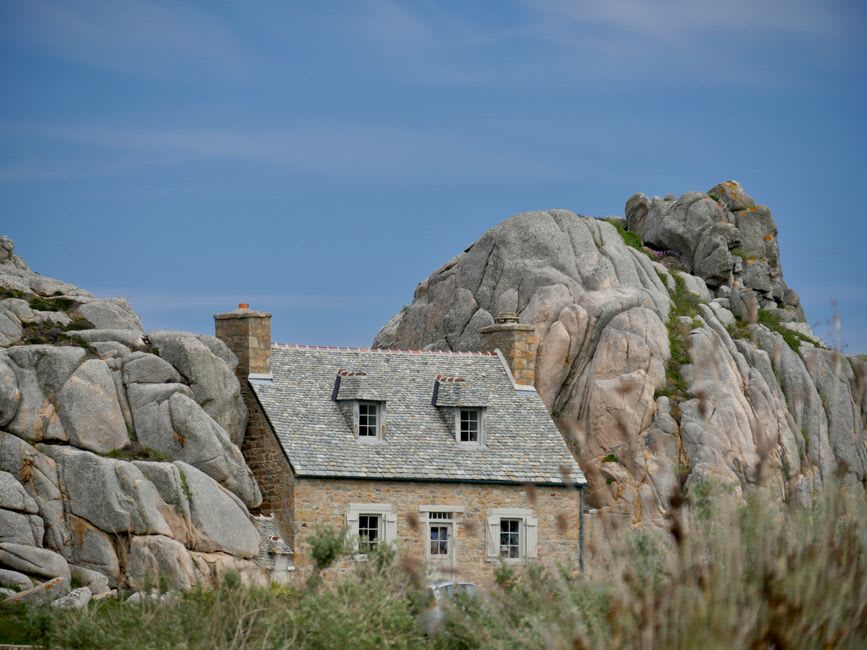
The Église Saint-Ronan anchors the square, named for a 5th-century Irish or Welsh hermit-saint who is said to have walked a specific route around the surrounding hills every day of his life. That route survives as the Petite Troménie, a pilgrimage walk held most years, and the Grande Troménie, a longer version held every six years that draws thousands of walkers along a twelve-kilometre loop through the countryside. We weren’t there for either, but the church itself, with Ronan’s tomb inside carved in white Kersanton stone, gave a sense of how seriously the village still takes him. We climbed the wooded hill above town afterward, the Montagne de Locronan, for a view stretching to the Baie de Douarnenez and the sea beyond.
When to go: Come outside July and August if you can — Locronan is popular enough in high summer that its one square gets genuinely crowded. A quiet weekday morning in shoulder season is the version of the village that actually earns the reputation.