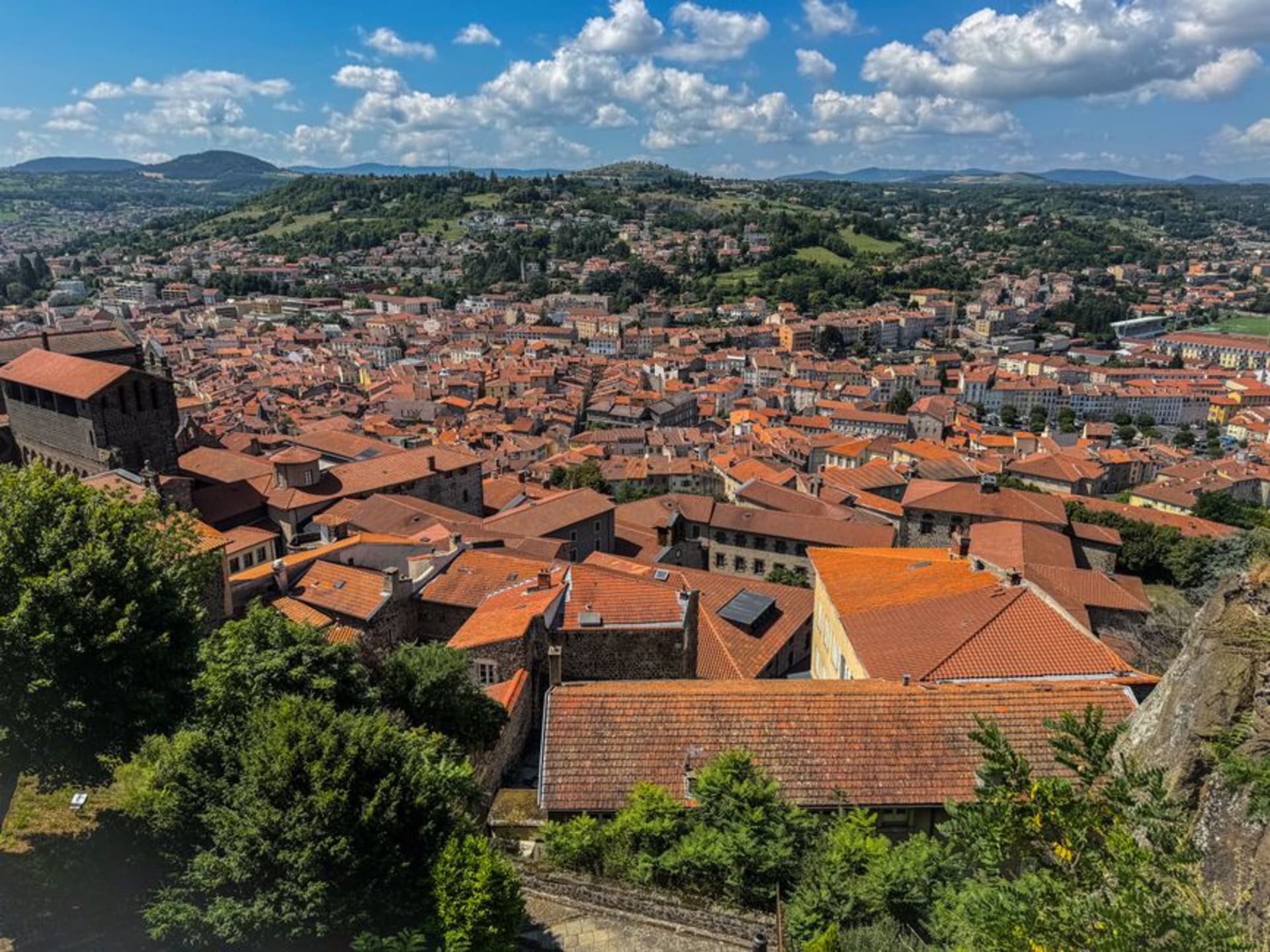
Le Puy-en-Velay
"The town is built on volcanic plugs, and it shows off every single one of them."
A volcanic town in the Auvergne where a giant red statue of the Virgin crowns one basalt spire and a Romanesque chapel improbably balances on another, both visible from streets that still smell faintly of lentils and lace.
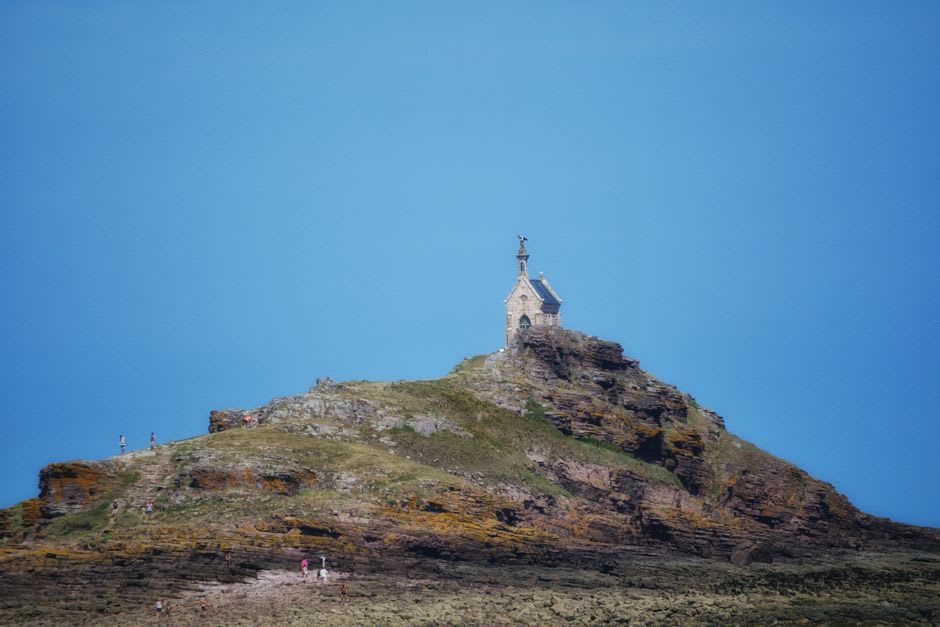
Le Puy-en-Velay sits in a wide volcanic basin dotted with the eroded necks of extinct volcanoes, and rather than build around them, the town simply put something dramatic on top of each one. Rocher Corneille, the tallest, carries a 22-metre cast-iron statue of the Virgin Mary painted red-brown, made from melted-down cannon captured at Sevastopol; the smaller Rocher d’Aiguilhe, a needle of basalt just across the valley, somehow supports an entire Romanesque chapel on its summit, reached by 268 steps carved straight into the rock. Lia climbed both in one afternoon out of what I can only describe as competitive spirit and did not speak to me for twenty minutes afterward.
A chapel on a needle
The Chapelle Saint-Michel d’Aiguilhe was built in 962, and the climb up its narrow rock-cut staircase, worn smooth by more than a thousand years of pilgrims, is genuinely dizzying in places — there’s nowhere to look but down. At the top, the tiny chapel’s interior still has traces of ninth-century frescoes, and the platform outside gives a full view back across town to the red Virgin on Rocher Corneille, the two landmarks essentially staring at each other across the valley.
Lentils, lace, and the start of a very long walk
Le Puy-en-Velay is also the traditional starting point of the Via Podiensis, one of the main French routes of the Camino de Santiago, and every morning pilgrims gather outside the Cathédrale Notre-Dame-du-Puy — its striped Romanesque facade one of the more unusual church fronts in France — for a blessing before setting off. Down in the old town, lace-makers still work bobbins in shop windows on the narrow streets, a craft the town has protected since the sixteenth century, and every menu seemed to feature the local green lentils, which have their own AOC and turned up, delicious, in nearly everything we ordered.

When to go: Late spring through September for warm weather and the town at its most animated with departing pilgrims; the lentil harvest in autumn is also a good excuse to eat your way through the local menus.