Kaysersberg
"It was voted France's favourite village a few years back, and for once I think the vote got it right."
A fortified valley town below a ruined imperial castle, birthplace of Albert Schweitzer, where a fortified bridge and a river running through the middle of the old town made me linger longer than planned.
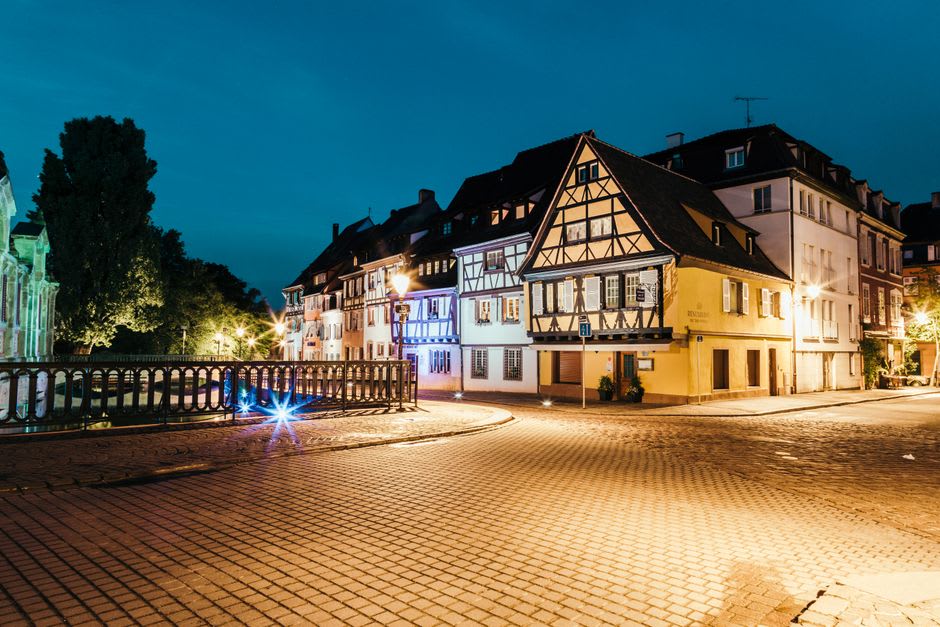
The Weiss river cuts straight through Kaysersberg’s old town, which is unusual for Alsace villages — most keep their water to a decorative canal at best — and it gives the place a sound that follows you everywhere, a constant low rush under the church bells and the wine-tasting chatter. We crossed the fortified bridge on our first evening, a squat structure from 1514 with a stone oratory built right into its parapet, and Lia stopped to look down at the current for a while in a way that told me we weren’t leaving in the morning like we’d planned.
The castle above the vines
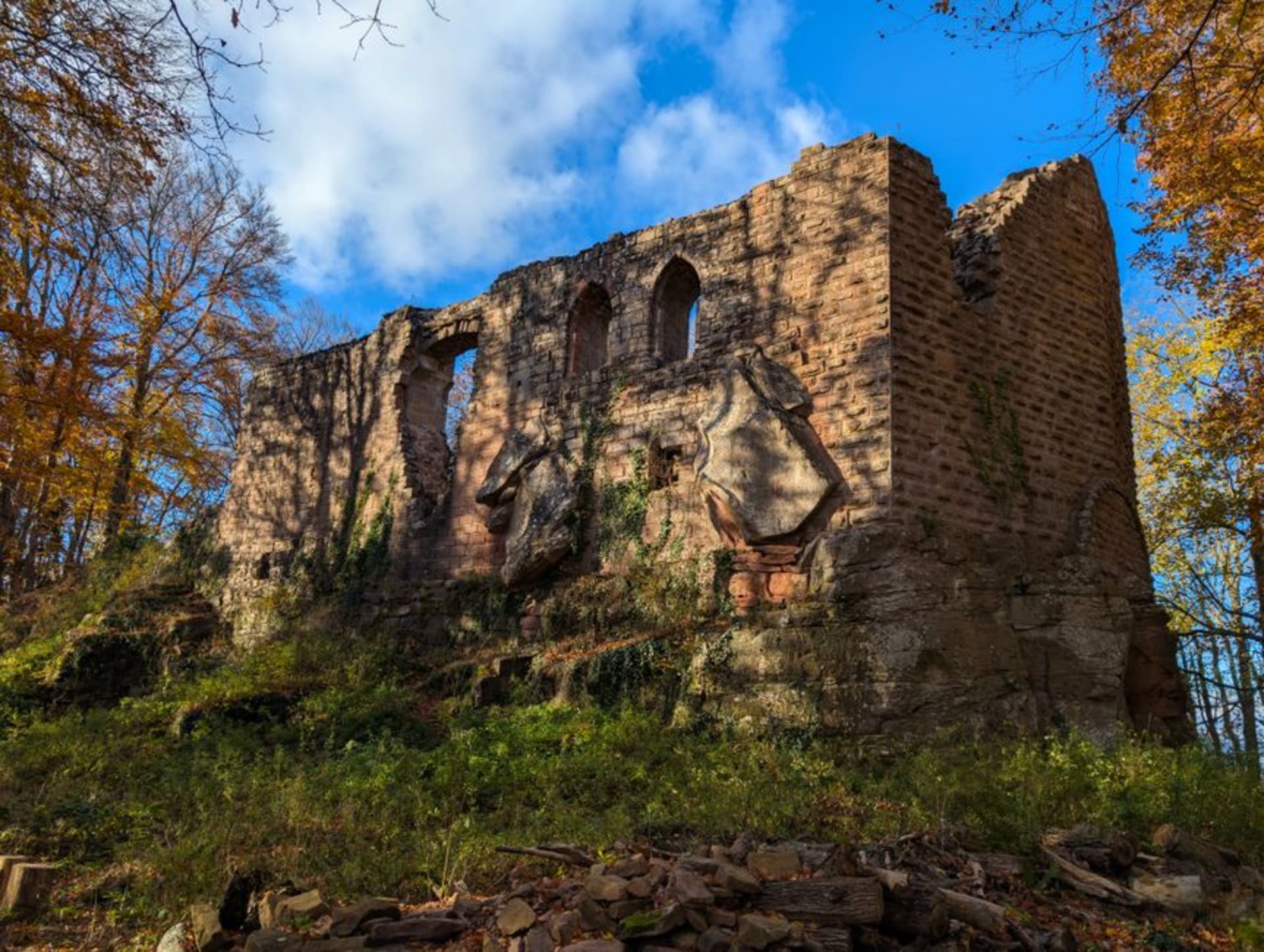
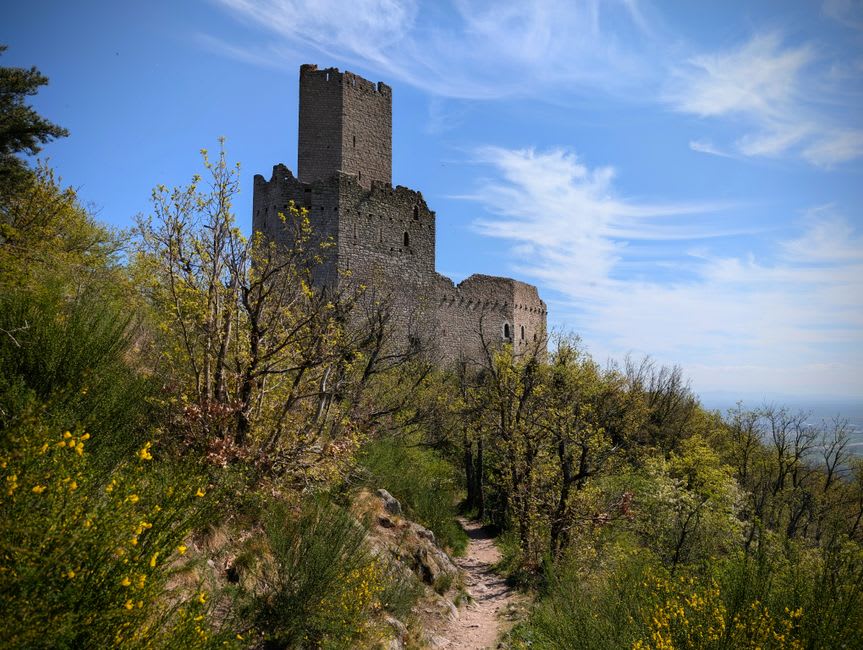
Above the town, on a rocky spur, sits the ruin of the Château de Kaysersberg, built by the Hohenstaufen emperors in the thirteenth century to guard the valley entrance into Alsace. It’s a proper ruin — no reconstruction, no gift shop, just broken walls and a keep you can still climb into if you don’t mind uneven footing — and the walk up through the vineyards took us about twenty-five minutes at an unhurried pace. From the top, the whole valley opens out: Kaysersberg’s rooftops directly below, then the vine rows running in disciplined lines toward Kientzheim and Sigolsheim, then the darker forest of the Vosges closing the view. We had the ruin entirely to ourselves on a Tuesday morning, which felt like a small miracle for somewhere this well known.
Schweitzer’s house and a town that stayed itself
Albert Schweitzer, the theologian and doctor who won the Nobel Peace Prize for his hospital work in Gabon, was born in Kaysersberg in 1875, and his childhood home on the main street now houses a small museum about his life — modest, well curated, not overrun. What struck me more than the museum was how ordinary the rest of the street still felt around it: a boulangerie doing steady local business, a butcher with a queue of actual residents, not just a corridor of wine shops built for tour buses. We ate dinner at a small winstub off Rue du Général de Gaulle, baeckeoffe simmered for hours in a sealed clay pot, and the owner sat down at our table for ten minutes once the kitchen slowed, just to talk about the harvest.
When to go: September, during harvest, when the vineyards on the castle hillside turn amber and the town is busy with pickers rather than tour groups. It also holds one of the region’s more atmospheric, less commercial Christmas markets if you’re there in December.