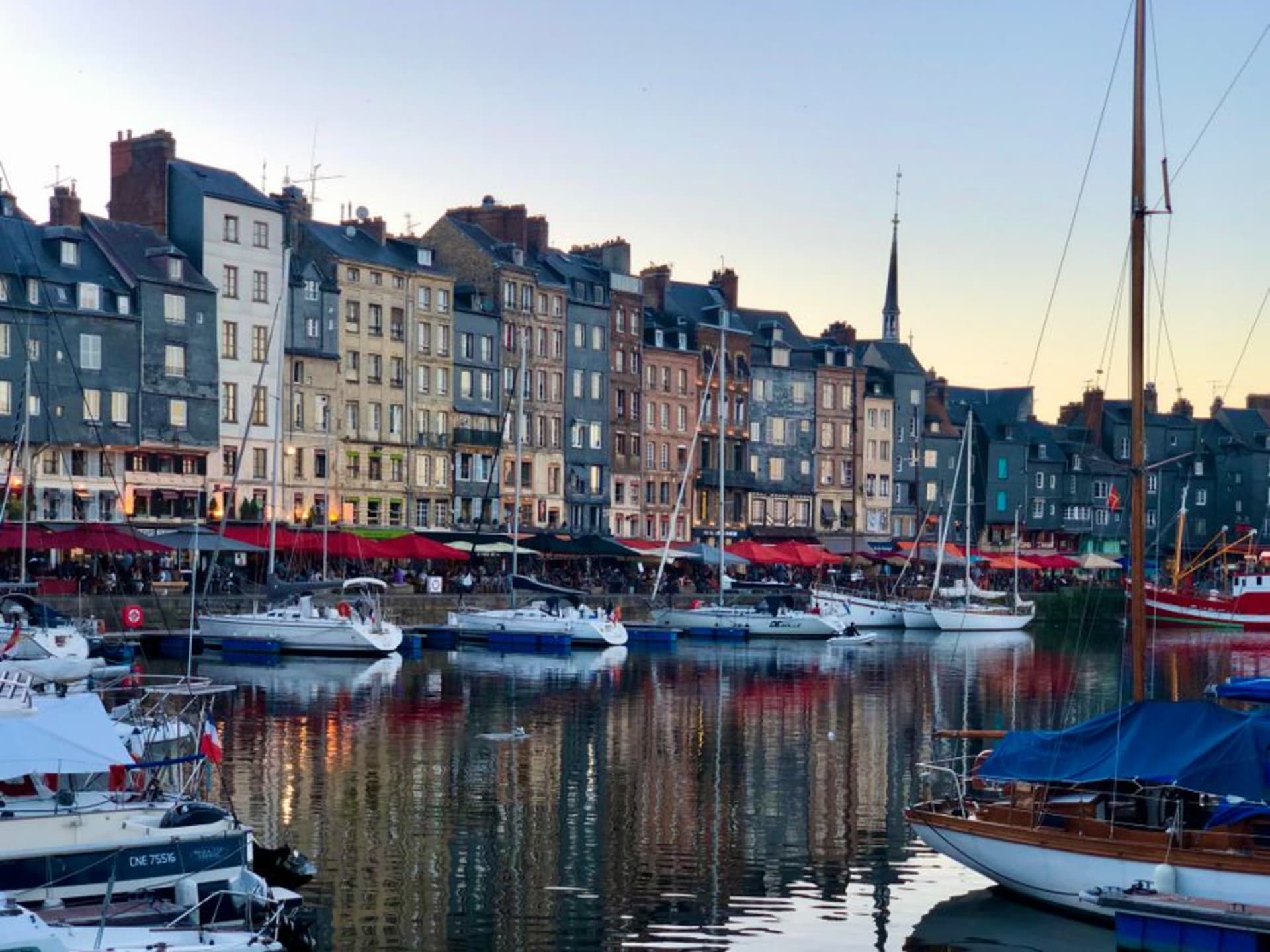
A harbour town at the mouth of the Seine where tall, narrow houses crowd the old dock and every painter who ever visited seems to have painted the exact same view.
Honfleur sits right where the Seine meets the sea, and Lia and I arrived on a grey afternoon expecting the light to disappoint us the way it sometimes does on the Normandy coast. Instead the clouds did something the local painters clearly knew about — soft, shifting, silvery — and the Vieux Bassin, the old harbour at the heart of town, looked exactly like every Impressionist painting of it we’d seen and dismissed as flattering exaggeration.
The dock that trained a generation of painters
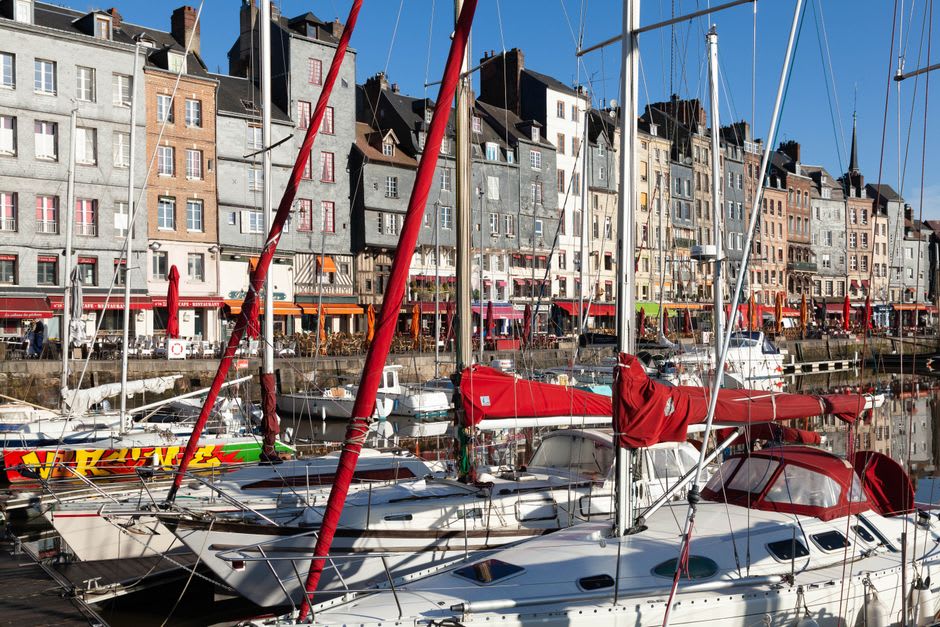
The Vieux Bassin is small, really just a rectangular basin ringed by tall, narrow houses with slate-covered façades, built deliberately steep and slim in the 16th and 17th centuries to cut down on property taxes that were calculated by street frontage. Eugène Boudin was born here and spent his career painting the harbour and the wide Normandy skies above it, later mentoring a young Claude Monet on the merits of painting outdoors rather than in a studio — a lesson that, by most accounts, helped set Impressionism in motion. The Musée Eugène Boudin, up the hill from the port, holds a strong collection of his work alongside pieces by Monet and other artists who passed through, and after seeing them we walked straight back down to the harbour and understood the paintings differently, standing in the actual light they’d tried to catch.
A church built by shipwrights, not stonemasons
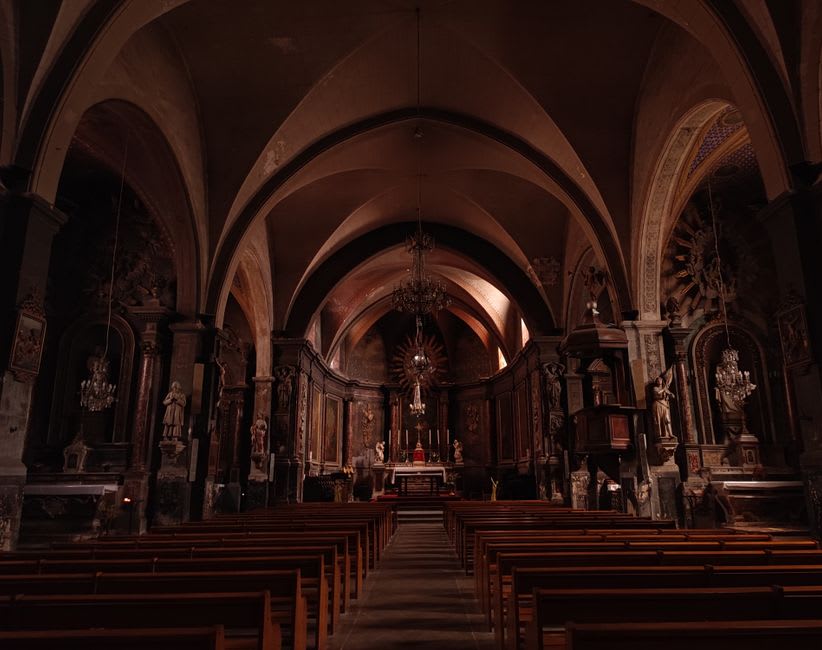
Just back from the harbour stands the Église Sainte-Catherine, France’s largest wooden church, built in the second half of the 15th century by local shipbuilders using the only skills and materials they had after the Hundred Years’ War had drained the town of money for a proper stone church. The result looks, from inside, unmistakably like the inverted hull of a ship — ribbed timber arches rising overhead in a way no stonemason would have built. The bell tower stands separate from the church entirely, apparently to keep the weight and vibration of the bells away from the wooden nave. We lingered inside longer than planned, then wandered the Rue des Logettes and Rue Haute, where crooked timber-framed houses lean at angles that felt more sculptural than structural.
When to go: Come in the shoulder seasons for the soft, changeable light the Impressionists loved, and avoid August weekends when day-trippers from Deauville and Paris pack the harbourfront solid.