
Gordes
"We saw it from ten kilometres away and spent the whole drive arguing about whether it was real or a film set."
A village of pale stone stacked in tiers up a Luberon cliff face, visible from the valley floor for kilometres before you've worked out how to actually drive up to it.
Every guidebook photo of the Luberon seems to be taken from the same pull-off on the D15, and by the time we found it there were four other cars already parked with the same idea. Gordes rises out of the valley in almost geometric tiers, pale stone houses stacked against a cliff so precisely that from a distance the whole village looks less like something people built than something that grew. Lia took eleven photos from that exact spot before we’d even started the climb up.
A village built to be looked at, and to look back
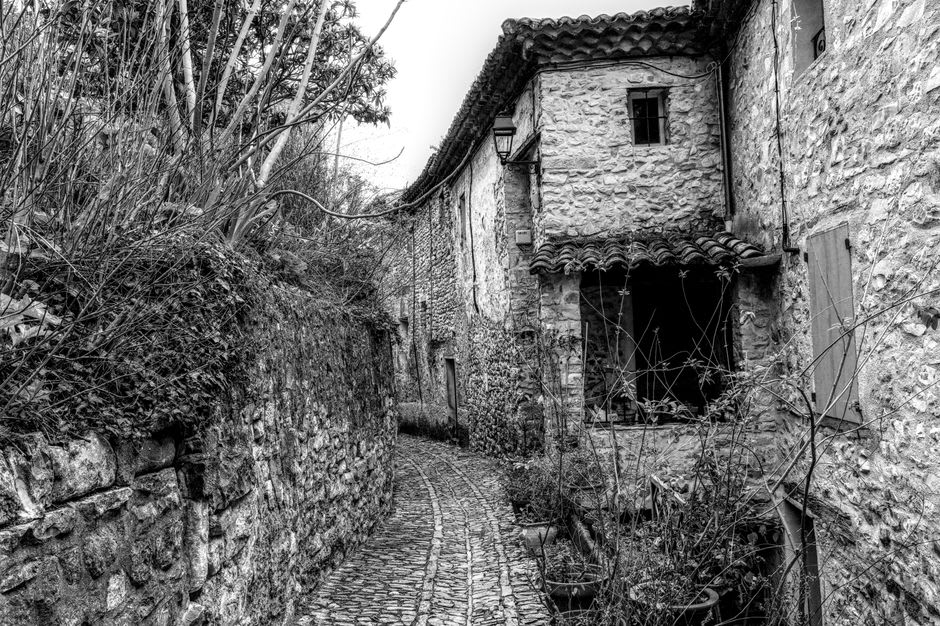
Up close, Gordes trades a little of its postcard perfection for something better — steep cobbled lanes, a Renaissance château with a fireplace so enormous you could stand up inside it, and views back down over the valley that make you understand why every other car on the road up here has a Parisian licence plate. We got lost twice in streets no wider than a car, ducked into a small gallery selling nothing but santons — the painted clay figurines Provençal families collect for their Christmas crèches — and ended up buying one of a baker holding a loaf of bread, for reasons neither of us could fully justify afterward.
Lavender, borie huts, and an abbey that means its silence
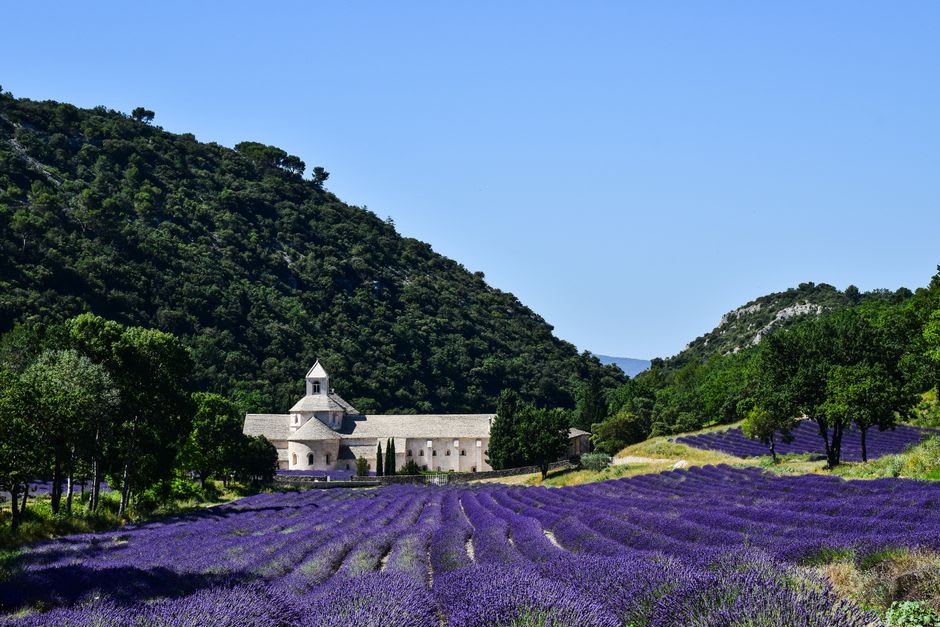
Ten minutes below the village, the Abbaye Notre-Dame de Sénanque sits in a small valley that in late June turns into a flat sea of purple lavender rows, the abbey’s grey stone the only thing breaking the colour. Cistercian monks still live there and still farm the lavender that funds the place, and the sign asking visitors to keep silent near the church is, unusually for tourist France, actually respected. On the way back we stopped at the Village des Bories, a cluster of dry-stone huts built without mortar, some of them centuries old, that shepherds used as shelters — squat, conical, and somehow more moving than the abbey for being so plainly functional.
When to go: Mid-June to late July, if the lavender is the point — check bloom reports before booking, since a hot spring can push the harvest earlier than the calendar suggests. Outside lavender season, September gives you the same golden stone with none of the traffic.