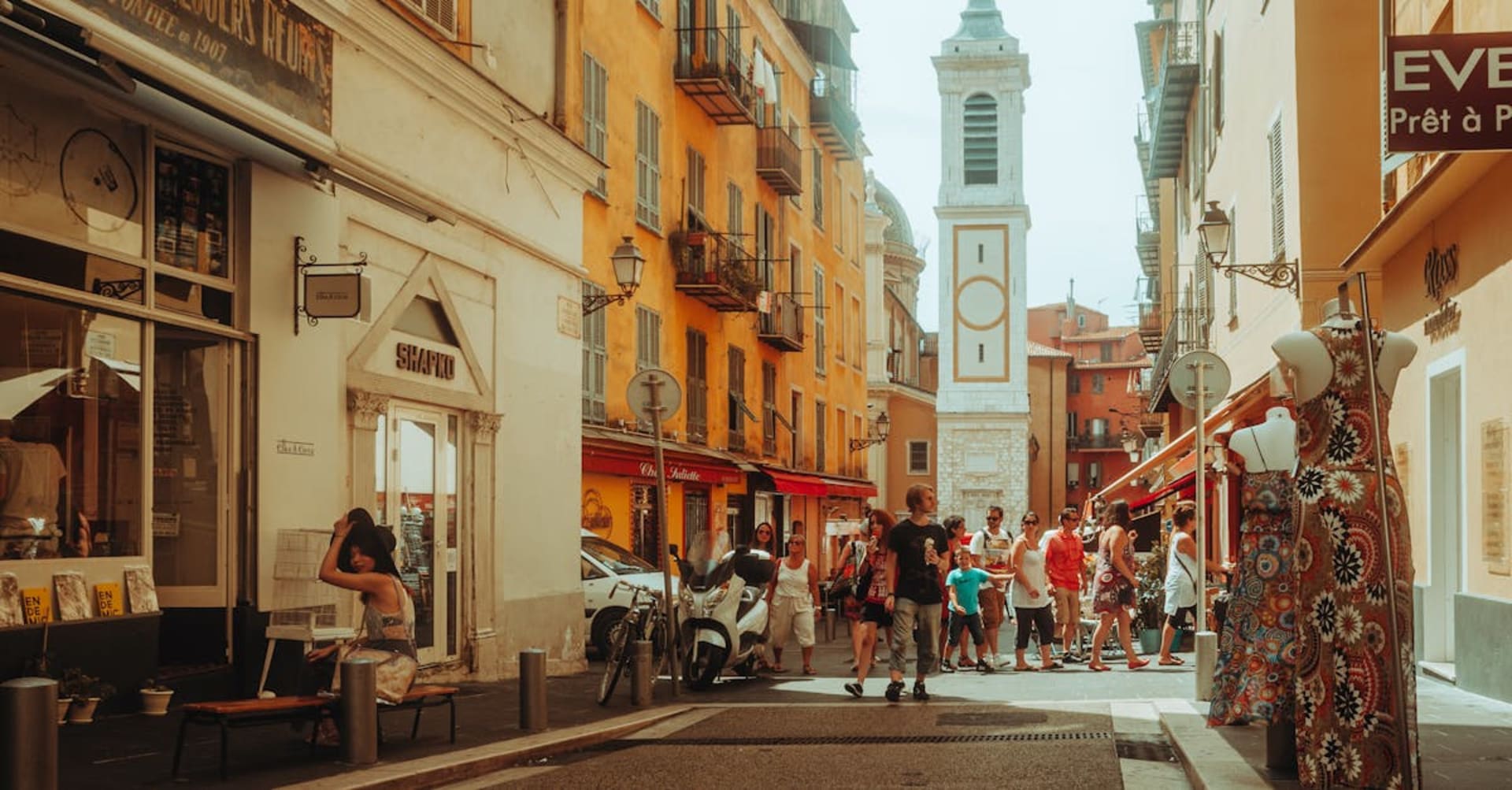
Provence is the France of the imagination — and the rare place where the imagination undersells the reality. The lavender fields of the Luberon, the ochre cliffs of Roussillon, the Roman theatre at Orange, the markets overflowing with tomatoes and goat cheese and olives in quantities that suggest the entire region is preparing for a very large, very good meal. Which, in a sense, it always is.
The Luberon Valley is the heart of the experience. Gordes, Bonnieux, Ménerbes, Lacoste — a string of perched villages connected by roads that wind through vineyards and cherry orchards. Each has its market day, its café, its view that looks like a postcard but smells like rosemary. The trick is timing: arrive at any village before 10am and you will have it largely to yourself. After that, the tour buses arrive and the calculus changes.
Aix-en-Provence is the region’s most elegant city — Cézanne’s hometown, with plane-tree-lined boulevards, fountains on every corner, and a market on the Cours Mirabeau that is more beautiful than it needs to be. The cafés here take the institution of coffee seriously: you sit, you watch, you are not hurried.
The Calanques, between Marseille and Cassis, are limestone fjords dropping into turquoise Mediterranean water. Hike to Calanque d’En-Vau — ninety minutes on a rocky trail — and swim in water so clear you can see the bottom at fifteen meters.
When to go: Late June for lavender in bloom. September for the grape harvest, thinner crowds, and the year’s most beautiful light.