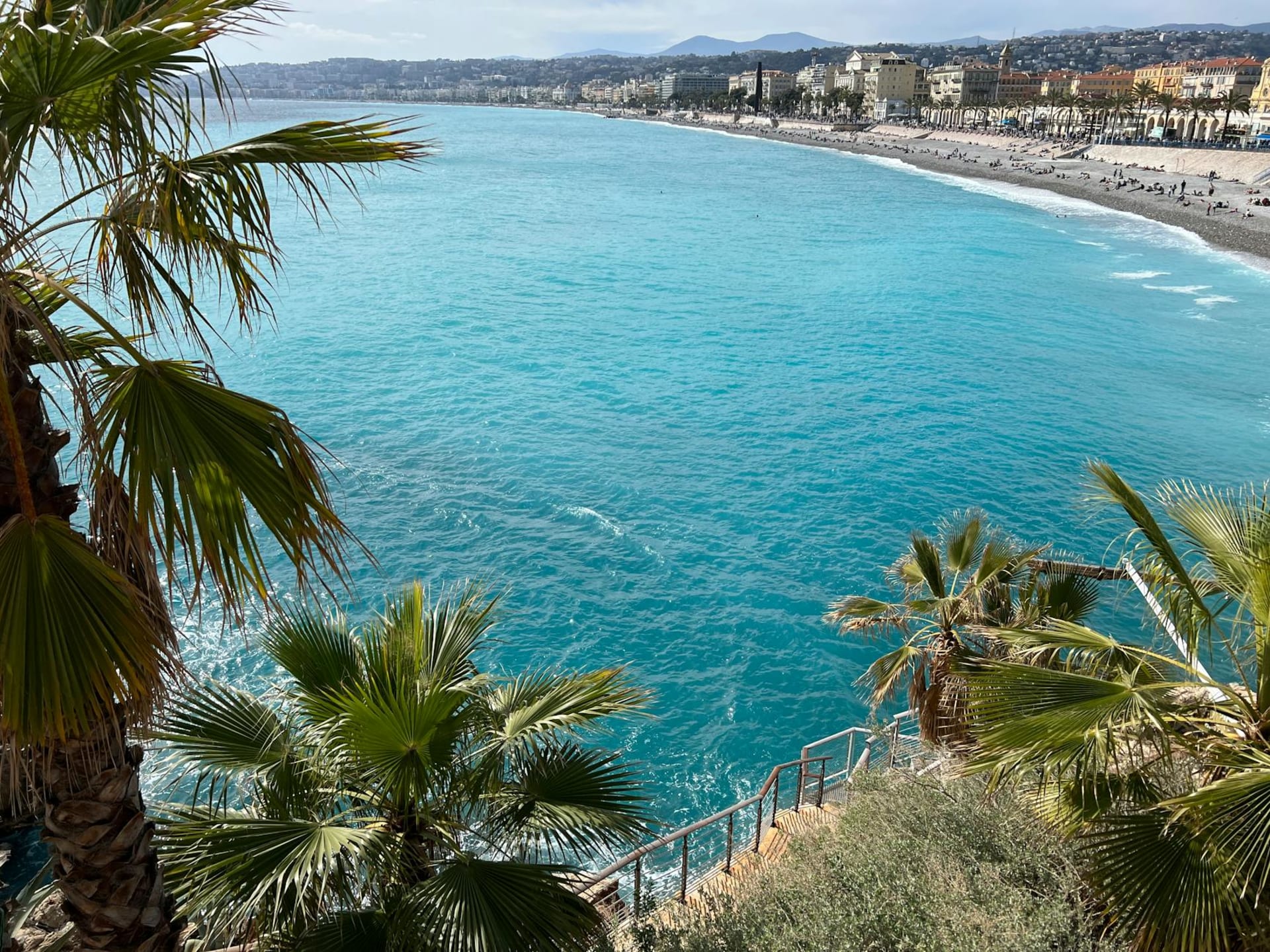
The Côte d’Azur is the stretch of Mediterranean coast between Cassis and the Italian border that has been seducing artists, aristocrats, and sun-seekers since the English invented the concept of the winter holiday in the 19th century. The name itself — Azure Coast — is a promise about color, and the coast delivers: the sea here is a blue so saturated it looks artificial, the sky matches it, and the bougainvillea cascading down ochre walls adds the only contrast the landscape needs.
I have a complicated relationship with the Riviera. It is the France of excess, of wealth performed in public, of yachts the size of apartment buildings anchored off Antibes. But it is also the France of Matisse in Nice, Picasso in Antibes, Chagall in Saint-Paul-de-Vence — artists who came for the light and stayed because the light was, in fact, extraordinary. The quality of Mediterranean light on this coast — sharp, bright, casting deep shadows that make colors sing — explains an entire chapter of 20th-century art.
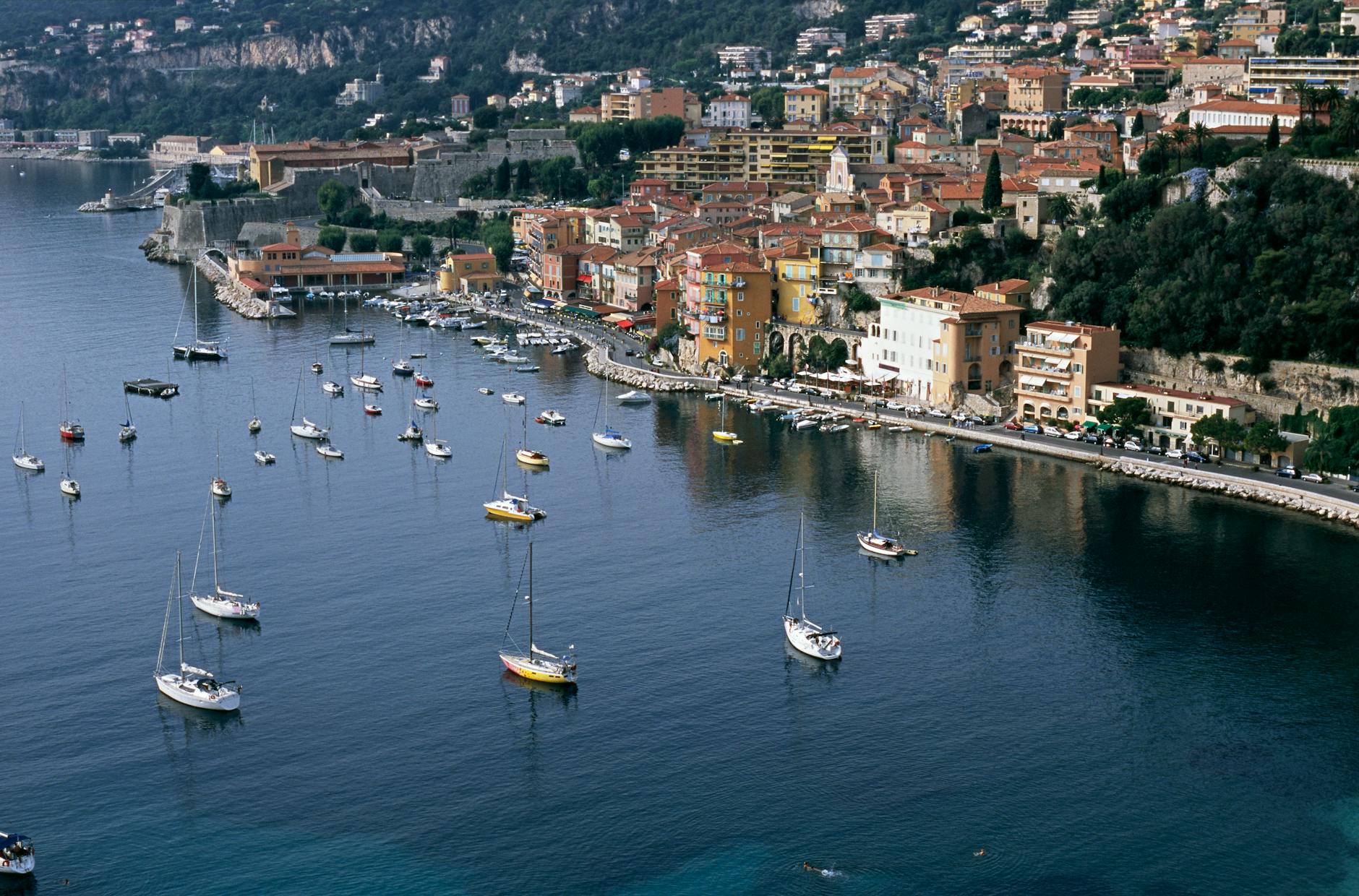
Nice is the capital of the Riviera and far more interesting than its reputation suggests. The Vieille Ville — the old town — is a tangle of narrow streets, Baroque churches, and the Cours Saleya market, where the flower stalls and the socca (chickpea-flour crepes cooked on enormous copper pans) are worth the early alarm. The Promenade des Anglais is the most famous seafront walk in Europe, and walking it at sunset, with the Baie des Anges turning pink, remains one of the great free pleasures of French travel.
The hilltop villages — Èze, Saint-Paul-de-Vence, Mougins, Gourdon — are perched on the mountainsides behind the coast like sentinels. Saint-Paul-de-Vence has the Fondation Maeght, one of the finest modern art museums in Europe, set in a pine forest with Giacometti sculptures in the courtyard. Èze has a cactus garden at its summit with views to Corsica on a clear day. These villages were medieval defenses against pirates; now they defend against nothing except the modern impulse to rush.

The Calanques near Cassis, at the western edge of the coast, are limestone inlets of impossible beauty — narrow fjords where the cliffs drop into water so clear it seems to have been filtered through glass. Rent a small boat from Cassis harbor or hike the GR 98 trail along the cliff tops. The swimming is some of the best in Europe, and the bouillabaisse in Cassis afterward is the proper reward.
When to go: May to June or September to October. July and August are crowded, hot, and expensive. The film festival in Cannes (May) and the Jazz Festival in Nice (July) are worth planning around.