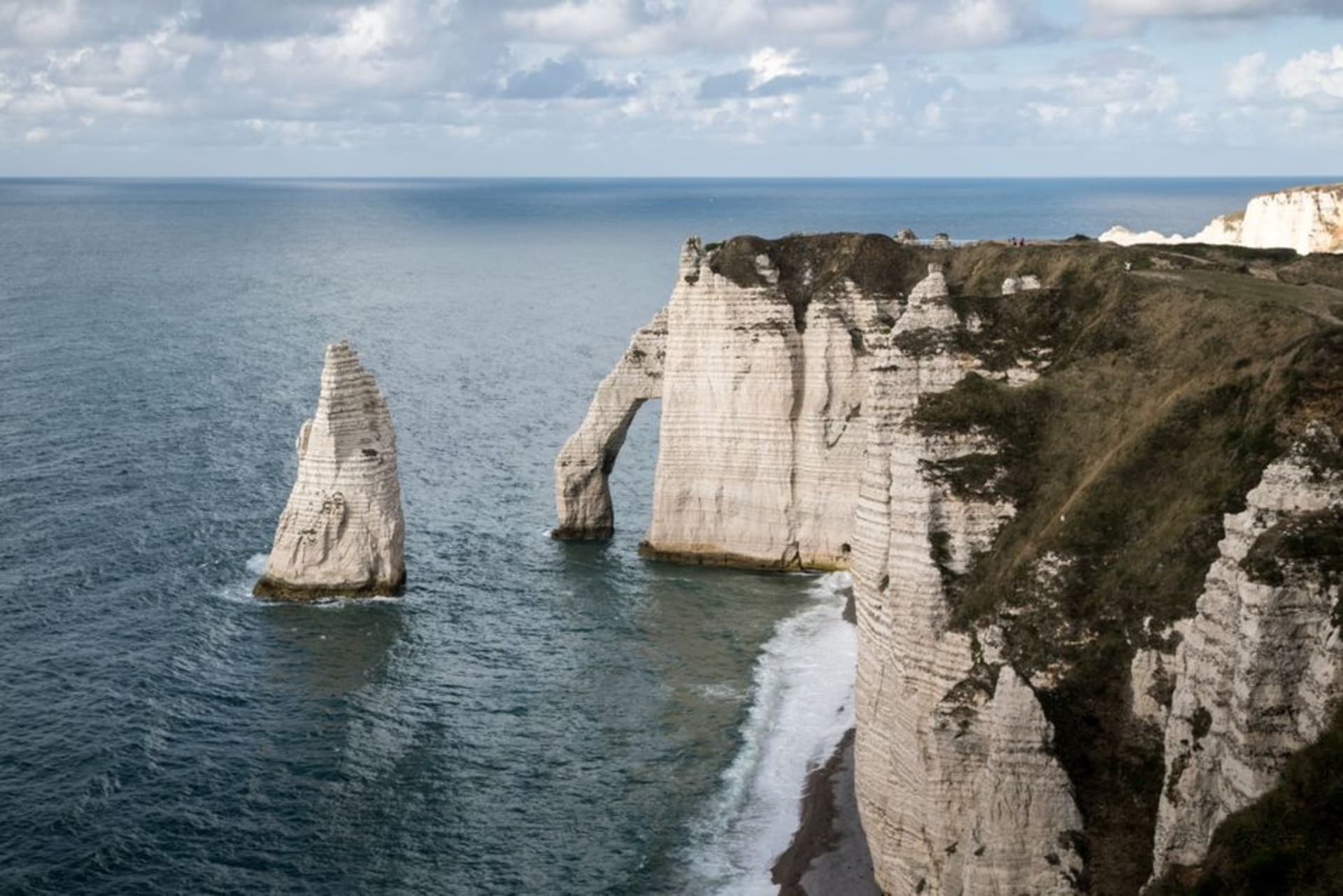
A stretch of white chalk cliffs on the Alabaster Coast carved into arches and needles dramatic enough that Monet painted them obsessively and Maupassant used them as a murder scene.
I’d seen the shape of Étretat’s cliffs so many times in paintings and travel photos that I half-expected the real thing to feel smaller, the way famous landmarks sometimes do. It didn’t. Lia and I climbed the grassy path up the western cliff on a windy afternoon and stood there for a long time just looking at the Falaise d’Aval punch a hole clean through the chalk, the sea moving through the gap beneath it.
Two cliffs, an arch, and a needle
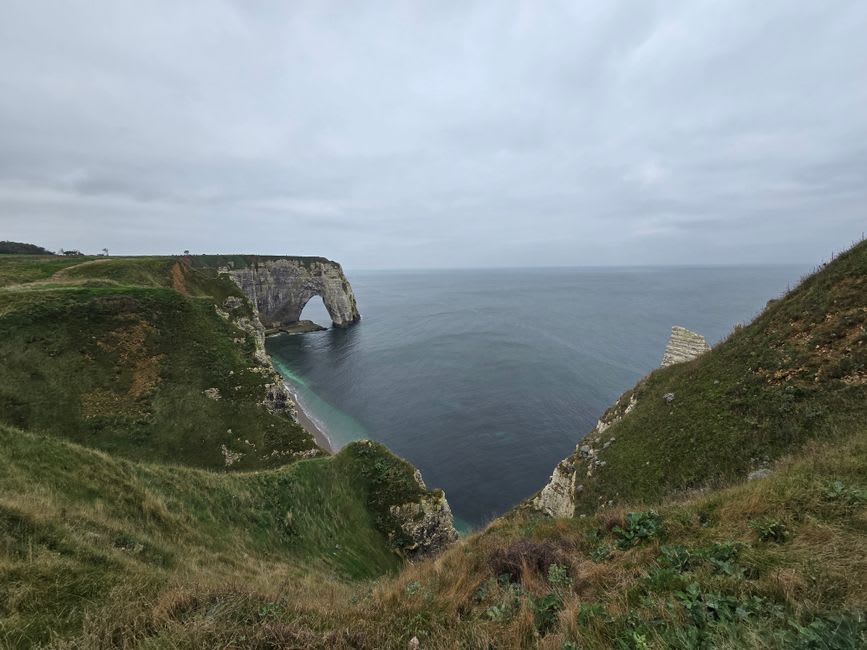
Étretat’s coastline is bookended by two chalk headlands. To the west, the Falaise d’Aval curves out into the sea and has been eroded into a vast natural arch, with a slim freestanding pillar of chalk called the Aiguille — the Needle — rising just offshore beside it. To the east, the Falaise d’Amont holds a smaller arch and a chapel, Notre-Dame-de-la-Garde, built for sailors’ families to watch for returning boats. Claude Monet painted this coastline more than eighty times in the 1880s, chasing the changing light and tide across the same formations, and it’s not hard to see why he kept coming back — we walked the clifftop path in one direction under sun and came back forty minutes later under scudding grey cloud, and the whole scene had changed colour.
A pretend murder and a very real cave
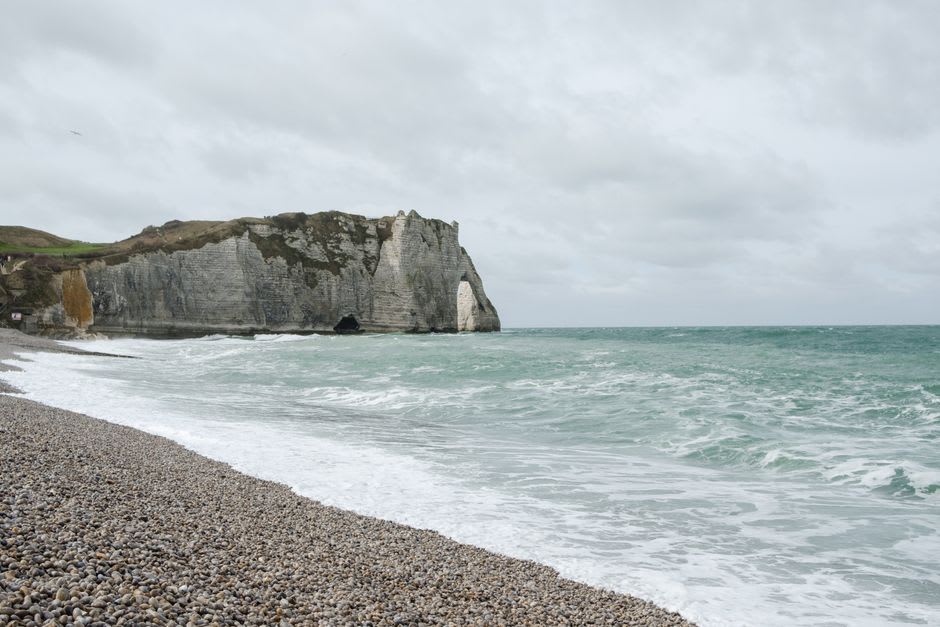
Guy de Maupassant, who grew up on this coast, set the climax of his novel Une Vie here, and Maurice Leblanc later used a hidden cave beneath the Falaise d’Aval as the secret lair of his gentleman-thief character Arsène Lupin, complete with a fictional treasure supposedly hidden inside the cliff itself — a detail locals still mention with more affection than skepticism. We walked down to the pebble beach at low tide and could just make out the cave mouth beneath the arch, water lapping into it. Back in the village we ate moules-frites at a terrace on the seafront, the white cliffs glowing faintly pink as the sun dropped, which is apparently the exact effect that gave this whole stretch of Normandy coast its name, the Côte d’Albâtre — the Alabaster Coast.
When to go: Late afternoon light is when the chalk cliffs glow at their best, so time the clifftop walk for a few hours before sunset. Spring and autumn keep the crowds manageable on a coastline that gets very busy with Parisian day-trippers in summer.