Espelette
"I've never seen a whole village organize itself around a single vegetable with this much conviction."
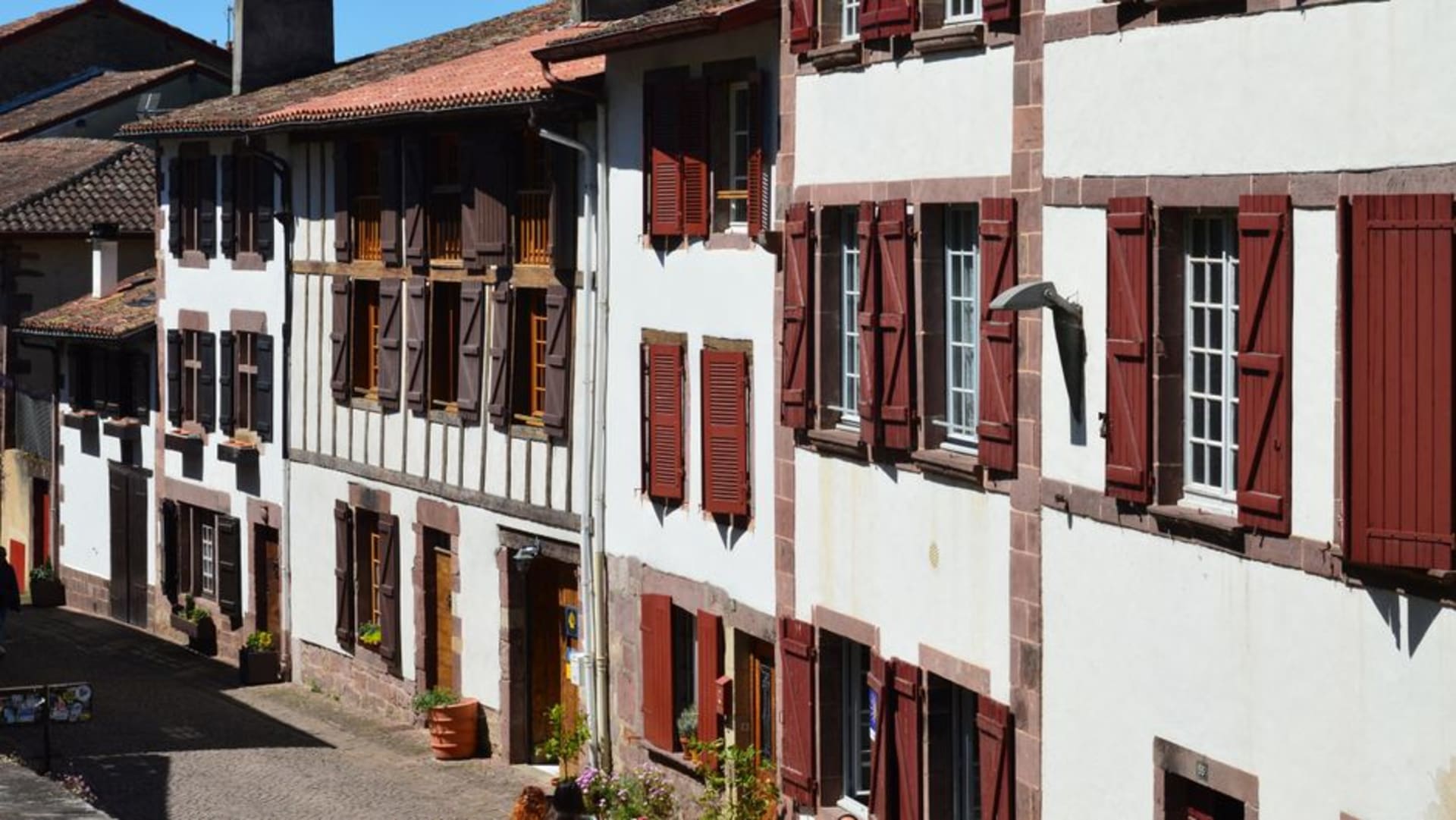
A small Basque village where every whitewashed facade is strung with ropes of drying red peppers, and the pepper itself has become the closest thing France has to a village mascot.
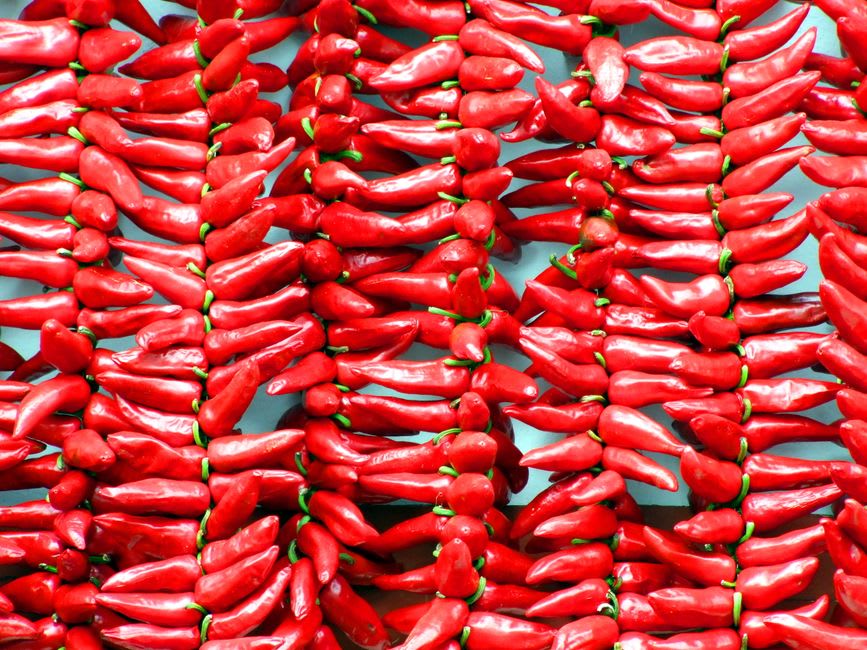
We drove into Espelette in late September, which turned out to be exactly the wrong time to arrive if you wanted to avoid the pepper. Every house along the main street had strings of them — glossy, dark red, tied in long garlands called ristras — hanging from the eaves to dry in the coastal air before being ground into the powder that shows up in half the dishes in this corner of France. Lia, who cooks with piment d’Espelette at home and had somehow never connected the spice jar to an actual place, spent a full minute just staring at one facade.
A pepper with an AOC and a festival
Espelette pepper earned its Appellation d’Origine Contrôlée in 2000, which sounds bureaucratic until you realize it means only peppers grown in ten specific communes, including this one, can legally use the name. The village leans into it without apology: the tourist office sells pepper jam, pepper chocolate, pepper-cured ham from the Ibaiona house down the road, and on the last weekend of October the whole place shuts down for the Fête du Piment, when strings of peppers are blessed outside the church and a new “chevalier” of the pepper is crowned with more solemnity than the vegetable probably deserves.
The village underneath the peppers
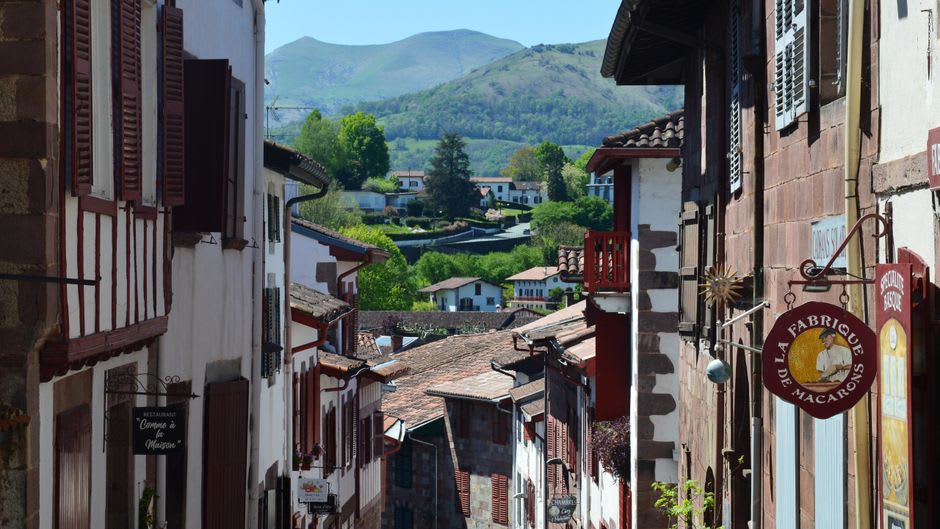
Strip away the ristras and Espelette is a textbook Basque village: a fronton — the walled court for pelota — sits right in the centre of town, the Château des Barons d’Ezpeleta anchors one end of the main street, and the church of Saint-Étienne has the carved wooden galleries and discoidal gravestones we’d already started to recognize as a regional signature. We ate lunch at a small table outside a bar on the main street, ordered the local ham with a glass of Irouléguy wine, and watched two old men argue amiably about something in Euskara neither of us understood a word of.
When to go: Come in September or October to see the peppers actually drying on the houses and, if your timing is lucky, catch the Fête du Piment on the last weekend of October.