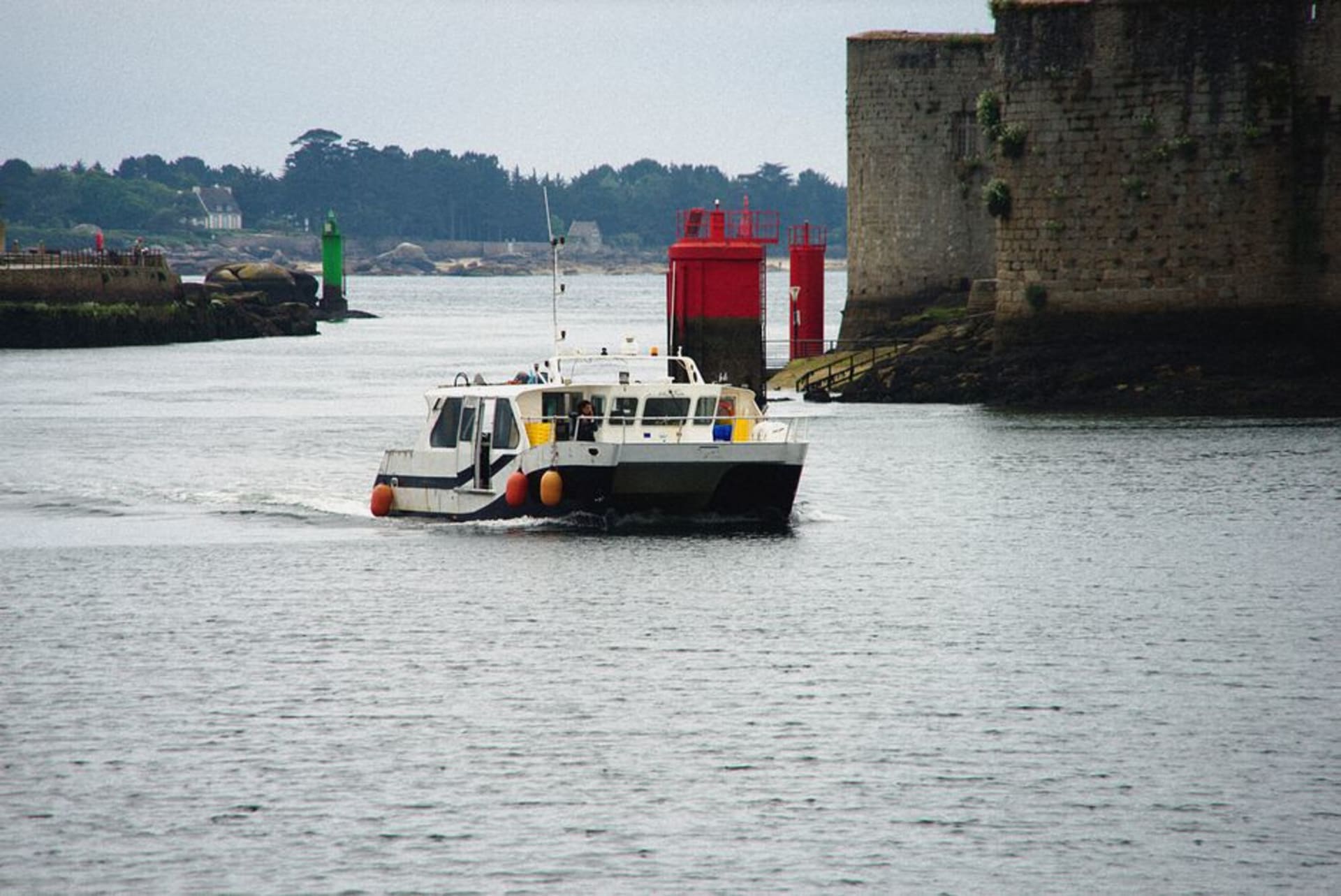
A working fishing port in southern Brittany where a fortified island town sits in the middle of the harbour and the nets drying on the quay are still blue for a reason nobody could fully explain to us.
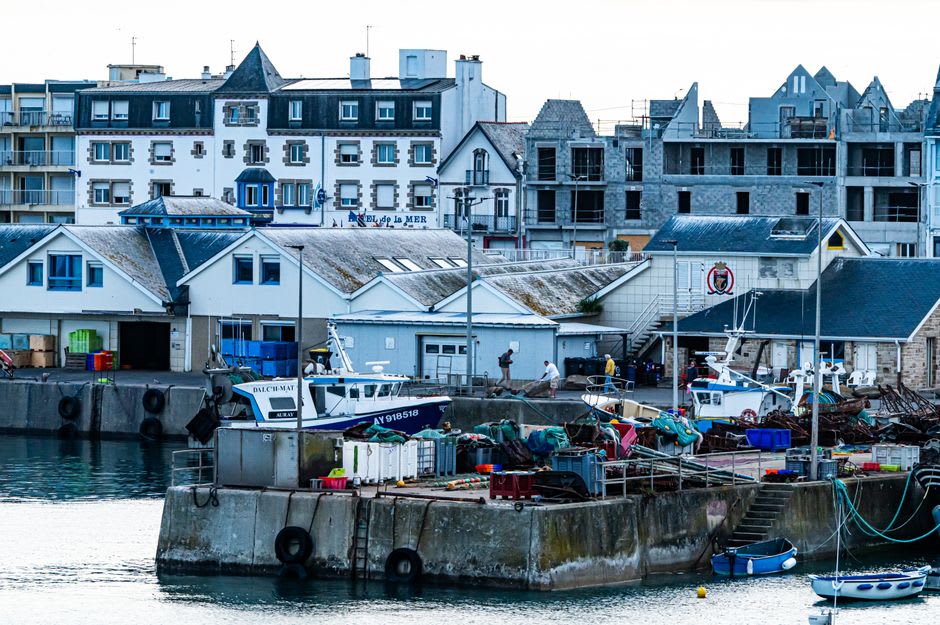
Concarneau doesn’t perform for visitors the way some Breton ports do. Trawlers still unload at the criée, the fish auction hall, most mornings, and the smell of the harbour is unapologetically a working smell — diesel, salt, and fish — right up until you cross the little footbridge onto the Ville Close and the town shifts, almost too abruptly, into something built for walking slowly. Lia and I arrived at low tide on a grey September morning and liked it more than any of the sunnier stops on that trip.
The walled island in the harbour
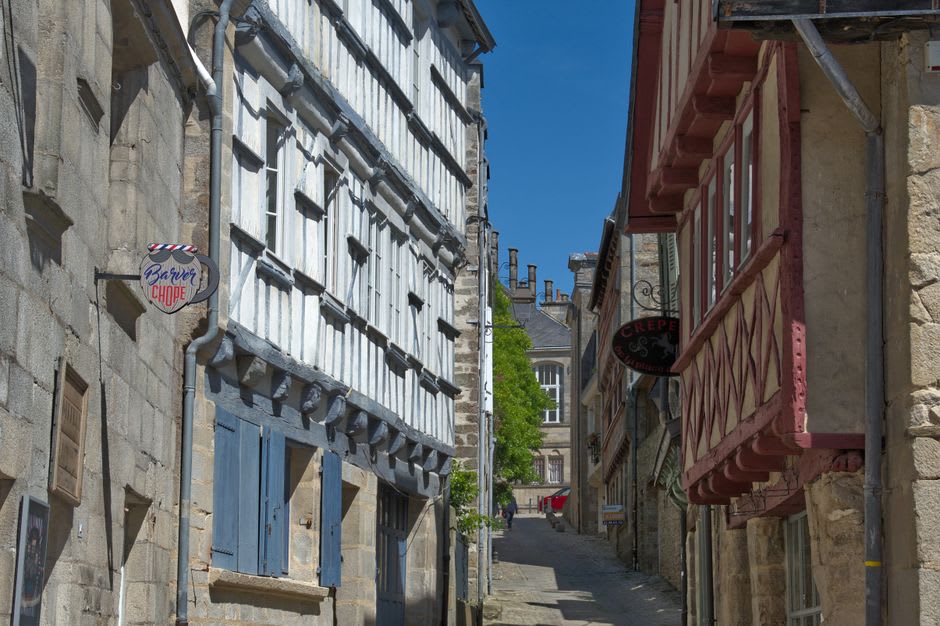
The Ville Close is a fortified islet in the middle of Concarneau’s harbour, ringed by granite ramparts built up over the 14th to 17th centuries and reachable only by a short bridge. Inside, the single main street is narrow enough that we kept stepping into doorways to let people pass, lined with crêperies and shops selling striped Breton shirts to tourists who, admittedly, included us. We climbed onto the ramparts for the loop around the island’s edge, which takes maybe twenty minutes and gives you the whole working harbour spread out below — trawlers, fish crates, gulls working the wake of an incoming boat.
Blue nets and the Filets Bleus
Concarneau was, for much of the 19th and 20th centuries, one of France’s most important sardine ports, and the town still celebrates that history every August with the Fête des Filets Bleus — the Festival of Blue Nets — a tradition started in 1905 to raise money for fishermen’s families after a catastrophic season when the sardines simply didn’t come. We missed the festival itself but caught the tail end of nets drying along the quay outside the walls, a deep indigo blue that a fisherman mending one told us came from an old tanning process using tannin, though he shrugged when I asked why blue specifically stuck as the colour. We ate langoustines at a harbourside table that evening while the boats came back in, one after another, gulls trailing every one of them.
When to go: Come in August if you can catch the Fête des Filets Bleus, but any shoulder-season weekday morning gets you the working port at its most honest, before the day-trip buses from Quimper arrive.