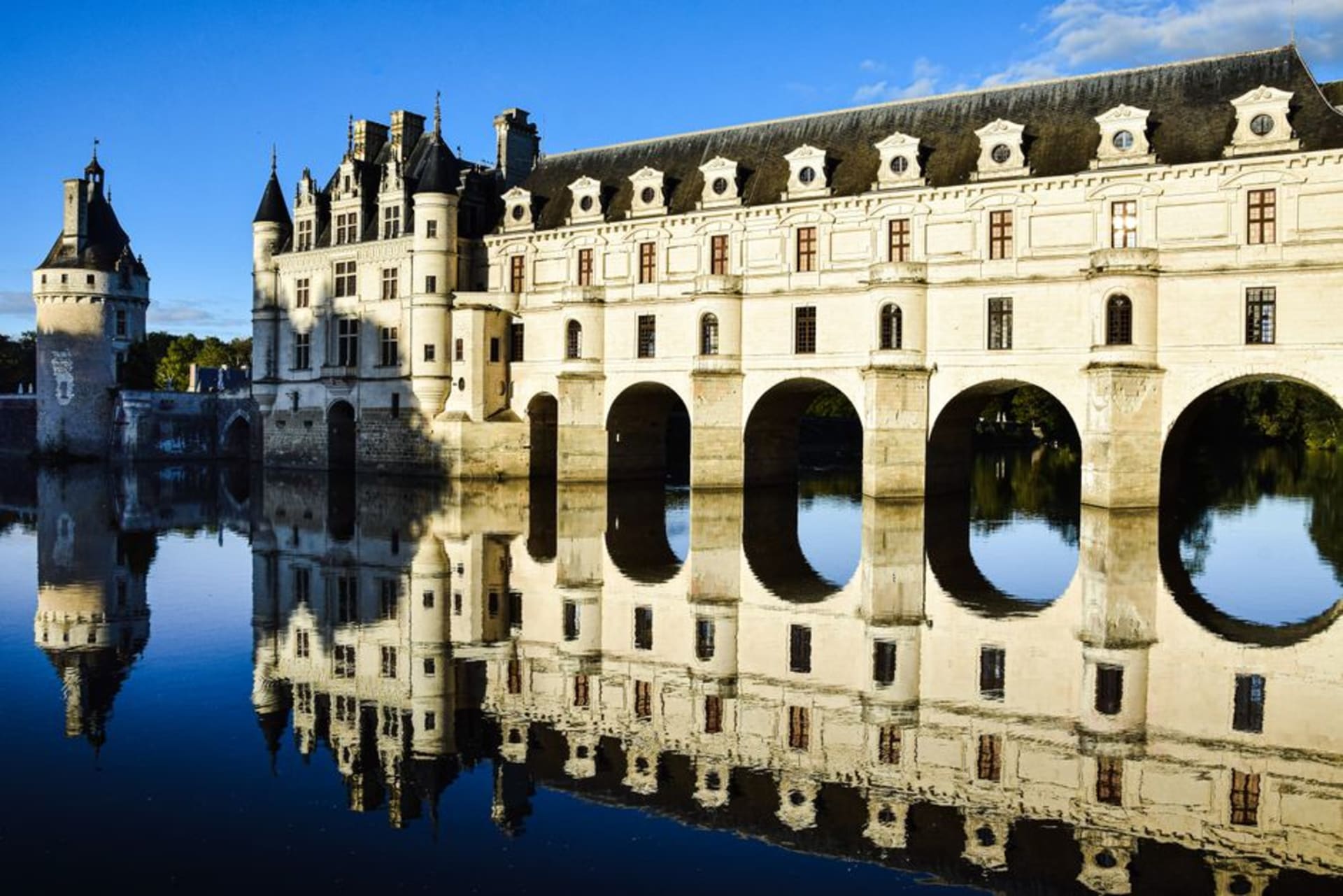
Chenonceaux
"Lia said it was the first château that actually made her gasp, and I don't think she was exaggerating."
A tiny village that exists almost entirely to serve the château arching over the River Cher beside it, built and shaped by a string of formidable women whose rivalry you can still trace room by room.
Chenonceaux the village has an extra x that Chenonceau the château does not, a quirk of nineteenth-century spelling reform that nobody bothered to apply to the building itself, and that small mismatch is about as complicated as the village gets. There is a main street, a handful of hotels, a few restaurants that all know exactly what they are for, and then, at the end of a long avenue of plane trees, the château itself, which arches clean across the River Cher like nothing else I have seen in France. Lia and I arrived by regional train from Tours, which drops you close enough to walk, and she gasped audibly the moment the gallery came into view. I don’t think it was performance.
The château of women
What sets Chenonceau apart from every other Loire château is that it was built, defended, and decorated almost entirely by women, and the building still carries the imprint of their rivalry. Diane de Poitiers, Henri II’s mistress, commissioned the arched bridge across the Cher and planted the first formal garden on the château’s east side. When Henri died, his widow Catherine de Médicis forced Diane out, seized the château, and built the two-story gallery atop Diane’s bridge — the very feature that makes Chenonceau famous — largely, historians agree, to outdo her.
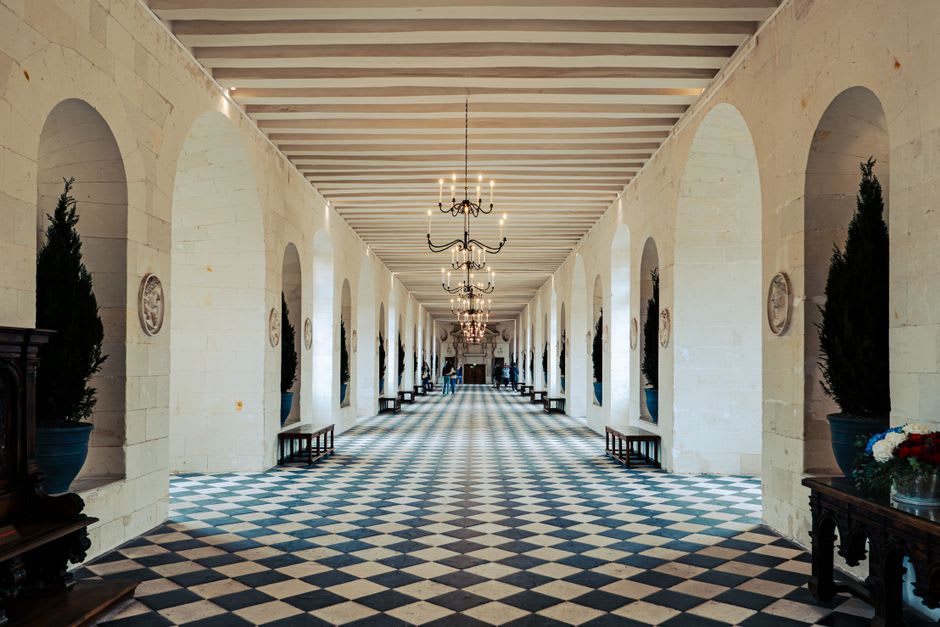
Walking through the Grande Galerie, a checkerboard-floored hall spanning the river with windows down both sides, you can feel that competitive energy in the architecture itself: it is a room built to be photographed centuries before photography existed. During both World Wars the gallery served a stranger purpose — as a hospital ward in the first, and as an escape route across the demarcation line between occupied and Vichy France in the second, since the Cher briefly marked that border.
Diane’s garden and a quiet dinner
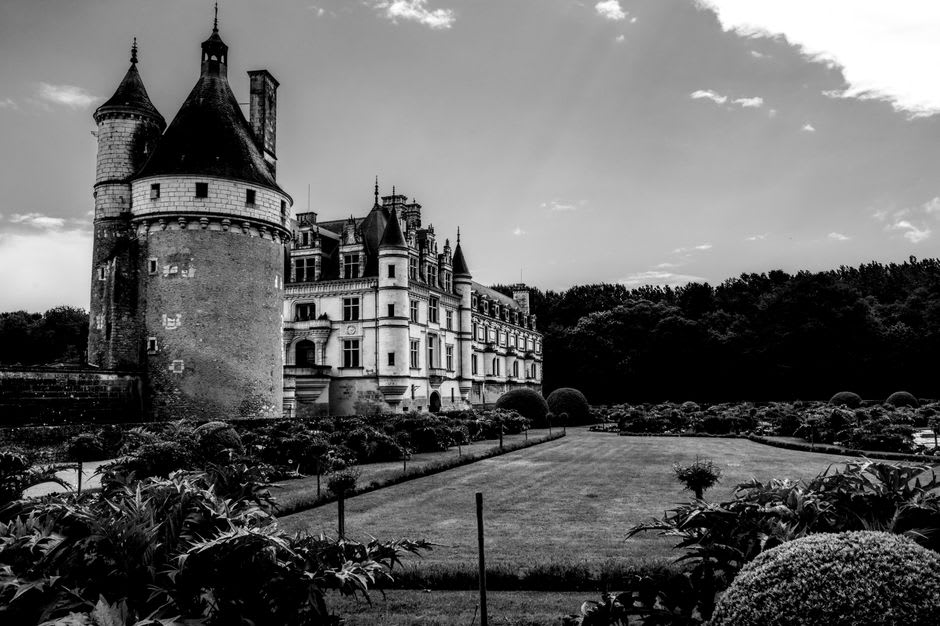
We spent longer than planned in the gardens, particularly Diane de Poitiers’s, a huge square parterre set slightly below the château to protect it from Cher flooding, laid out in triangular beds around a central fountain. It was late June and the beds were dense with salvia and dahlias, bees working every row, and almost nobody else was down there — everyone funnels through the château and misses it.
For dinner we didn’t stray far. The village’s one memorable restaurant, tucked just off the main avenue, does a simple menu built around Loire river fish and local Touraine wine, and we ate outside under a canopy of vines as the light went down over the château’s turrets, visible from our table at the end of the street.
When to go: Early morning, whatever the season — the château opens before the day-trip buses from Tours arrive, and having the gallery close to yourself changes the entire experience. Late spring brings the gardens to their best.