Chamonix
"Chamonix exists in Mont Blanc's shadow, and that shadow is entirely exhilarating."
I came to Chamonix expecting a ski resort. What I found instead was a town living permanently under the spell of something much larger than itself — a 4,808-meter argument against human scale that you feel in your chest before you even leave the valley floor.
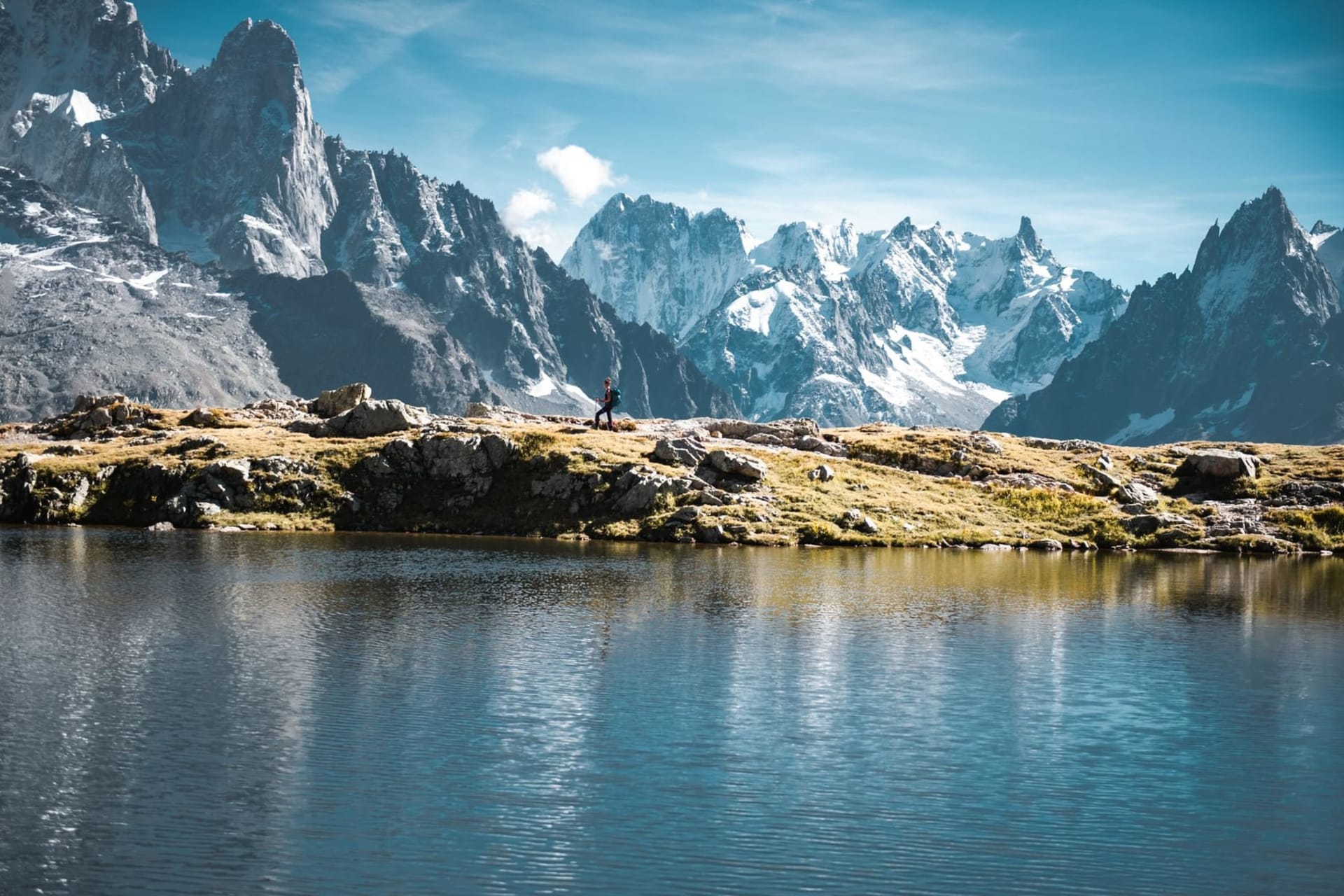
We arrived on the train from Saint-Gervais in late afternoon, when the light hits the Aiguilles Rouges from the west and turns the granite faces a color that has no name in French or Spanish. Lia pressed her forehead against the window and went quiet for a full minute. That says everything.
The Weight of the Mountain
The centre-ville is compact and unpretentious in the way that only places with overwhelming natural backdrops can afford to be. Rue du Docteur Paccard cuts through the main drag past gear shops and patisseries, and at nearly every intersection you glance up and Mont Blanc is simply there — a white mass of indifference hanging above the church steeple. The Aiguille du Midi cable car station sits at the edge of town like a portal to another dimension, which is essentially what it is: one moment you are eating a croissant, twenty minutes later you are standing at 3,842 meters with your lungs politely refusing to cooperate.
The cold at the Aiguille du Midi summit is not the cold of winter streets. It is a dry, crystalline cold that enters through your sinuses and convinces you briefly that thought itself might freeze. We spent forty minutes up there, faces pressed against the glass of the observation terrace, watching a rope team inch across the Vallée Blanche below us like a sentence being written very slowly on white paper.
Below the Ice
Back at valley level, Chamonix rewards slower attention. I had not expected the food to matter, but it does. A bowl of tartiflette at a wooden table inside Le Bump — reblochon pooling across potato and lardons — is the kind of meal that makes cold weather feel purposeful. The town smells of woodsmoke and wet wool and, near the river Arve, something mineral and glacial that drifts down from the ice fields above.
The unexpected discovery came on our second evening, following the Arve upstream past the edge of town toward Les Pèlerins. The path nearly disappears into pine forest, the noise of the resort fades entirely, and for a half hour we walked in silence alongside the grey-green glacial water with no other people in sight. In one of Europe’s most visited mountain towns, that silence felt like a small miracle.
When to go: July and August offer the best conditions for high-altitude hiking and the Mer de Glace glacier walk, with long clear days and accessible trails above the snowline. For skiing, January through March brings reliable powder, though the town fills quickly — mid-January tends to offer the best balance of snow quality and manageable crowds.