Blois
"Blois felt like the first Loire town where actual people outnumbered the tour groups, and I liked it more for that."
A working Loire town stacked on a hillside above the river, where a royal château built in four different centuries stages a murder every schoolchild in France learns about, and the old streets never feel staged for tourists.
After a run of châteaux towns that exist mostly to be visited, Blois came as a relief. It’s a real town, with a hillside of steep streets that has nothing to do with tourism — grocery shops, a market three mornings a week, kids on scooters weaving around us on Rue des Trois Clefs. Lia and I based ourselves here for four nights while doing day trips to Chambord and Chaumont, and by the end I liked Blois better than most of the châteaux we’d driven out to see.
Four centuries under one roof
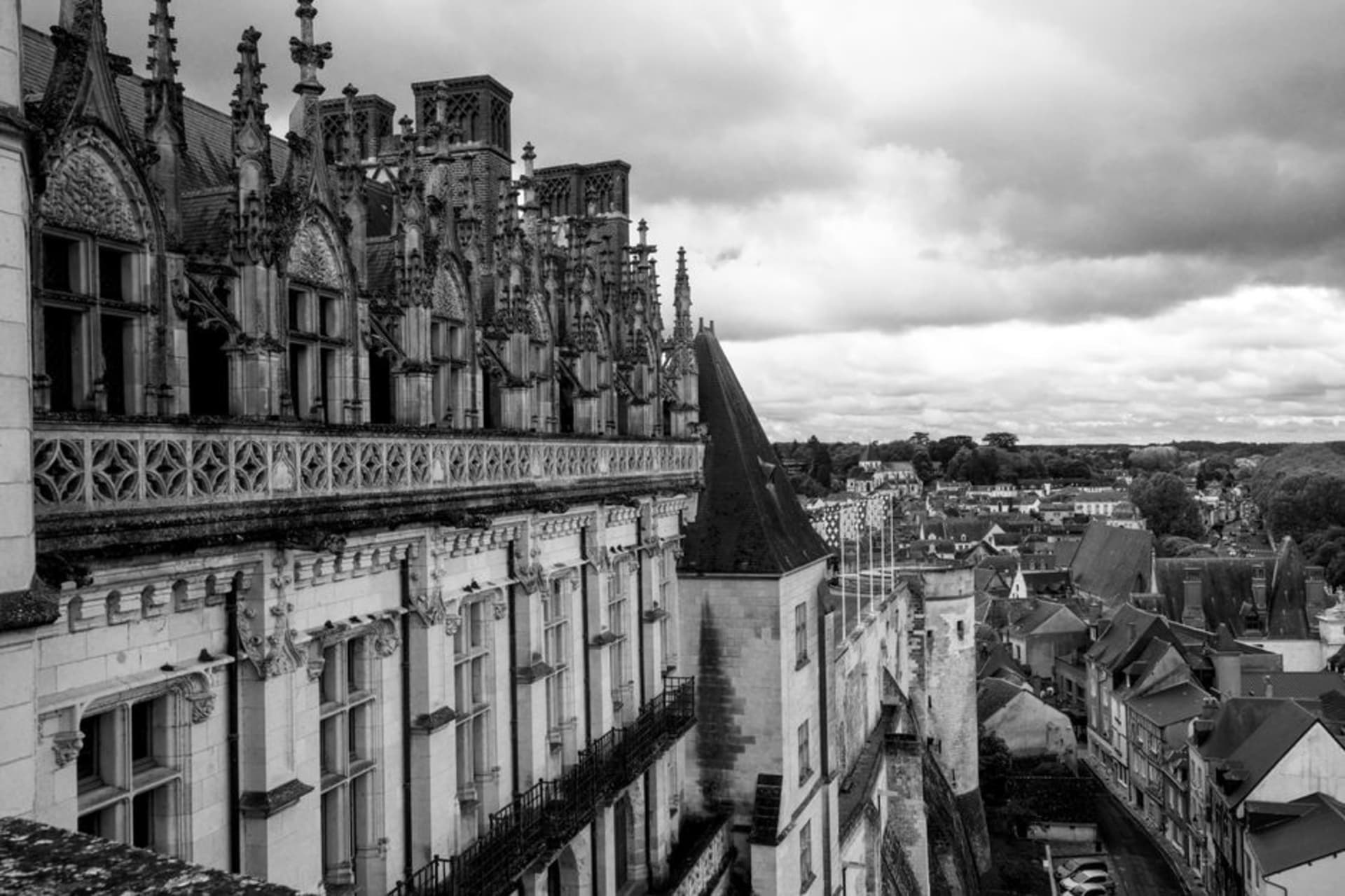
The Château Royal de Blois is unusual because it isn’t one building from one era — it’s four wings built across four centuries, each in the style of its own time, wrapped around a single courtyard. There’s a medieval hall from the thirteenth century, a Gothic-flamboyant wing from Louis XII, a Renaissance wing from François I with a spectacular external spiral staircase carved with salamanders, and a classical wing added later by Gaston d’Orléans. Walking the courtyard is like watching French architecture evolve in real time without leaving your spot.
The wing everyone comes for the story, though, is the François I wing, where in December 1588 King Henri III had the Duke of Guise assassinated in a chamber just off the royal bedroom, ending the duke’s bid to seize the throne during the Wars of Religion. The room is furnished now much as it might have looked, and the guide who took us through it recited the killing in enough detail that Lia grabbed my arm halfway through.
The hillside streets and the covered market
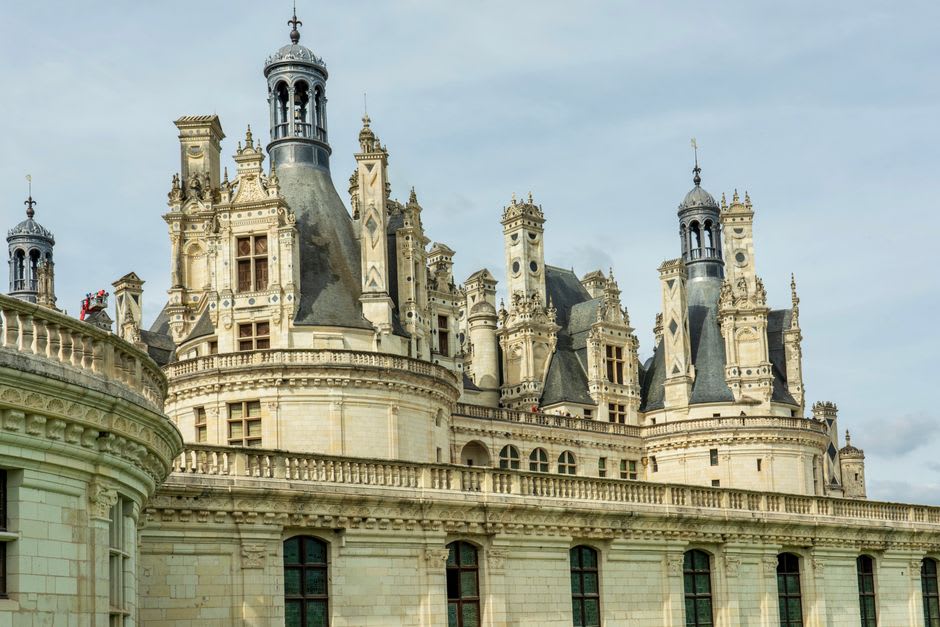
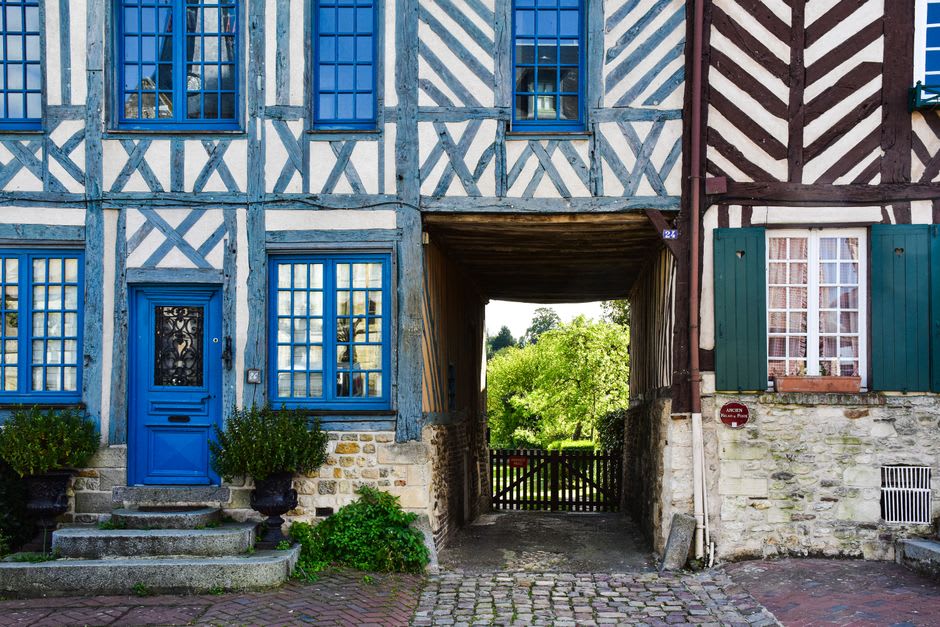
Below the château, the old town tumbles down the hillside toward the Loire in a tangle of stepped lanes, half-timbered houses, and small squares that never quite level out. We got happily lost more than once, ending up in the Jardin des Simples, a small terraced garden of medicinal herbs behind the château with a clear view over the river and the rooftops below.
The Saturday market along Quai Villebois-Mareuil runs the length of the riverbank, stalls of Sologne asparagus, goat cheese from the surrounding farms, and a fishmonger selling Loire eel that a woman in the queue insisted we try — we bought a small portion, grilled it that evening on the terrace of our rental, and neither of us could quite believe how good it was.
When to go: Late spring through early autumn, and definitely on a Saturday if you can manage it — the market along the river is worth building a day around, and Blois makes a genuinely good, affordable base for the surrounding châteaux without the crowds that gather in Amboise or Chenonceaux.