
Beynac-et-Cazenac
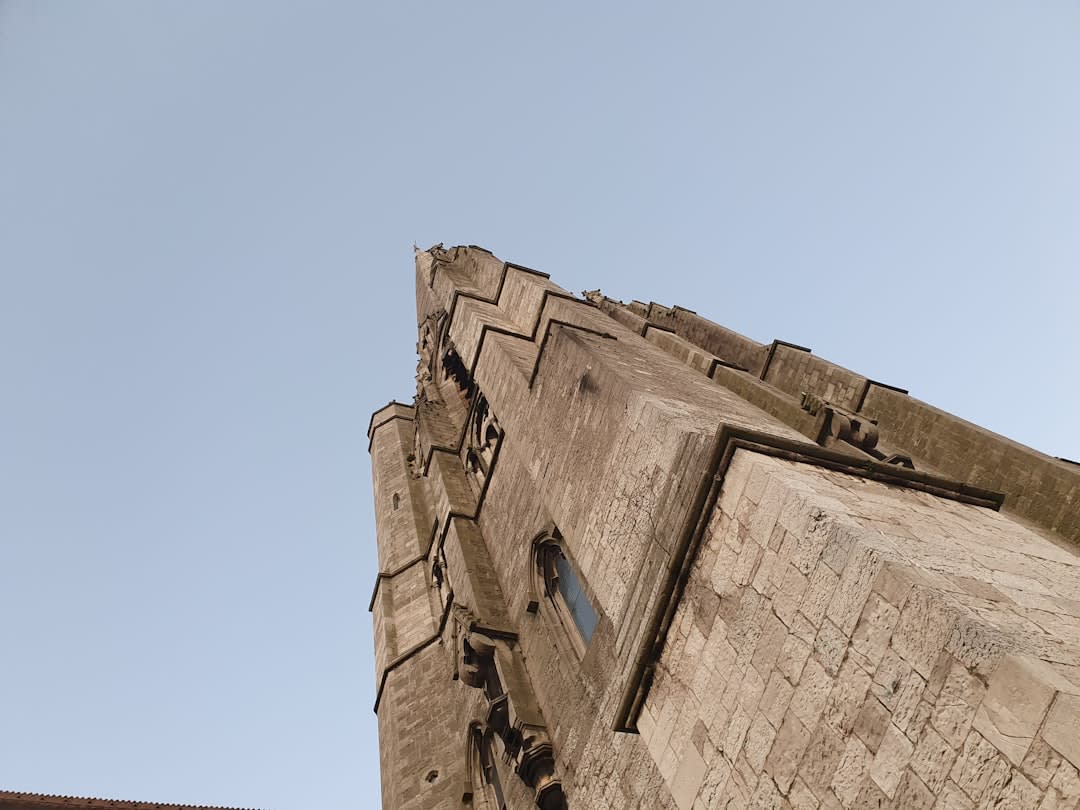
"I've never felt so small standing under a building as I did looking straight up at Beynac's keep."
A stone village stacked beneath a brooding clifftop fortress on the Dordogne River, one of the best-preserved medieval castles in France and the backdrop for half the postcards sold in the valley.
Beynac is the view every brochure of the Dordogne Valley uses, and having now stood underneath it, I understand why. The village is a tight stack of grey stone houses climbing a nearly vertical slope, and above it, on a sheer limestone cliff a hundred and fifty metres over the river, sits a castle that looks less built than grown out of the rock itself. Lia and I parked at the bottom by the river and started the climb up through the village not fully appreciating how steep it was going to get — by the time we reached the château gate we’d earned the view.
A castle that watched its enemy across the river
For most of the Hundred Years’ War, Beynac sat on the French side of a frontier that ran straight down the Dordogne, and its garrison spent decades staring across the water at Castelnaud, a rival château held by the English on the opposite bank, clearly visible from Beynac’s ramparts. The two castles never fought each other directly in any decisive battle, but their permanent standoff shaped the whole valley — villages on each side picked allegiances based on which fortress controlled their stretch of river, and you can still see Castelnaud’s own tower from Beynac’s walls today, a genuinely eerie thing to look at once you know the history.
The keep itself, an eleventh and twelfth-century donjon, is one of the most intact in France, and the guided route through it takes you up narrow spiral stairs into rooms with fireplaces still blackened, arrow slits still angled toward the valley below. Standing at the base of the main tower and looking straight up the sheer stone face, I felt genuinely dizzy in a way no château elsewhere in France had managed.
The village below and a slow float on the river
Below the castle, Beynac’s village streets are cobbled and steep enough that some of them are stepped rather than sloped, lined with stone houses that have clearly been lived in continuously for centuries rather than restored for show. We stopped at a tiny épicerie for walnut bread and local cheese and ate it sitting on a low wall looking down at the Dordogne.
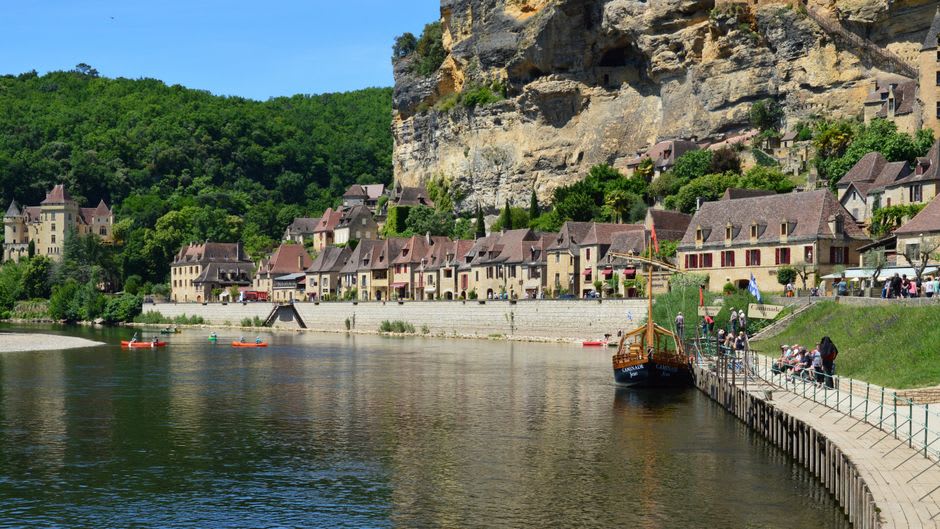
Later we did what half the valley seems to do in summer — rented a gabarre, a traditional flat-bottomed river boat, and floated the stretch between Beynac and La Roque-Gageac. From the water, looking back up at the château on its cliff with the afternoon sun full on the stone, it was easily one of the best views of the whole trip, and far less strenuous than the walk up had been.
When to go: Late spring or early autumn — the climb up to the château is much more pleasant without July’s heat, and the river is calm enough for a gabarre ride from April through October.