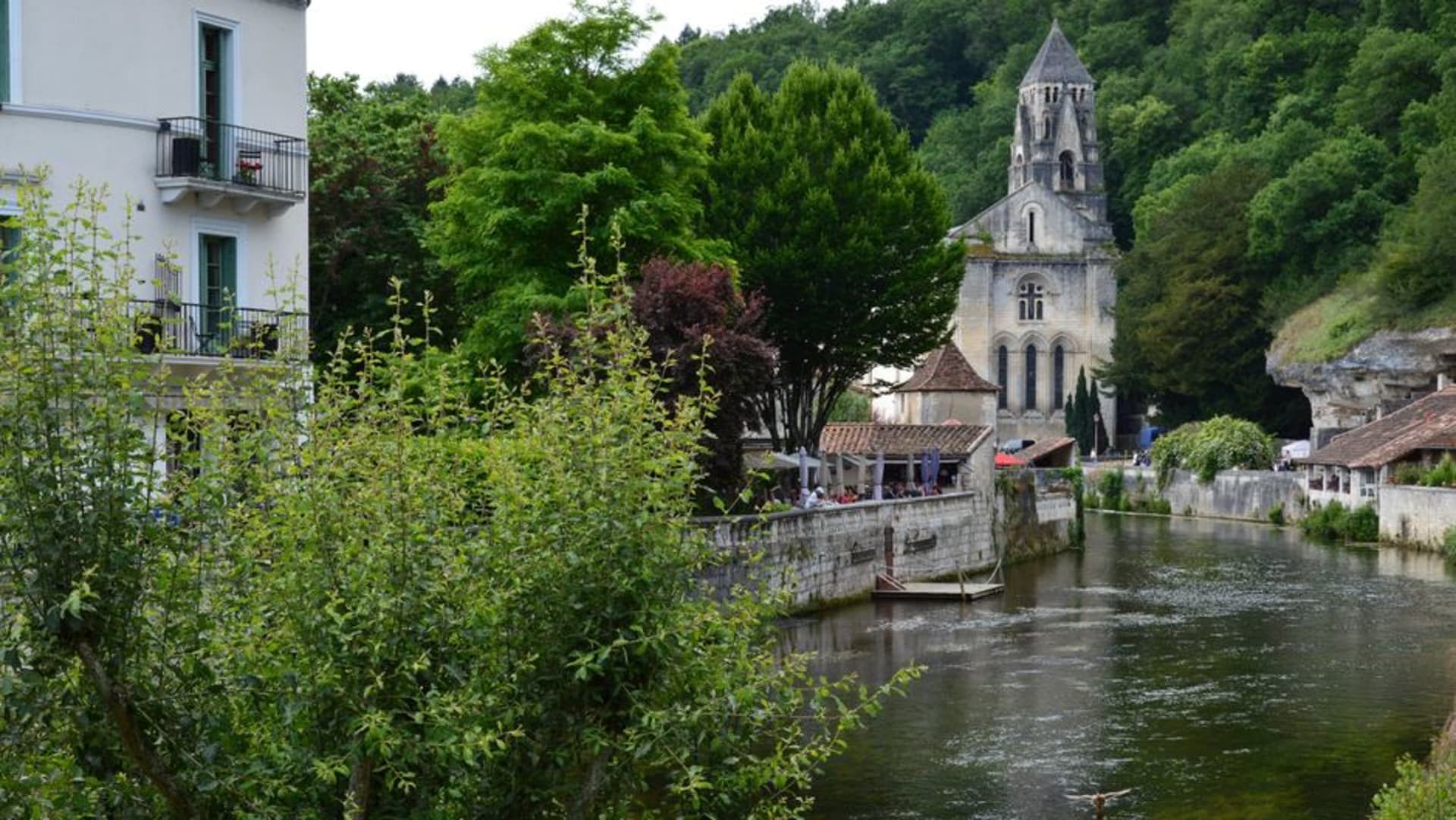
Baume-les-Messieurs
"The road just stops at a wall of cliffs, and the village is tucked in right at the base of them."
A village hidden inside a dead-end limestone canyon in the Jura, built around an ancient abbey and surrounded by cheese cellars ageing the region's prized Comté in caves cut into the cliffs.
You don’t really arrive at Baume-les-Messieurs so much as descend into it. The village sits at the closed end of a reculée, a dead-end canyon carved into the Jura’s limestone plateau, and the road drops steeply through hairpins with the cliffs closing in on both sides before opening onto a small green bowl with the village and its abbey at the centre. Lia, checking the map as we descended, said it looked less like a road than a decision the landscape had made for us.
An abbey with an outsized reputation
The Abbaye de Baume-les-Messieurs was founded in the ninth century and grew powerful enough that its monks — the “messieurs” of the name, a title granted because they were mostly minor nobility rather than ordinary clergy — later went on to found the great abbey of Cluny. What remains today is a cluster of Romanesque and Gothic buildings around a peaceful cloister, including a carved Flemish altarpiece inside the church that’s startlingly ornate for a village this size and this far from anywhere.
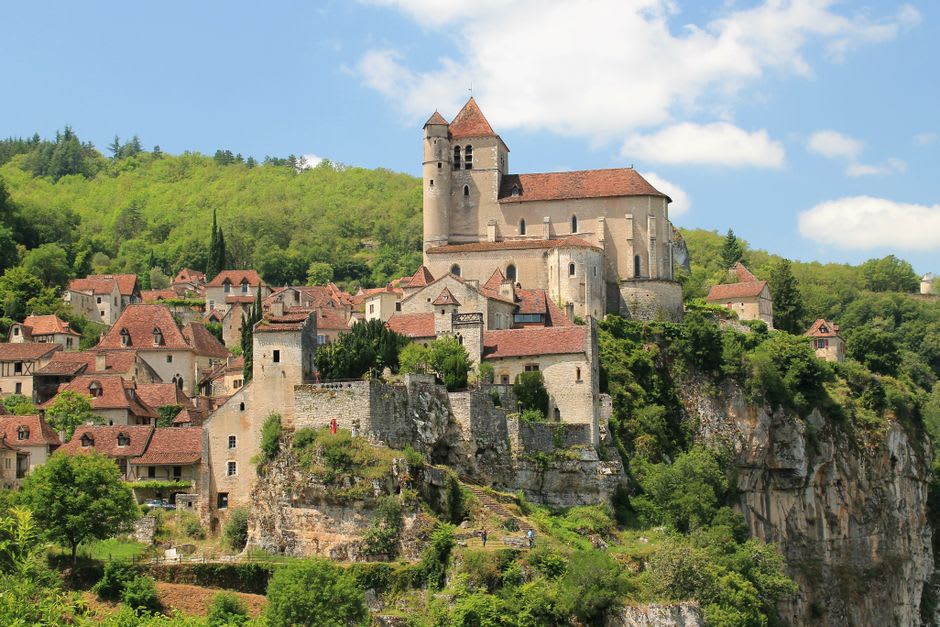
Comté in the caves, and a waterfall at the end of the walk
Just outside the village, the Grottes de Baume-les-Messieurs are a network of caves and underground galleries with stalactites and an underground river; more usefully for the region’s economy, similar caves nearby have been used for centuries to age Comté cheese at a constant cool temperature, and a short walk from the village brings you to the source of the Cascades des Tufs, where mineral-rich water spills over a series of tufa terraces into the canyon floor. We stood at the base of the falls for a while, cool spray drifting over from a genuinely startling amount of water for such a small opening in the rock.

When to go: Late spring through early autumn, when the waterfall runs strongest after snowmelt and the caves are open for visits; the steep descent road can be tricky in winter conditions.