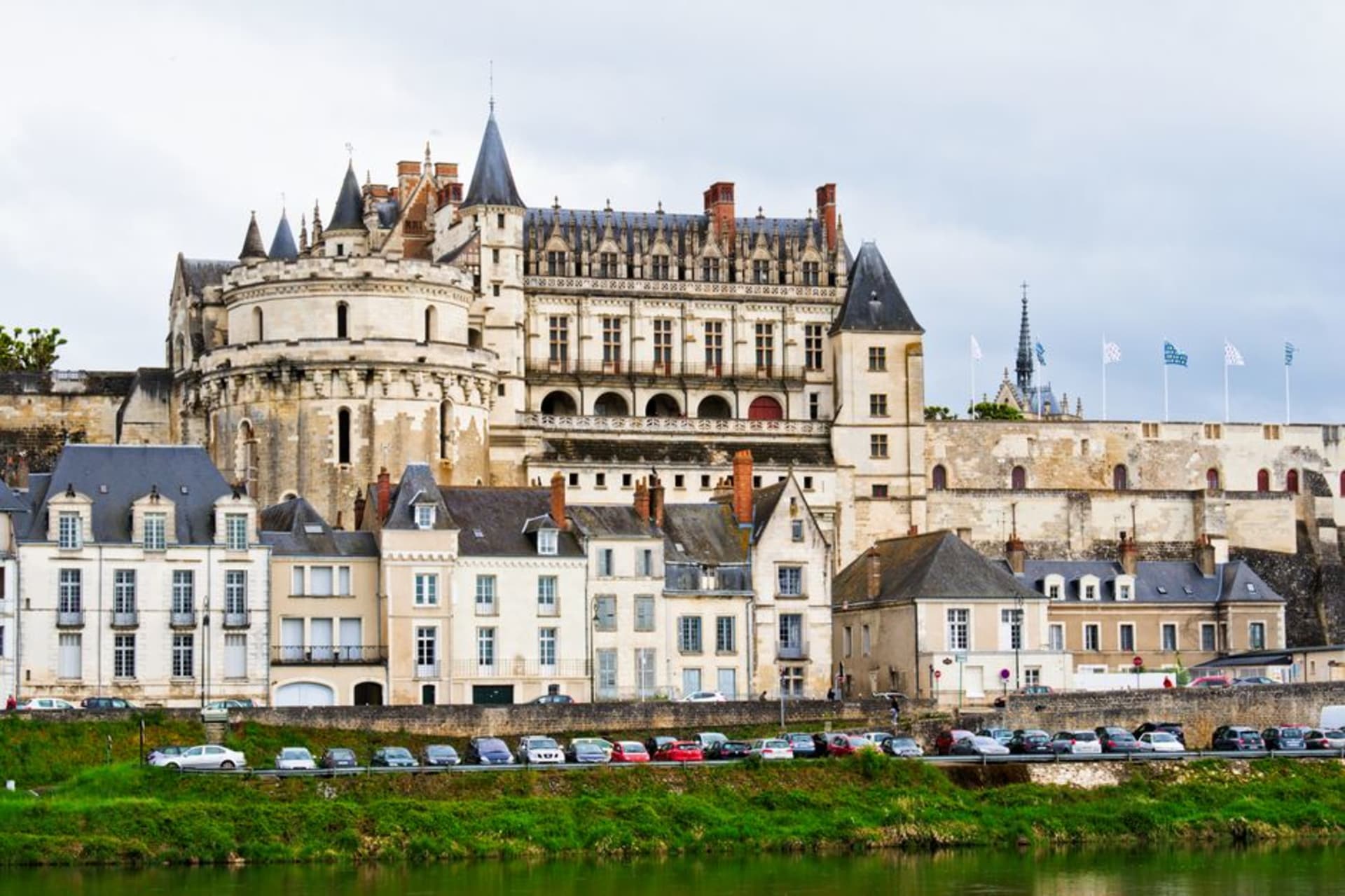
Amboise
"I stood where Leonardo is buried and thought about how strange it is that he ended up here, of all places."
A honey-stone town on the Loire where Leonardo da Vinci lived out his last years, and where the château's terrace still catches the best light on the river in the valley.
We came to Amboise on a whim, really — Lia had read that Leonardo da Vinci spent his final three years in a manor here, invited by François I, and that was enough to get us off the train a stop early on our way south. I did not expect to like it as much as I did. The town sits low against the Loire with the château rising directly above it on a rocky spur, and there is a compactness to the whole place that makes it feel like you can hold it in your hand — you can walk from the river to the ramparts to the edge of town in twenty minutes, and every one of those minutes has something worth looking at.
Leonardo’s last address
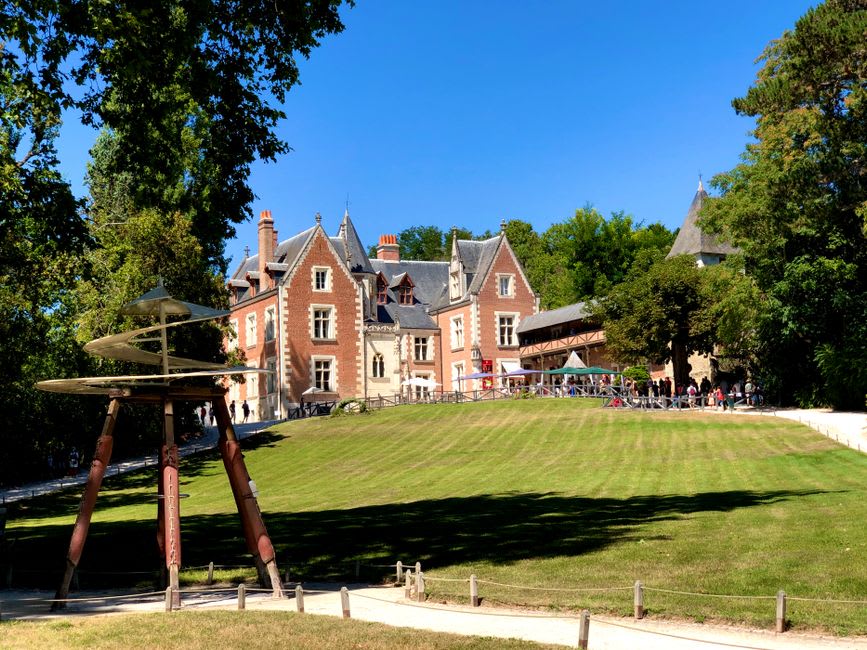
Le Clos Lucé, the manor where da Vinci lived and worked until his death in 1519, sits a short walk uphill from the château, connected in local legend by an underground tunnel that supposedly let François I visit him without ceremony. The house itself is modest — red brick, tall windows, nothing that announces genius — but the grounds have been filled with working-scale models built from his notebook sketches: a tank, a swing bridge, an early helicopter blade. Lia, who is not easily impressed by tourist reconstructions, spent twenty minutes cranking a wooden gear model and refused to move on until she understood how it worked.
We paid our respects at the Chapelle Saint-Hubert inside the château grounds, a small Gothic chapel with flame-shaped tracery where a stone slab marks what are believed to be Leonardo’s remains — bones were exhumed and reburied here in the nineteenth century after being scattered during the Revolution, and the attribution is more devotional than certain. Still, standing in that quiet stone room, four hundred years removed from a man who reshaped how humans think about looking at things, felt worth the detour.
The terrace and the town below
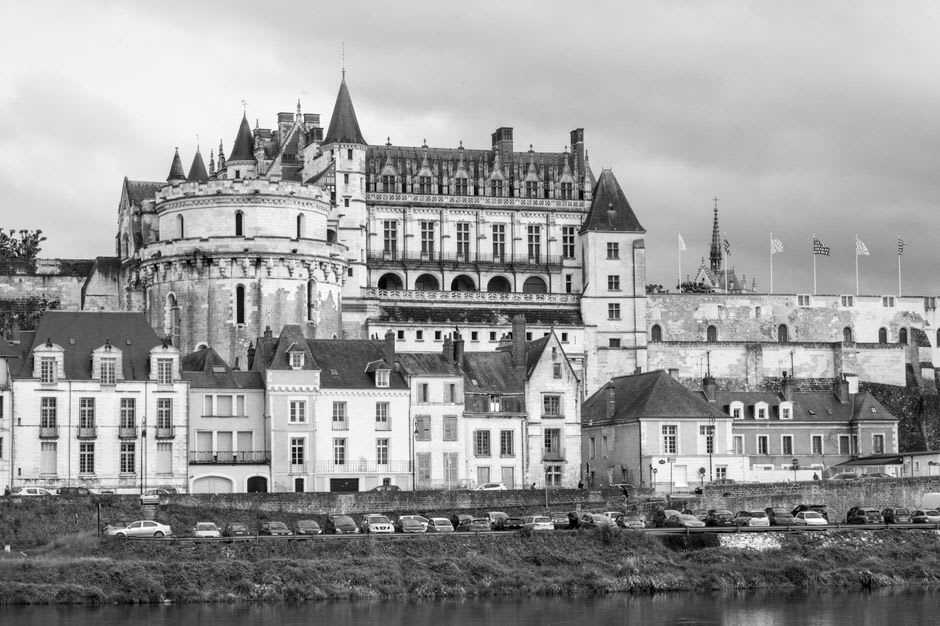
The Château d’Amboise itself is smaller than Chambord or Chenonceau and better for it — you are not competing with tour buses for a sightline. The real reason to climb up is the terrace along the ramparts, which gives an unbroken view down the Loire in both directions: sandbanks, poplar lines, the slate roofs of the town clustered at the base of the rock. We came back a second evening just to sit on a bench there with a bottle of Vouvray from a shop on Rue Nationale and watch the light go copper over the water.
Down in the old town, we found our dinner more or less by accident at a small place near the covered market on Place Michel Debré, where the owner talked us through a plate of rillettes de Tours and a pike-perch fished, he insisted, that morning from the river we could see from our table. I have no way of verifying that claim and no interest in disputing it.
When to go: Late spring, before the summer château circuit fills up — May gives you the gardens in bloom and a river town that hasn’t yet been overtaken by coach tours. September works nearly as well and comes with the first of the harvest.