Aix-en-Provence
"Every fountain in this town has a temperature and a mood, and by day three I had opinions about all of them."
A honey-stone university town built around a mile of plane trees and fountains, where Cézanne painted the same mountain a hundred times and the market still opens at dawn.
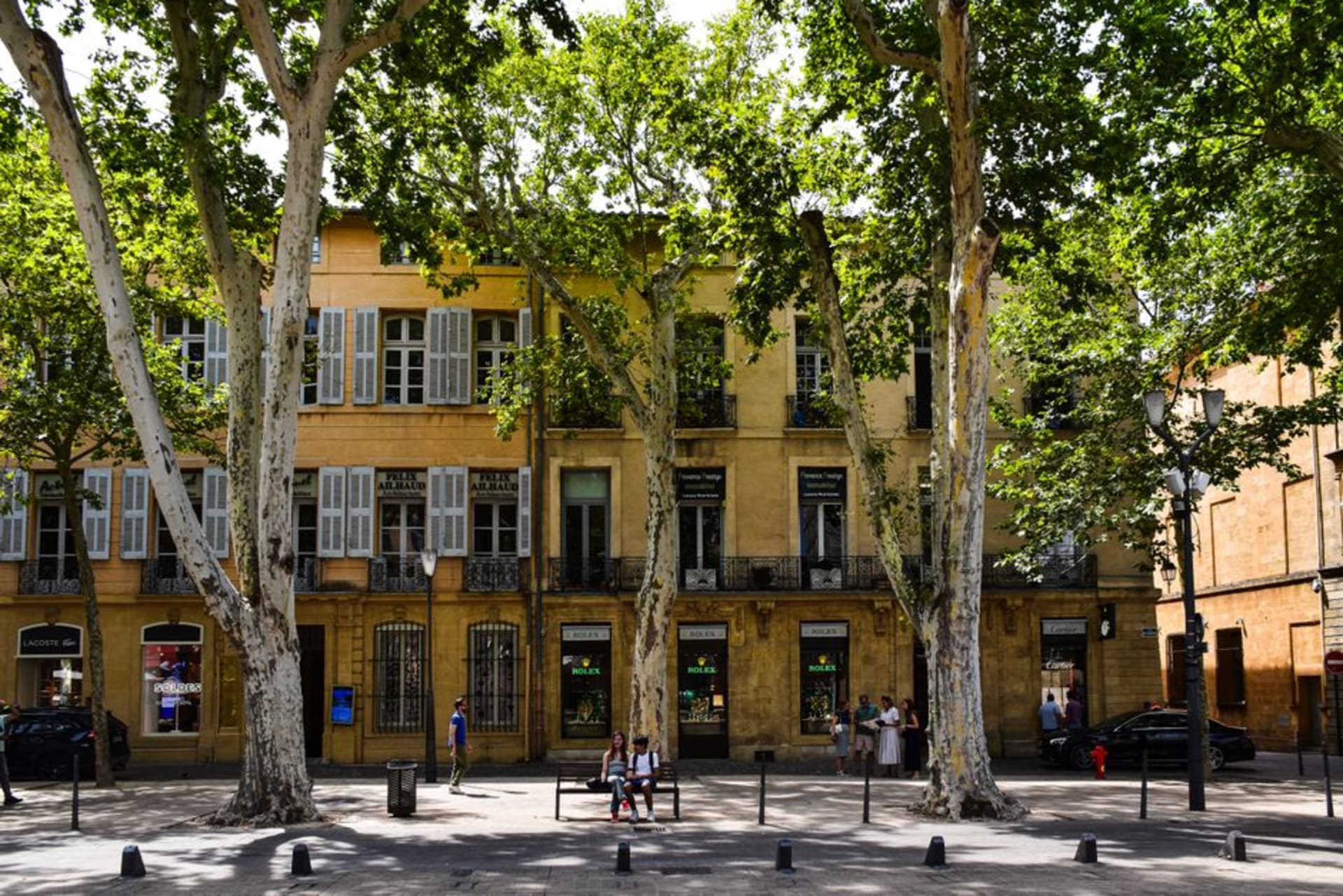
We arrived in Aix in the flat white heat of a Provençal afternoon, the kind that makes you walk on the shaded side of the street without discussing it, and found the whole town organized around exactly that problem. The Cours Mirabeau, the boulevard that splits Aix in two, is planted with plane trees so dense that the light arrives in coins on the pavement, and every hundred metres or so a fountain interrupts the traffic with the sound of water that has clearly been keeping people sane here since the eighteenth century. Lia declared within the first hour that she wanted to live on this street, in one of the honey-coloured townhouses with the wrought-iron balconies, and I did not argue.
Cours Mirabeau and the water that never stops
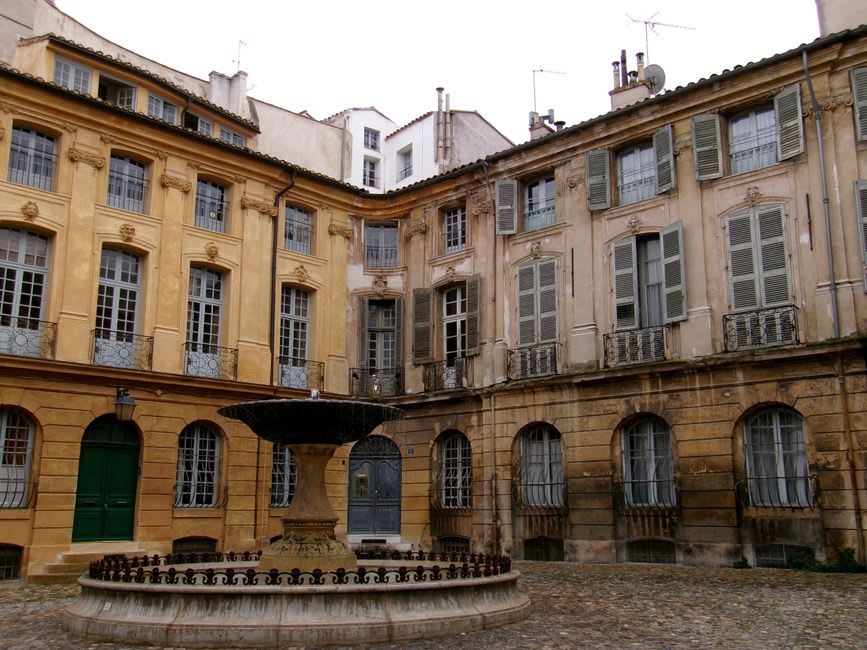
Four fountains punctuate the boulevard, and they are not identical, whatever the postcards suggest. The Fontaine des Neuf Canons sits squat and businesslike at one end; the Fontaine d’Eau Chaude, mossy and warm to the touch because it is fed by a thermal spring, sits mid-way and looks, frankly, a little unwell, with algae the colour of a bruise — and I mean that as a compliment. Aixois have been bathing in that water since the Romans were here. We sat at a café table by the mossy fountain with a carafe of rosé and watched students spill out of the law faculty at the top of the street, the same ritual, I imagine, that’s played out here for three hundred years.
Chasing Cézanne up the hill
Paul Cézanne was born here and never really left, and the town has turned that fact into a quiet religion. We followed the bronze pavement markers — a self-guided trail called the Circuit Cézanne — past his childhood home, his sister’s house, the café where he argued about painting, and up the Chemin de la Marguerite to his last studio, the Atelier des Lauves, kept exactly as he left it, easels and coats and all. From the hill above it you can see Mont Sainte-Victoire on the horizon, the same grey-white ridge he painted more than sixty times, and it does something to you to stand where he stood and realize the mountain looks almost annoyingly the same.
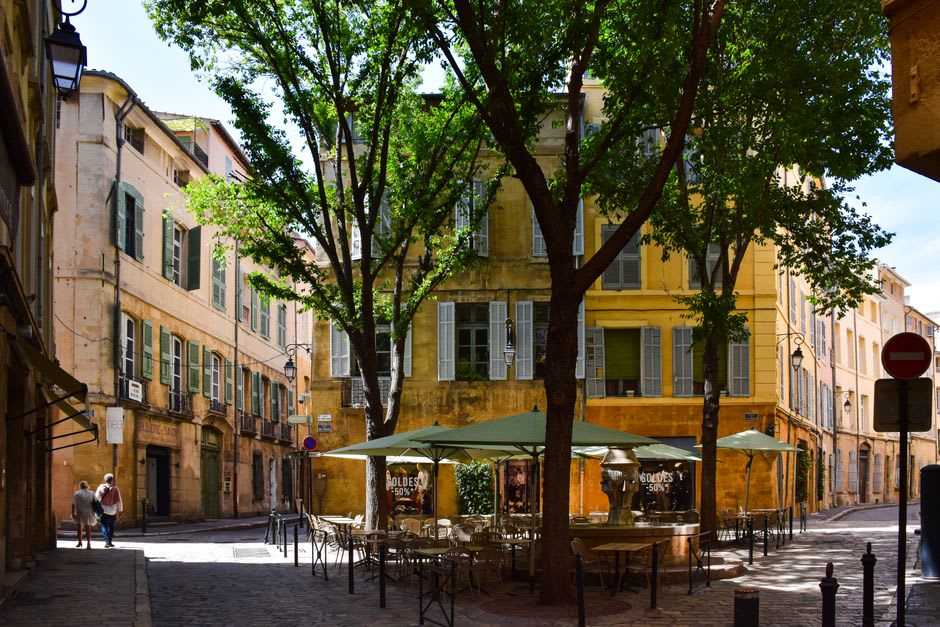
We finished the afternoon at the Marché Richelme, buying tomatoes so ripe they’d split if you looked at them wrong, and ate them standing over the sink in our rental like it was the only correct way.
When to go: Late spring, before the June heat sets in and while the market stalls are still piled with the first of the season’s fruit. July brings the Festival d’Aix opera crowds and a heat that makes the fountains feel less like decoration and more like survival infrastructure.