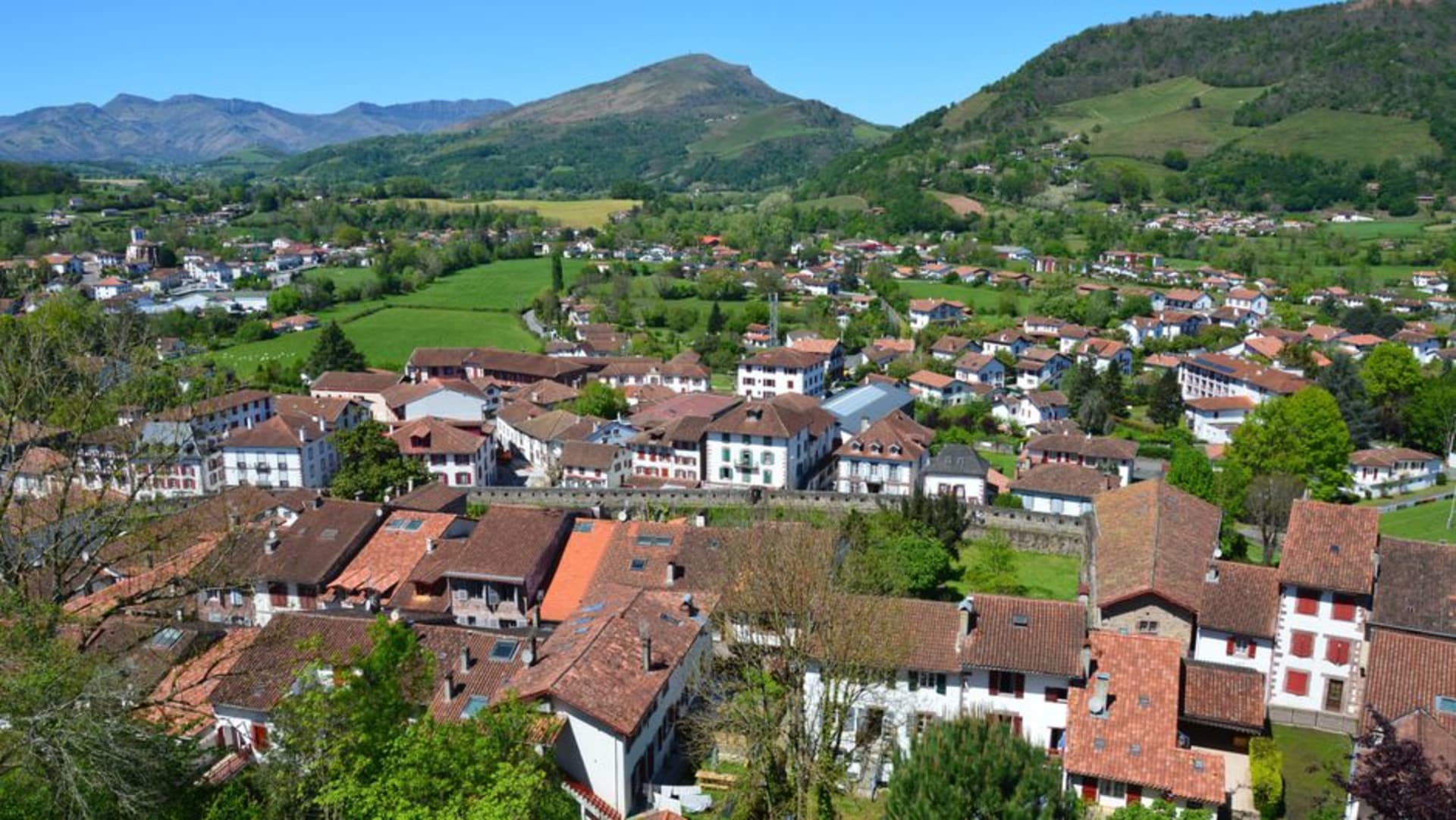
A single-street Basque village on the old pilgrim road to Santiago, its houses lined up like a stage set of red timber and white plaster with the Pyrenean foothills rising right behind them.
Ainhoa is officially one of the “plus beaux villages de France,” a label that in some places has curdled into a kind of gift-shop parody of itself. Ainhoa hasn’t. The village is, quite literally, a single main street laid out by the monks of Roncesvalles in the thirteenth century as a stopping point for pilgrims walking toward Santiago de Compostela, and it has barely widened since. We parked at one end, walked the length of it in about eight minutes, and then walked it again slowly, which is really the correct way to see a place this size.
Houses built to be seen from the road
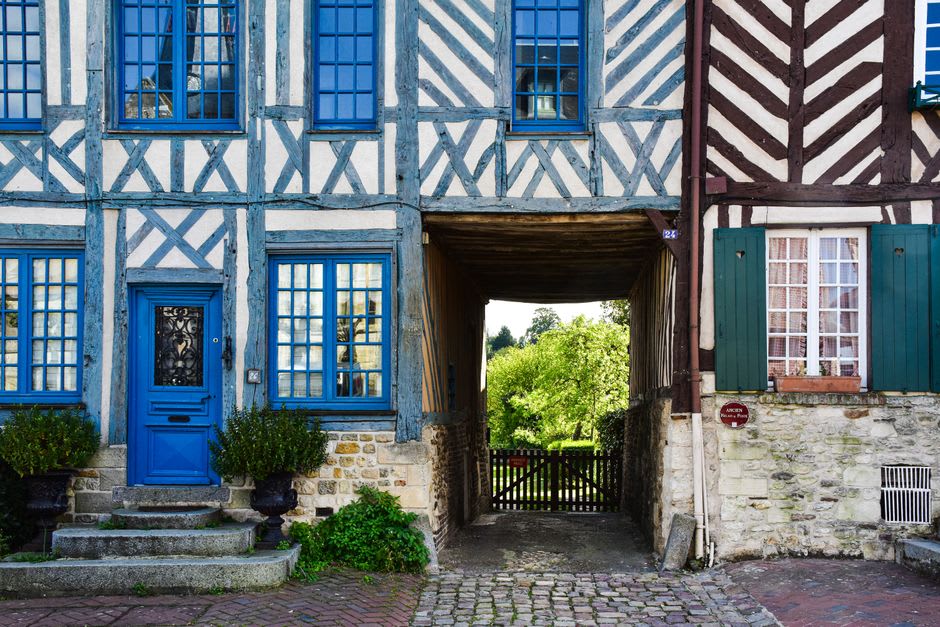
Every house along the street carries a carved stone lintel above its door with a name, a date, and often a family crest — some going back to the seventeenth century, when Ainhoa grew wealthy on trade passing between France and Spain over the nearby col. The timber frames are painted the same deep ox-blood red we’d started seeing everywhere in the Labourd region, supposedly originally made from bull’s blood mixed with lime, and the effect against the whitewash is sharp enough that the whole street looks freshly painted even where it isn’t.
The church, the fronton, and the graves that face the mountains
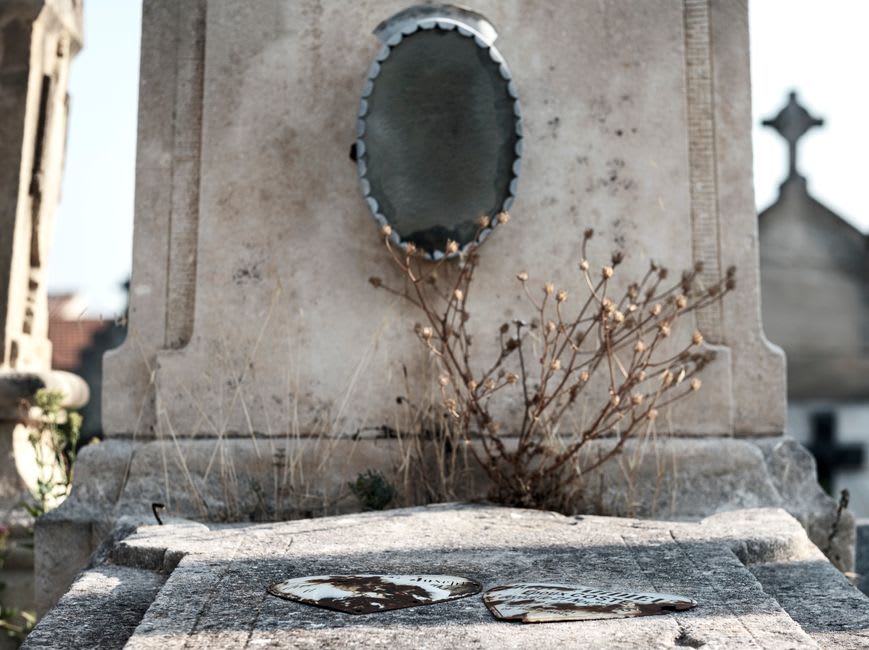
At the top of the village, the Église Notre-Dame-de-l’Assomption has the same dark wooden interior galleries as every Basque church we visited that week, but its real curiosity is the cemetery outside: rows of discoidal steles, round carved gravestones unique to the Basque country, some marked with sun symbols that predate the church itself by centuries. Below the church, the village fronton was in use when we passed — two boys in bare feet slamming a ball against the wall with wooden paletas while their mothers watched from a bench and pretended not to be timing them.
When to go: Spring and early autumn keep the light soft on the timber facades without the midsummer crowds that funnel through on day trips from the coast.